CAS 75996-29-1
:5-Fluorbenzol-1,3-diol
Beschreibung:
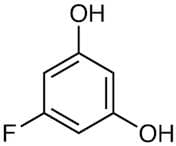
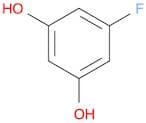
5-Fluorbenzol-1,3-diol, auch bekannt unter seiner CAS-Nummer 75996-29-1, ist eine aromatische Verbindung, die durch das Vorhandensein eines Fluoratoms und zweier Hydroxylgruppen (-OH), die an einem Benzolring gebunden sind, gekennzeichnet ist. Der Fluorsubstituent befindet sich an der Position 5, während die Hydroxylgruppen an den Positionen 1 und 3 positioniert sind, was ihn zu einem Dihydroxyderivat des Fluorbenzenes macht. Diese Verbindung weist Eigenschaften auf, die typisch für phenolische Verbindungen sind, einschließlich potenzieller antioxidativer Aktivität aufgrund der Anwesenheit von Hydroxylgruppen. Es ist wahrscheinlich, dass es in polaren Lösungsmitteln löslich ist, da es in der Lage ist, Wasserstoffbrücken zu bilden, während seine aromatische Natur einen gewissen Grad an Hydrophobizität verleihen kann. Das Vorhandensein des Fluoratoms kann die Reaktivität und biologische Aktivität der Verbindung beeinflussen, was möglicherweise ihre Lipophilie erhöht und ihre Wechselwirkung mit biologischen Zielen verändert. 5-Fluorbenzol-1,3-diol könnte Anwendungen in der Pharmazie, Agrochemie oder als Zwischenprodukt in der organischen Synthese haben, obwohl spezifische Anwendungen von weiteren Forschungen und Entwicklungen abhängen würden.
Formel:C6H5FO2
InChl:InChI=1/C6H5FO2/c7-4-1-5(8)3-6(9)2-4/h1-3,8-9H
SMILES:c1c(cc(cc1O)O)F
Synonyme:- 1,3-Benzenediol, 5-fluoro-
Sortieren nach
Reinheit (%)
0
100
|
0
|
50
|
90
|
95
|
100
5 Produkte.
5-Fluororesorcinol
CAS:Formel:C6H5FO2Reinheit:>98.0%(GC)(T)Farbe und Form:White to Light yellow to Light orange powder to crystalMolekulargewicht:128.105-Fluororesorcinol
CAS:5-Fluororesorcinol is a fluorine-containing analog of resorcinol. It is used as a topical medication for the treatment of acne, psoriasis, and other skin disorders. 5-Fluororesorcinol has been shown to inhibit the production of tyrosinase, an enzyme that catalyzes the oxidation of phenols to quinones. This process is involved in the formation of melanin and plays a role in inflammation and cell proliferation. 5-Fluororesorcinol also binds to cannabinoid receptors (CB1 and CB2) with high affinity. The molecular model for 5-fluoro resorcinol shows hydrogen bonding interactions with the hydroxyl group and fluorine atom. It also exhibits ferroelectric behavior due to its nonlinear dipole moment. The presence of two isomers (5R or 6S) may be due to steric hindrance from one or more methyl groups in the orthoFormel:C6H5FO2Reinheit:Min. 95%Molekulargewicht:128.1 g/mol