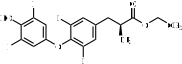
CAS 76353-71-4
:L-Tyrosin, O-(4-hydroxy-3,5-diiodophenyl)-3,5-diiodo-, Ethylester
Beschreibung:
L-Tyrosin, O-(4-hydroxy-3,5-diiodophenyl)-3,5-diiodo-, Ethylester, identifiziert durch die CAS-Nummer 76353-71-4, ist eine chemische Verbindung, die zur Klasse der jodierten Tyrosinderivate gehört. Diese Substanz weist ein Tyrosin-Gerüst auf, das eine Aminosäure ist, die wichtig für die Proteinsynthese und die Produktion von Neurotransmittern ist. Die Verbindung zeichnet sich durch die Anwesenheit mehrerer Jodatome aus, insbesondere an den Positionen 3 und 5 des aromatischen Rings, was ihre biologische Aktivität und Stabilität erheblich beeinflussen kann. Die ethylesterfunktionelle Gruppe erhöht ihre Lipophilie, was möglicherweise ihre Absorption und Verteilung in biologischen Systemen beeinflusst. Jodierte Verbindungen wie diese werden häufig wegen ihrer Anwendungen in der medizinischen Chemie untersucht, insbesondere bei der Entwicklung von Radiopharmazeutika und Bildgebungsagenten aufgrund der radioaktiven Eigenschaften von Jod-Isotopen. Darüber hinaus kann die Anwesenheit von Hydroxylgruppen zu ihrer Reaktivität und Wechselwirkungen mit anderen biologischen Molekülen beitragen. Insgesamt veranschaulicht diese Verbindung die komplexe Beziehung zwischen Struktur und Funktion in biochemischen Kontexten.
Formel:C17H15I4NO4
Sortieren nach
Reinheit (%)
0
100
|
0
|
50
|
90
|
95
|
100
4 Produkte.
Thyroxine Ethyl Ester
CAS:Kontrolliertes ProduktApplications An analog of Thyroxine (L425600) with stimulatory effects on human red blood cell membrane Ca2+-activated ATPase. It is a potential inactivator of iodothyronine deiodinase type II.
References Davis, F.B. et al.: J. Biol. Chem., 258, 12373 (1983); Safran, M. et al.: J. Biol. Chem., 268, 14224 (1993);Formel:C17H15I4NO4Farbe und Form:NeatMolekulargewicht:804.92Thyroxine ethyl ester
CAS:Thyroxine ethyl ester is a hormone that is used to treat hypothyroidism. It is taken by mouth and has a low absorption rate when taken orally. Thyroxine ethyl ester binds to iodothyronine receptors in the thyroid gland and activates them, leading to increased production of the thyroid hormones thyroxine (T4) and triiodothyronine (T3). The uptake of thyroxine ethyl ester into the body can be inhibited by sodium salts or other compounds that bind to it. Thyroxine ethyl ester does not affect cholesterol levels or lipid levels, but it does increase plasma cholesterol. This drug also has no effect on light emission or on conjugates. Immobilized thyroxine ethyl ester has been shown to be insensitive to the inhibitory effects of TSH on its production in vitro.Formel:C17H15I4NO4Reinheit:Min. 95%Molekulargewicht:804.92 g/mol