CAS 7646-78-8
:Zinn(IV)-chlorid
Beschreibung:
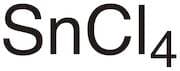
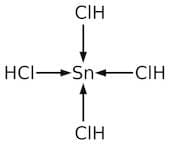
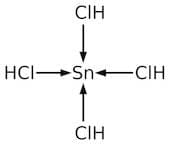
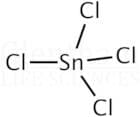
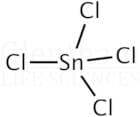
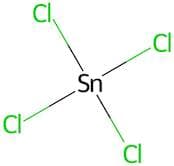
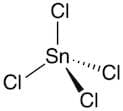
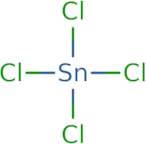
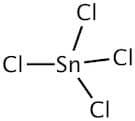
Zinn(IV)-chlorid, auch bekannt als Zinn(IV)-chlorid, ist eine anorganische Verbindung mit der Formel SnCl4. Es ist eine farblose, flüchtige Flüssigkeit bei Raumtemperatur, die durch seinen starken, stechenden Geruch gekennzeichnet ist. Zinn(IV)-chlorid ist hochlöslich in organischen Lösungsmitteln und reagiert mit Wasser, um Salzsäure und Zinnoxid zu erzeugen, was es zu einer starken Lewis-Säure macht. Es hat eine tetraedrische Molekülgeometrie, mit Zinn im Zentrum, umgeben von vier Chloratomen. Diese Verbindung wird hauptsächlich in der Herstellung von Organostannverbindungen, als Katalysator in verschiedenen chemischen Reaktionen und in der Synthese anderer zinnhaltiger Materialien verwendet. Aufgrund seiner korrosiven Natur birgt es Gesundheitsrisiken, einschließlich Atemwegsreizungen und Hautverbrennungen bei Kontakt. Eine ordnungsgemäße Handhabung und Lagerung in einer kontrollierten Umgebung sind entscheidend, um die mit seiner Verwendung verbundenen Risiken zu mindern. Darüber hinaus kann Zinn(IV)-chlorid Komplexe mit verschiedenen Liganden bilden, was seine Nützlichkeit in der Koordinationschemie weiter erweitert.
Formel:Cl4Sn
InChl:InChI=1S/4ClH.Sn/h4*1H;/q;;;;+4/p-4
InChI Key:InChIKey=HPGGPRDJHPYFRM-UHFFFAOYSA-J
SMILES:[Sn](Cl)(Cl)(Cl)Cl
Synonyme:- Libavius Fuming spirit
- Nsc 209802
- Stannic chloride
- Stannic chloride (anhydrous)
- Stannic tetrachloride
- Tetrachlorostannane
- Tetrachlorotin
- Tetrachlorure d'etain
- Tetracloruro De Estano
- Tin (Iv) Tetrachloride
- Tin Tetrachloride
- Tin chloride (SnCl4)
- Tin chloride (SnCl<sub>4</sub>)
- Tin(IV) chloride
- Zinn(Iv)-Chlorid
- Zinntetrachlorid
- Tin chloride
- stannic chloride fuming
- Stannous chloride
- Stagno (tetracloruro di)
- Tin (IV) chloride anhydrous
- Stannane, tetrachloro-
- Stannic chloride, anhydrous [UN1827] [Corrosive]
- Tin(4+) tetrachloride
- Tin(IV) chloride PENTAHYDRATE
- stannane, tetrachloro-
- Weitere Synonyme anzeigen
Sortieren nach
Reinheit (%)
0
100
|
0
|
50
|
90
|
95
|
100
16 Produkte.
Tin(IV) Chloride (ca. 1.0mol/L in Dichloromethane)
CAS:Formel:SnCl4Farbe und Form:Colorless to Almost colorless clear liquidMolekulargewicht:260.51Tin(IV) chloride, anhydrous, 98% (metals basis)
CAS:Tin(IV) chloride is a precursor to prepare organotin compounds such as tetralkyltin and dialkyldichlorotin(IV), which find applications as catalysts and polymer stabilizers. As a Lewis acid catalyst, it is used in Fridel-Crafts reactions for alkylation and cyclization. It is involved in the selectivFormel:Cl4H4SnReinheit:98%Molekulargewicht:264.54Tin(IV) chloride, 99.99% (metals basis)
CAS:Tin(IV) chloride is a precursor to prepare organotin compounds such as tetralkyltin and dialkyldichlorotin(IV), which finds application as catalysts and polymer stabilizers. As a Lewis acid catalyst, it is used in Fridel-Crafts reactions for alkylation and cyclization. It is involved in the selectivFormel:Cl4H4SnReinheit:99.99%Molekulargewicht:264.54Tin(IV) chloride, anhydrous (99.99-Sn%) PURATREM
CAS:Tin(IV) chloride, anhydrous (99.99-Sn%) PURATREM
Formel:SnCl4Reinheit:99.99-Sn%Farbe und Form:colorless liq.Molekulargewicht:260.50Tin(IV) Chloride anhydrous
CAS:Formel:Cl4SnReinheit:≥ 98.0%Farbe und Form:Clear, colourless to pale yellow liquidMolekulargewicht:260.50Tin(IV) chloride, anhydrous, 99.99%
CAS:Formel:SnCl4Reinheit:≥ 99.99%Farbe und Form:Clear, colourless liquidMolekulargewicht:260.50Tin(IV) chloride
CAS:Tin(IV) chlorideReinheit:99.99%Farbe und Form:Colourless To Pale Yellow LiquidMolekulargewicht:260.52g/molTin(IV) chloride, anhydrous, 98%
CAS:Tin(IV) chloride, anhydrous, 98%
Formel:SnCl4Reinheit:98%Farbe und Form:colorless liq.Molekulargewicht:260.50Tin IV chloride, anhydrous
CAS:SNT7930 - Tin IV chloride, anhydrous
Formel:Cl4SnReinheit:0.999Farbe und Form:Liquid, ClearMolekulargewicht:260.51Tin (IV) chloride
CAS:Tin (IV) chloride is an inorganic acid that is soluble in water and methanol. It can be used to synthesize picolinic acid, which is a product of the reaction between dextran sulfate and trifluoroacetic acid. Tin (IV) chloride has been shown to inhibit the growth of bacteria by binding to the surface of the cell wall, inhibiting the synthesis of proteins necessary for bacterial growth. Tin (IV) chloride also reacts with copper chloride or hydrogen fluoride, forming a surface layer that inhibits bacterial growth. Tin (IV) chloride has been shown to have strong inhibitory properties against Clostridium perfringens.
Formel:SnCl4Reinheit:Min. 95%Farbe und Form:Colorless Clear LiquidMolekulargewicht:260.52 g/molStannic Chloride anhydrous extrapure, 99%
CAS:Formel:SnCl4Reinheit:min. 99%Farbe und Form:Clear, Colourless to slight yellow, LiquidMolekulargewicht:260.52Stannic Chloride 1M in Toluene
CAS:Formel:SnCl4Farbe und Form:Clear, Pale yellow to yellow fuming, LiquidMolekulargewicht:260.52Stannic Chloride 1M in Dichloromethane
CAS:Formel:SnCl4Farbe und Form:Clear, Pale yellow to yellow, LiquidMolekulargewicht:Â 260.52Stannic Chloride 1M in Heptane
CAS:Formel:SnCl4Farbe und Form:Clear, Colourless, LiquidMolekulargewicht:Â 260.52