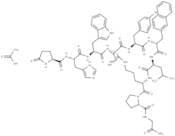
CAS 76932-60-0
:Nafarelin acetate(76932-56-4 free base)
CAS:Nafarelin acetate (76932-56-4) is a GnRH analog that reduces LH and FSH release, used for estrogen-related treatments.Formel:C68H87N17O15Reinheit:99.98%Farbe und Form:SolidMolekulargewicht:1382.55Nafarelin Acetate
CAS:Kontrolliertes ProduktApplications Nafarelin Acetate is a gonadotropin-releasing hormone agonist. Treatment with Nafarelin improves sleep disturbances and anxiety-depression. Nafarelin is also used in the treatment of estrogen-dependent gynecologic disorders such as endometriosis and uterine leiomyomas.
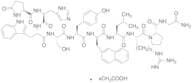
References Simberg, N., et al.: Acta. Obstet. Gyn. Scan., 77, 854 (1998); Bergqvist, A., et al.: Acta. Obstet. Gyn. Scan., 80, 628 (2001); Tahara, M., et al.: Fertil. Steril., 73, 799 (2000)Formel:C66H83N17O13·xC2H4O2Farbe und Form:NeatMolekulargewicht:1382.5Synarela
CAS:Kontrolliertes ProduktSynarela is a drug that belongs to the class of drugs called gonadotropin-releasing hormone (GnRH) analogues, which are used in the treatment of endometriosis and other autoimmune diseases. Synarela is a GnRH agonist with a long-acting effect. It has been shown to suppress luteinizing hormone and follicle-stimulating hormone release, and thereby inhibit ovulation. Synarela also inhibits the production of estrogen, progesterone, and testosterone by binding to receptors on the cell surface. This drug has been shown to be effective for up to one year after a single injection. The efficacy of this drug has been demonstrated in clinical trials using blood sampling as well as pharmacological treatment with 5-hydroxytryptamine (5-HT) agonists or antagonists. The side effects associated with Synarela include menstrual irregularities, headache, nausea, vomiting, breast tenderness, mood changes, and depression.
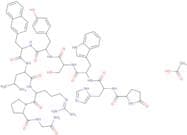
Formel:C68H87N17O15Reinheit:Min. 95%Molekulargewicht:1,382.5 g/mol