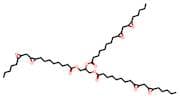
CAS 8013-07-8
:Epoxidiertes Sojaöl
Beschreibung:
Epoxidiertes Sojaöl (ESO) ist eine chemische Verbindung, die aus pflanzlichen Ölen gewonnen wird und durch das Vorhandensein von Epoxidgruppen gekennzeichnet ist, die dreigliedrige cyclische Ether sind. Es wird durch die Epoxidierung von Sojaöl hergestellt, einem Triglycerid, das hauptsächlich aus Fettsäuren besteht. ESO ist eine farblose bis blassgelbe Flüssigkeit mit einem milden Geruch und ist bekannt für seine hervorragende Stabilität, geringe Flüchtigkeit und Oxidationsbeständigkeit. Es zeigt eine gute Verträglichkeit mit verschiedenen Polymeren und wird häufig als Weichmacher und Stabilisator in der Produktion von flexiblem PVC und anderen Kunststoffen verwendet. Darüber hinaus dient ESO als reaktiver Verdünner in Beschichtungen und Klebstoffen, wodurch deren Leistungsmerkmale verbessert werden. Seine ungiftige Natur und biologische Abbaubarkeit machen es zu einer attraktiven Alternative zu herkömmlichen petrochemischen Additiven. Darüber hinaus kann ESO die mechanischen Eigenschaften von Materialien verbessern und wird in verschiedenen Anwendungen eingesetzt, einschließlich Lebensmittelverpackungen, Kosmetika und Körperpflegeprodukten. Insgesamt wird Epoxidiertes Sojaöl für seine Vielseitigkeit und umweltfreundliches Profil geschätzt.
Formel:Unspecified
Synonyme:- ESO
- Nexoleum
- Scraplube
- Epoxidized Soybean Oil
- Soybean oil, epoxidized
- Epoxidized soya bean oil
- Drapex 6.8
- Epoxidized Soyabean Oil
- G 62
- Epocizer P 206
- Epoxidized soybean oil
Sortieren nach
Reinheit (%)
0
100
|
0
|
50
|
90
|
95
|
100
7 Produkte.
Plastic Additive 15
CAS:Animal or vegetable fats & oils/their fractions, boiled, oxidized, etc; inedible mixtures or preparations of animal or vegetable fats and oils, nesoiFormel:C57H106O10Farbe und Form:LiquidMolekulargewicht:940 - 950Soybean Oil Epoxide
CAS:Applications Soybean Oil Epoxide (cas# 8013-07-8) is frequently used as an additive during poly(vinyl chloride) preparation, displacing harmful phthalates. Soybean Oil Epoxide has also been modified for lubricant formulations with improved oxidative stability and low pour point.
References Bueno-Ferrer, C.; et al.: Polym. Degrad. Stab., 95, 2207 (2010); Hong?Sik, H.; et al.: J. Am. Oil Chem. Soc., 78, 1179 (2001).Formel:C57H98O12Farbe und Form:NeatMolekulargewicht:975.4Soybean oil epoxide - Epoxide value >6%
CAS:Soybean oil epoxide is a versatile building block with many applications in the chemical industry. It can be used as a reagent for the synthesis of complex compounds, and is useful as an intermediate in the production of high-quality specialty chemicals. Soybean oil epoxide is also an important reactant in organic synthesis, where it can be used to form a variety of scaffolds that are structurally diverse but functionally equivalent. It has been shown to have good stability and high purity, making it a valuable commodity in the research chemical industry.Farbe und Form:Slightly Yellow Clear LiquidSoybean oil epoxide - contains 4,000 ppm monomethyl ether hydroQuinone as inhibitor Epoxide value >6%
CAS:Soybean oil epoxide is a fatty acid that is used as an inhibitor for epoxy resins. It is created by the reaction of a polybasic acid with unsaturated fatty acids in soybean oil. The epoxide value of soybean oil epoxide is greater than 6% and it has a high resistance to thermal expansion. Soybean oil epoxide reacts with metal hydroxides to form metal soaps, which are insoluble in water. Soybean oil epoxide also inhibits the production of proteinases by binding to receptors on cells, thereby preventing cell growth.Reinheit:Min. 95%Farbe und Form:Powder