CAS 815-52-1
:2-Brom-3-pentanon
Beschreibung:
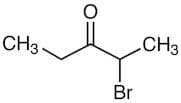
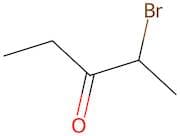
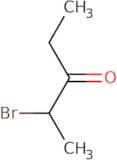
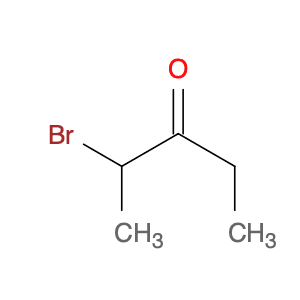
2-Brom-3-pentanon ist eine organische Verbindung, die als Keton klassifiziert ist und durch das Vorhandensein eines Bromatoms und einer Carbonylgruppe (C=O) in ihrer Struktur gekennzeichnet ist. Ihre molekulare Formel ist C5H9BrO, was darauf hinweist, dass sie fünf Kohlenstoffatome, neun Wasserstoffatome, ein Bromatom und ein Sauerstoffatom enthält. Diese Verbindung erscheint typischerweise als farblose bis blassgelbe Flüssigkeit mit einem charakteristischen Geruch. Sie ist in organischen Lösungsmitteln wie Ethanol und Ether löslich, hat jedoch eine begrenzte Löslichkeit in Wasser aufgrund ihrer hydrophoben Kohlenstoffkette. 2-Brom-3-pentanon wird häufig in der organischen Synthese als Zwischenprodukt zur Herstellung verschiedener Arzneimittel und Agrochemikalien verwendet. Sie zeigt die für Ketone typische Reaktivität, einschließlich nucleophiler Additionsreaktionen, und kann aufgrund des Vorhandenseins des Bromatoms Substitutionsreaktionen unterliegen. Sicherheitsvorkehrungen sollten beim Umgang mit dieser Verbindung getroffen werden, da sie Gesundheitsrisiken darstellen kann, wenn sie eingeatmet oder eingenommen wird, und geeignete Schutzausrüstung verwendet werden sollte.
Formel:C5H9BrO
InChl:InChI=1S/C5H9BrO/c1-3-5(7)4(2)6/h4H,3H2,1-2H3
InChI Key:InChIKey=VUDTYIUNUSPULX-UHFFFAOYSA-N
SMILES:C(C(Br)C)(CC)=O
Synonyme:- 2-Bromo-3-pentanone
- 2-Bromopent-3-one
- Ethyl a-bromoethyl ketone
- a-Bromodiethyl ketone
- 3-Pentanone, 2-bromo-
- 2-Bromo-3-pentanone >
Sortieren nach
Reinheit (%)
0
100
|
0
|
50
|
90
|
95
|
100
4 Produkte.
2-Bromo-3-pentanone
CAS:Formel:C5H9BrOReinheit:>95.0%(GC)Farbe und Form:Light orange to Yellow to Green clear liquidMolekulargewicht:165.032-Bromo-3-pentanone
CAS:2-Bromo-3-pentanone is a chemical reagent that is used in the synthesis of β-unsaturated ketones. It is produced by the alkylation of sodium hydroxide solution with 2-bromopentane, followed by the reaction with a ruthenium complex. The product can also be obtained from β-unsaturated ketones by reducing anhydrous sodium and sodium carbonate in a hydroxide solution. This process converts the carbonyl group to an alkene group. Cyclopentenones are obtained by dehydrogenation of ethyl esters, which can be achieved through reductive or stereoselective methods. Halides can be added as substituents to produce stereoisomers in stepwise reactions.Formel:C5H9BrOReinheit:Min. 95%Molekulargewicht:165.03 g/mol