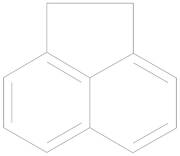
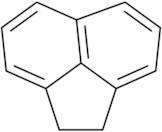
CAS 83-32-9
:Acenaphthen
- 1,2-Dihydroacenaphthylene
- 1,8-Dihydroacenaphthalene
- 1,8-Ethylenenaphthalene
- Acenafteno
- Acenaphtene
- Acenaphthen
- Acenaphthylene, 1,2-dihydro-
- Ai3-00128
- Ccris 5951
- Ethene - Naphthalene (1:1)
- Ethylenenaphthalene
- Hsdb 2659
- Naphthyleneethylene
- Nsc 7657
- peri-Ethylenenaphthalene
- Weitere Synonyme anzeigen
- Niedrigster Preis
- Höchster Preis
- Niedrigste Reinheit
- Höchste Reinheit
- Schnellste Lieferung
CLP SVOC Calibration Mixture 512 2000 µg/mL in Dichloromethane
CAS:Kontrolliertes Produkt- 100-01-6
- 100-02-7
- 101-55-3
- 103-33-3
- 105-67-9
- 106-44-5
- 106-46-7
- 106-47-8
- 108-60-1
- 108-95-2
- 111-44-4
- 111-91-1
- 117-81-7
- 117-84-0
- 118-74-1
- 120-12-7
- 120-82-1
- 120-83-2
- 121-14-2
- 129-00-0
- 131-11-3
- 132-64-9
- 191-24-2
- 193-39-5
- 205-99-2
- 206-44-0
- 207-08-9
- 208-96-8
- 218-01-9
- 50-32-8
- 51-28-5
- 53-70-3
- 534-52-1
- 541-73-1
- 56-55-3
- 59-50-7
- 606-20-2
- 62-75-9
- 621-64-7
- 67-72-1
- 7005-72-3
- 77-47-4
- 78-59-1
- 83-32-9
- 84-66-2
- 84-74-2
- 85-01-8
- 85-68-7
- 86-73-7
- 86-74-8
- 87-68-3
- 87-86-5
- 88-06-2
- 88-74-4
- 88-75-5
- 91-20-3
- 91-57-6
- 91-58-7
- 95-48-7
- 95-50-1
- 95-57-8
- 95-95-4
- 98-95-3
- 99-09-2
Farbe und Form:MixtureAcenaphthene (1,2-Dihydro Acenaphthylene)
CAS:Applications Polycyclic aromatic hydrocarbons as carcinogenic agents.
Not a dangerous good if item is equal to or less than 1g/ml and there is less than 100g/ml in the package
References Hansen, B., et al.: Environ. Toxicol. Chem., 18, 772 (1999), Czub, G., et al.: Environ. Sci. Technol., 38, 2406 (2004),Formel:C12H10Farbe und Form:NeatMolekulargewicht:154.21Acenaphthene
CAS:Acenaphthylene is a natural compound that has anti-inflammatory activity. It has been shown to inhibit the growth of skin cancer cells and wild-type strains of Escherichia coli. Acenaphthylene is synthesized by thermal degradation of acenaphthene and can be found in wastewater. Acenaphthylene can be extracted from these samples using solid phase microextraction (SPME). Acenaphthene can also be used as an indicator for the presence of other compounds in a reaction solution or analytical method. Acenaphthylene reacts with hydrogen peroxide to form a fluorescent derivative, which can be detected using UV light. The injection solution used for this reaction is acetone, methanol, and distilled water.
Formel:C12H10Reinheit:Min. 99 Area-%Farbe und Form:PowderMolekulargewicht:154.21 g/molAcenaphthene in Acetonitrile
CAS:AcetonitrileFormel:C12H10Farbe und Form:White needles; [CAMEO]Molekulargewicht:154.21