CAS 83857-96-9
:2-Butyl-4-chlor-5-formylimidazol
Beschreibung:
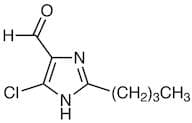
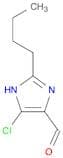
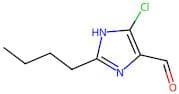
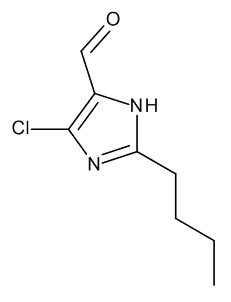
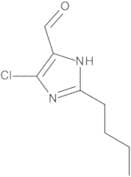
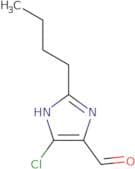
2-Butyl-4-chlor-5-formylimidazol ist eine organische Verbindung, die durch ihren Imidazolring gekennzeichnet ist, der eine fünfgliedrige heterocyclische Struktur mit zwei Stickstoffatomen ist. Die Anwesenheit einer Butylgruppe trägt zu ihren hydrophoben Eigenschaften bei, während die Chlor- und Formylsubstituenten polare funktionelle Gruppen einführen, die an verschiedenen chemischen Reaktionen teilnehmen können. Diese Verbindung wird typischerweise in der organischen Synthese verwendet und kann als Zwischenprodukt in der Herstellung von Arzneimitteln oder Agrochemikalien dienen. Ihre Reaktivität wird durch die elektronenanziehende Natur der Chlor- und Formylgruppen beeinflusst, die den elektrophilen Angriff auf den Imidazolring verstärken können. Darüber hinaus können die Löslichkeit und Stabilität der Verbindung je nach Lösungsmittel und Umweltbedingungen variieren. Sicherheitsdaten sollten konsultiert werden, da halogenierte Verbindungen Gesundheitsrisiken darstellen können, und es sollten geeignete Handhabungsverfahren befolgt werden. Insgesamt ist 2-Butyl-4-chlor-5-formylimidazol eine vielseitige Verbindung mit potenziellen Anwendungen in verschiedenen Bereichen der Chemie.
Formel:C8H11ClN2O
InChl:InChI=1S/C8H11ClN2O/c1-2-3-4-7-10-6(5-12)8(9)11-7/h5H,2-4H2,1H3,(H,10,11)
InChI Key:InChIKey=JLVIHQCWASNXCK-UHFFFAOYSA-N
SMILES:C(CCC)C=1NC(C=O)=C(Cl)N1
Synonyme:- (2-n-Butyl-5-Chloro-imidazole-4-yl)-Carboxaldehyde
- 1H-Imidazole-4-carboxaldehyde, 2-butyl-5-chloro-
- 2-Butyl-4-Chloro-1H-Imidazole-5-Carbaldehyde
- 2-Butyl-4-Chloro-1H-Imidazole-5-Carboxaldehyde
- 2-Butyl-4-Chloro-1H-imidazo-5-Carboxaldehyde
- 2-Butyl-4-Chloro-5-Imidazole Carboxaldehyde
- 2-Butyl-4-Chloro-5-Imidazolecarboxaldehyde
- 2-Butyl-4-Chloro-5-formyl imidazole
- 2-Butyl-4-Chloro-5-formylimidazloe
- 2-Butyl-4-Chloro-5-formylimidazole
- 2-Butyl-4-Chloro-Imidazole-5-Carbaldehyde
- 2-Butyl-4-chloro-1-H-imidazole-5-carboxaldehyde
- 2-Butyl-4-chloro-1H-imidazolyl-5-carboxaldehyde
- 2-Butyl-4-chloro-5-formylimidazole(BCFI)
- 2-Butyl-4-chloroimidazole-5-carbaldehyde
- 2-Butyl-4-chloroimidazole-5-carboxaldehyde
- 2-Butyl-5-Chloro-1H-Imidazole-4-Carbaldehyde
- 2-Butyl-5-Chloroimidazole-4-Carboxaldehyde
- 2-Butyl-5-chloro-3H-imidazole-4-carboxaldehyde
- 2-Butyl-5-chloro-4-formylimidazole
- 2-Butyl-5-chloroimidazole-4-carbaldehyde
- 2-Butyl-5-formyl-4-chloroimidazole
- 2-n-Butyl-4-Chloro-1H-Imidazole-5-Carboxaldehyde
- 2-n-Butyl-4-chloro-5-imidazolecarboxaldehyde
- 2-n-Butyl-5-chlorimidazole-4-carbaldehyde
- 4-Chloro-2-n-butylimidazole-5-carboxaldehyde
- Bcfi
- Weitere Synonyme anzeigen
Sortieren nach
Reinheit (%)
0
100
|
0
|
50
|
90
|
95
|
100
11 Produkte.
2-Butyl-5-chloro-1H-imidazole-4-carboxaldehyde
CAS:Formel:C8H11ClN2OReinheit:>98.0%(GC)Farbe und Form:Light yellow to Yellow to Orange powder to crystalMolekulargewicht:186.64Losartan Related Compound A (2-Butyl-4-chloro-1H-imidazole-5-carbaldehyde)
CAS:Compounds containing an unfused imidazole ring (whether or not hydrogenated) in the structure nesoiFormel:C8H11ClN2OFarbe und Form:PowderMolekulargewicht:186.055992-Butyl-4-chloro-5-formylimidazole
CAS:Formel:C8H11ClN2OReinheit:95%Farbe und Form:SolidMolekulargewicht:186.63872-(But-1-yl)-5-chloro-1H-imidazole-4-carboxaldehyde
CAS:2-(But-1-yl)-5-chloro-1H-imidazole-4-carboxaldehydeFormel:C8H11ClN2OReinheit:97%Farbe und Form: pale yellow solidMolekulargewicht:186.64g/molLosartan EP Impurity D (Losartan USP Related Compound A)
CAS:Formel:C8H11ClN2OMolekulargewicht:186.642-Butyl-4-chloro-1H-imidazole-5-carbaldehyde
CAS:Kontrolliertes ProduktFormel:C8H11ClN2OFarbe und Form:NeatMolekulargewicht:186.642-Butyl-4-chloro-1H-imidazole-5-carboxaldehyde
CAS:Formel:C8H11ClN2OFarbe und Form:Light Yellow To BrownMolekulargewicht:186.642-Butyl-5-chloro-4-formylimidazole
CAS:Formel:C8H11ClN2OReinheit:95%Farbe und Form:SolidMolekulargewicht:186.642-Butyl-4-chloro-1H-imidazole-5-carboxaldehyde
CAS:Glyoxal is a chemical compound that has shown to have bactericidal activity against human pathogens such as Mycobacterium tuberculosis, Helicobacter pylori, and Staphylococcus aureus. It is used in the synthesis of heterocyclic amines and can be found as an impurity in imidazole derivatives. Glyoxal is a broad-spectrum antimicrobial that has been shown to inhibit the growth of fungi and bacteria by reacting with functional groups on the microorganisms' cell walls. It reacts with bacterial cell walls by forming an intermediate molecule, which reacts with other molecules present in the microorganism's environment to form carbon dioxide, water, and glyoxal. The reaction time for glyoxal depends on temperature; higher temperatures will result in faster reactions. Techniques used to synthesize glyoxal include dehydration of oximes or by reaction with phosphorus oxychloride.Formel:C8H11ClN2OReinheit:Min. 95%Farbe und Form:PowderMolekulargewicht:186.64 g/mol