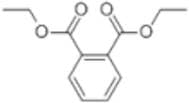
CAS 84-66-2
:Diethylphthalat
Beschreibung:
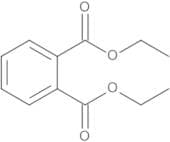
Diethylphthalat (DEP) ist eine organische Verbindung, die zur Familie der Phthalate gehört und durch ihre esterfunktionellen Gruppen gekennzeichnet ist. Es handelt sich um eine farb- und geruchlose Flüssigkeit, die in organischen Lösungsmitteln löslich ist, jedoch eine begrenzte Löslichkeit in Wasser aufweist. DEP wird hauptsächlich als Weichmacher verwendet, um die Flexibilität und Haltbarkeit von Kunststoffen, insbesondere von Polyvinylchlorid (PVC), zu verbessern. Darüber hinaus dient es als Lösungsmittel in verschiedenen Anwendungen, einschließlich Kosmetika, Düfte und Pharmazeutika. Die chemische Struktur von Diethylphthalat besteht aus zwei Ethylgruppen, die an eine Phthalatgruppe gebunden sind, was zu seinen Eigenschaften als Weichmacher beiträgt. Obwohl DEP allgemein als wenig giftig gilt, wurden Bedenken hinsichtlich seiner potenziellen endokrinen disruptiven Wirkungen und seiner Umweltpersistenz geäußert. Regulierungsbehörden haben Richtlinien für seine Verwendung, insbesondere in Verbraucherprodukten, festgelegt. Insgesamt ist Diethylphthalat eine wichtige industrielle Chemikalie mit vielfältigen Anwendungen, aber ihre Sicherheit und Umweltverträglichkeit sind weiterhin Gegenstand laufender Forschung und Regulierung.
Formel:C12H14O4
InChl:InChI=1S/C12H14O4/c1-3-15-11(13)9-7-5-6-8-10(9)12(14)16-4-2/h5-8H,3-4H2,1-2H3
InChI Key:InChIKey=FLKPEMZONWLCSK-UHFFFAOYSA-N
SMILES:C(OCC)(=O)C1=C(C(OCC)=O)C=CC=C1
Synonyme:- 1,2-Benzenedicarboxylic acid diethyl ester
- 1,2-Benzenedicarboxylic acid, 1,2-diethyl ester
- 1,2-Benzodioic acid diethyl ester
- 1,2-Diethyl benzene-1,2-dicarboxylate
- Anozol
- Benzene-1,2-dicarboxylic acid diethyl ester
- DEP
- Diethyl phthalate, (Phthalic acid diethyl ester)
- Diethyl 1,2-benzenedicarboxylate
- Diethyl Benzene-1,2-Dicarboxylate
- Diethylphtalate
- Diethylphthalat
- Ethyl phthalate
- Ftalato De Dietilo
- Neantine
- Nsc 8905
- Palatinol A
- Phtalate de diethyle
- Phthalate, Diethyl
- Phthalic Acid Diethyl Ester
- Phthalol
- Phthalsaeure-Diaethylester
- Placidol E
- Solvanol
- Unimoll DA
- o-Benzenedicarboxylic acid diethyl ester
- o-Bis(ethoxycarbonyl)benzene
- Diethyl phthalate (DEP)
- PHTHALIC ACID, BIS-ETHYL ESTER
- -Benzenedicarboxylic acid diethyl ester
- 1,2-diethyl phthalate
- RARECHEM AL BI 0044
- diethyl1,2-benzenedioate
- PHTHALIC ACID DIETHYL
- diethyl1,2-benzenedicarboxylate
- DIETHYL PHTHALATE
- Diethyl ester of 1,2-Benzenedicarboxylic acid
- 'LGC' (2000)
- Diethyl-o-phthalate
- 1,2-benzenedioicacid,diethylester
- Weitere Synonyme anzeigen
Sortieren nach
Reinheit (%)
0
100
|
0
|
50
|
90
|
95
|
100
SVOC Mixture 1002 100-400 µg/mL in Acetone
CAS:Kontrolliertes Produkt- 103-23-1
- 117-81-7
- 118-74-1
- 120-12-7
- 121-14-2
- 129-00-0
- 131-11-3
- 15862-07-4
- 16605-91-7
- 191-24-2
- 193-39-5
- 205-99-2
- 2051-60-7
- 207-08-9
- 208-96-8
- 218-01-9
- 2437-79-8
- 40186-71-8
- 50-32-8
- 52663-71-5
- 53-70-3
- 56-55-3
- 60145-22-4
- 60233-25-2
- 606-20-2
- 77-47-4
- 78-59-1
- 84-66-2
- 84-74-2
- 85-01-8
- 85-68-7
- 86-73-7
- 87-86-5
Formel:C7H6N2O4Farbe und Form:MixtureMolekulargewicht:182.13Base/Neutral Extractables Mixture 999 2000 µg/mL in Benzene:MeCl2:ACN (2:2:1)
CAS:Kontrolliertes Produkt- 101-55-3
- 103-33-3
- 106-46-7
- 108-60-1
- 111-44-4
- 111-91-1
- 117-81-7
- 117-84-0
- 118-74-1
- 120-12-7
- 120-82-1
- 121-14-2
- 129-00-0
- 131-11-3
- 191-24-2
- 193-39-5
- 205-99-2
- 206-44-0
- 207-08-9
- 208-96-8
- 218-01-9
- 50-32-8
- 53-70-3
- 541-73-1
- 56-55-3
- 606-20-2
- 62-75-9
- 621-64-7
- 67-72-1
- 7005-72-3
- 77-47-4
- 78-59-1
- 83-32-9
- 84-66-2
- 84-74-2
- 85-01-8
- 85-68-7
- 86-30-6
- 86-73-7
- 87-68-3
- 91-20-3
- 91-58-7
- 95-50-1
- 98-95-3
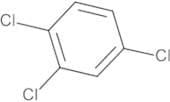
Formel:C6H3Cl3Farbe und Form:MixtureMolekulargewicht:181.45Diethyl Phthalate
CAS:Kontrolliertes ProduktApplications A phthalate metabolite with genotoxic effect. This compound is a contaminant of emerging concern (CECs).
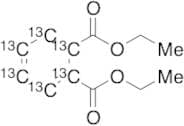
References Reyes, F., et al.: J. Clin. Endocrinol. Metab., 37, 74 (1973), Engel, S., et al.: Neurotoxicology, 30, 522 (2009),Formel:C12H14O4Farbe und Form:NeatMolekulargewicht:222.24Diethyl Phthalate-13C6
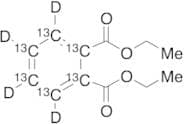
CAS:Kontrolliertes ProduktFormel:C6C6H14O4Farbe und Form:NeatMolekulargewicht:228.193Diethyl Phthalate (Phenyl-13C6, D4)
CAS:Kontrolliertes ProduktFormel:C17H13ClN4O·CH4·H2OFarbe und Form:NeatMolekulargewicht:358.822Diethyl Phthalate pure, 99%
CAS:Kontrolliertes ProduktFormel:C12H14O4Reinheit:min. 99%Farbe und Form:Clear, Colourless, LiquidMolekulargewicht:222.24Diethyl phthalate
CAS:Kontrolliertes ProduktFormel:C12H14O4Reinheit:99%Farbe und Form:LiquidMolekulargewicht:222.24Diethyl phthalate
CAS:Kontrolliertes ProduktDiethyl phthalate is an organic compound that is used in wastewater treatment. It has been shown to have a matrix effect on analytical methods, such as gas chromatography and liquid chromatography. Diethyl phthalate is not commonly found in the environment because it does not hydrolyze readily in water. However, it can be detected in maternal blood and breast milk due to its ability to cross the placenta and mammary gland barrier. Diethyl phthalate has a reactive nature and may be carcinogenic. It has been shown to cause DNA damage in vitro assays with human cells, but not with rat cells or bacteria. Diethyl phthalate may also cause cell lysis when exposed to water, which may lead to death of aquatic organisms.Formel:C12H14O4Reinheit:Min. 95%Farbe und Form:Clear LiquidMolekulargewicht:222.24 g/mol