CAS 867-56-1
:Natrium-L-lactat
Beschreibung:
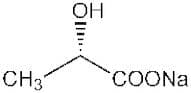
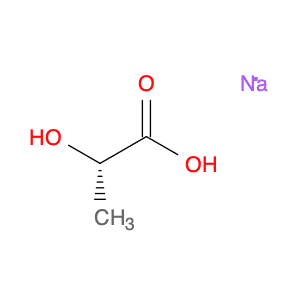
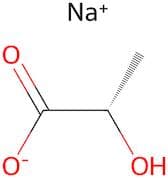
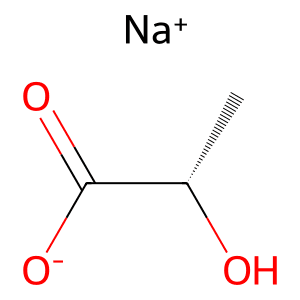
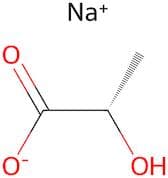
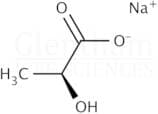
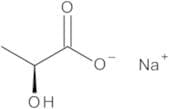
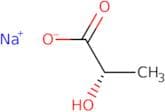
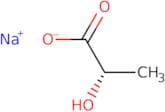
Natrium-L-lactat, mit der CAS-Nummer 867-56-1, ist das Natriumsalz der L-Milchsäure, eine Verbindung, die eine bedeutende Rolle in verschiedenen biochemischen Prozessen spielt. Es erscheint als ein weißes, hygroskopisches Pulver, das in Wasser löslich ist, was es in verschiedenen Anwendungen nützlich macht. Natrium-L-lactat wird häufig in der Lebensmittelindustrie als Konservierungsmittel und Aromastoff verwendet, da es die Haltbarkeit von Produkten verbessert und eine milde Säure verleiht. In der pharmazeutischen und kosmetischen Industrie dient es als Feuchtigkeitsspender und pH-Regulator. Biochemisch ist es an Stoffwechselprozessen beteiligt und kann als Elektrolytersatz wirken. Die Verbindung wird allgemein als sicher (GRAS) anerkannt, wenn sie in angemessenen Mengen verwendet wird. Zu seinen Eigenschaften gehören ein leicht süßer Geschmack und ein niedriges Toxizitätsprofil, was es für verschiedene Anwendungen in Lebensmitteln, Medizin und Körperpflegeprodukten geeignet macht. Darüber hinaus kann es in Laborumgebungen für Zellkulturen und als Pufferagent verwendet werden.
Formel:C3H6O3·Na
InChl:InChI=1S/C3H6O3.Na/c1-2(4)3(5)6;/h2,4H,1H3,(H,5,6);/t2-;/m0./s1
InChI Key:InChIKey=ZZUUMCMLIPRDPI-DKWTVANSSA-N
SMILES:[C@@H](C(O)=O)(C)O.[Na]
Synonyme:- (+)-Lactate sodium
- (+)-Sodium lactate
- (S)-2-Hydroxypropanoic acid monosodium salt
- (S)-2-Hydroxypropionic acid sodium salt
- L-Lactic acid sodium salt
- Lactic acid, monosodium salt, <span class="text-smallcaps">L</span>-
- Propanoic acid, 2-hydroxy-, monosodium salt, (2S)-
- Propanoic acid, 2-hydroxy-, monosodium salt, (S)-
- Propanoic acid, 2-hydroxy-, sodium salt (1:1), (2S)-
- Purasal S 98
- Sodium <span class="text-smallcaps">L</span>-(+)-lactate
- Weitere Synonyme anzeigen
Sortieren nach
Reinheit (%)
0
100
|
0
|
50
|
90
|
95
|
100
16 Produkte.
Sodium L-lactate, 98+%
CAS:This Thermo Scientific Chemicals brand product was originally part of the Alfa Aesar product portfolio. Some documentation and label information may refer to the legacy brand. The original Alfa Aesar product / item code or SKU reference has not changed as a part of the brand transition to Thermo SciFormel:C3H5NaO3Reinheit:98+%Farbe und Form:White, Crystals or powder or crystalline powder or lumpsMolekulargewicht:112.06Sodium Lactate
CAS:Lactic acid, its salts and estersFormel:C3H5NaO3Farbe und Form:White Light Yellow PowderMolekulargewicht:112.01364Sodium (S)-2-hydroxypropanoate
CAS:Formel:C3H5NaO3Reinheit:98%Farbe und Form:SolidMolekulargewicht:112.0598Sodium L-lactate
CAS:Formel:C3H5NaO3Reinheit:≥ 98.0%Farbe und Form:White powderMolekulargewicht:112.06Sodium L-lactate, 98%
CAS:Formel:C3H5NaO3Reinheit:≥ 98.0%Farbe und Form:White powderMolekulargewicht:112.06(L)-Sodium lactate
CAS:L-Sodium lactate, produced from pyruvate by Lactate Dehydrogenase, increases in muscles and blood post-exercise, and is found in various organs and fluids.Formel:C3H5NaO3Reinheit:99.17% - 99.84%Farbe und Form:LiquidMolekulargewicht:112.06L-(+)-Lactic Acid Sodium Salt
CAS:Kontrolliertes ProduktFormel:C3H5O3·NaFarbe und Form:NeatMolekulargewicht:112.06Sodium L-lactate - 60% aqueous solution
CAS:Lactate is a monocarboxylic acid that is produced by the liver and kidneys. It is also produced as a result of anaerobic metabolism. Lactate can be converted back to glucose in the liver, thereby contributing to blood sugar levels. Lactate has been shown to have inhibitory effects on bacterial growth and may work by binding to calcium ions. The uptake of lactate by bacteria is catalyzed by the enzyme L-lactate dehydrogenase, which converts lactate into pyruvate with concomitant release of a hydrogen ion (H+). The H+ may serve as an electron donor for the reduction of ferric iron, which leads to its oxidation state becoming ferrous iron (Fe2+) and thus prevents it from catalyzing the production of hydroxyl radicals. Magnetic particles are used to study the effect of lactate on bacterial cells. These studies show that lactate has low energy requirements and acts as a carbon source for bacteriaFormel:C3H5NaO3Reinheit:Min. 95%Farbe und Form:Colorless Clear LiquidMolekulargewicht:112.06 g/molSodium (S)-2-hydroxypropanoate 60% solution in water
CAS:Reinheit:60% solution in waterMolekulargewicht:112.01Sodium (S)-2-hydroxypropanoate
CAS:Formel:C3H5NaO3Reinheit:95.0%Farbe und Form:SolidMolekulargewicht:112.06Sodium L-lactate - powder
CAS:Sodium L-lactate is a sodium salt of L-lactic acid, which is metabolized in the body to produce energy. It is used as a nutritional supplement and has been shown to have an inhibitory effect on Staphylococcus. The uptake of sodium L-lactate was found to be greater than that of glucose, which may be due to its ability to bind fatty acids. Sodium L-lactate also regulates mitochondrial biogenesis and increases the production of ATP levels. This increase in ATP levels may be due to its inhibition of fatty acid synthesis for use as an energy source. Sodium L-lactate has been shown to decrease the number of neuronal cells that die during high fat diet consumption, which may make it a potential drug target for preventing obesity.
Formel:C3H5NaO3Reinheit:Area-% Min. 95 Area-%Farbe und Form:White Off-White PowderMolekulargewicht:112.06 g/mol