CAS 87-88-7
:Chloranilsäure
Beschreibung:
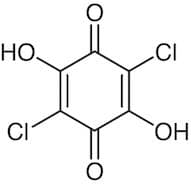
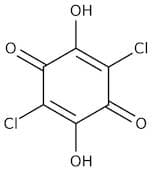
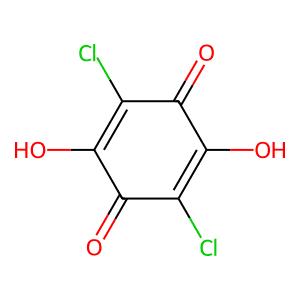
Chloranilsäure, mit der CAS-Nummer 87-88-7, ist eine organische Verbindung, die zur Klasse der aromatischen Säuren gehört. Sie zeichnet sich durch ihr dunkelrotes bis braunes kristallines Aussehen aus und ist bekannt für ihre Löslichkeit in polaren Lösungsmitteln wie Wasser und Alkohol. Die chemische Struktur weist eine chlorierte Anilin-Gruppe auf, die zu ihren sauren Eigenschaften und ihrer Reaktivität beiträgt. Chloranilsäure wird häufig als Reagenz in der analytischen Chemie verwendet, insbesondere bei der Bestimmung von Metallionen aufgrund seiner Fähigkeit, farbige Komplexe zu bilden. Darüber hinaus zeigt es Eigenschaften, die es nützlich für die Farbstoffsynthese und als pH-Indikator machen. Die Verbindung ist auch für ihre potenziellen Anwendungen in der organischen Elektronik und Materialwissenschaft bekannt. Sie sollte jedoch mit Vorsicht behandelt werden, da sie bei Kontakt Gesundheitsrisiken darstellen kann. Insgesamt ist Chloranilsäure eine vielseitige Verbindung mit erheblichem Nutzen in verschiedenen chemischen Anwendungen.
Formel:C6H2Cl2O4
InChl:InChI=1S/C6H2Cl2O4/c7-1-3(9)5(11)2(8)6(12)4(1)10/h9,12H
InChI Key:InChIKey=IPPWILKGXFOXHO-UHFFFAOYSA-N
SMILES:ClC=1C(=O)C(O)=C(Cl)C(=O)C1O
Synonyme:- 2,5-Cyclohexadiene-1,4-Dione, 2,5-Dichloro-3,6-Dihydroxy-
- 2,5-Dichloro-3,6-Dihydroxy-1,4-Benzoquinone
- 2,5-Dichloro-3,6-Dihydroxy-P-Benzoquinon
- 2,5-Dichloro-3,6-Dihydroxy-P-Benzoquinone
- 2,5-Dichloro-3,6-Dihydroxy-P-Quinon
- 2,5-Dichloro-3,6-Dihydroxy-P-Quinone
- 2,5-Dichloro-3,6-Dihydroxybenzo-1,4-Quinone
- 2,5-Dichloro-3,6-Dihydroxybenzoquinone
- 2,5-Dichloro-3,6-Dihydroxycyclohexa-2,5-Diene-1,4-Dione
- 2,5-Dichloro-3,6-Dihydroxyquinone
- 2,5-Dichloro-3,6-dihydroxy-1,4-quinone
- 2,5-Dichloro-3,6-dihydroxy-2,5-cyclohexadiene-1,4-dione
- 2,5-Dihydroxy-3,6-Dichlorobenzoquinone
- 2,5-Dihydroxy-3,6-dichloro-1,4-benzoquinone
- 2,5-Dochloro-3,6-Dihydroxy Benzoquinone
- 2,5-Dochloro-3,6-Dohydroxy-P-Benzoquinone
- 2,5-Dochloro-3,6-Dyhydroxybenzoquinone
- 2,5-Dyhydroxy-3,6-2-Benzoquinone
- 3,6-Dichloro-2,5-dihydroxy-1,4-benzoquinone
- 3,6-Dichloro-2,5-dihydroxybenzoquinone
- 4-Dione,2,5-Dichloro-3,6-Dihydroxy-5-Cyclohexadiene-1
- 5-Cyclohexadiene-1,4-Dione,2,5-Dichloro-3,6-Dihydroxy-2
- Chloranilic
- Chloranilic Acid,(2,5-Dichloro-3,6-Dihydroxy-1,4
- Chloranilic Acid Crystalline
- Chlorobenzene Acid
- Dichloro Hydroquinone
- Labotest-Bb Lt00159487
- NSC 6108
- NSC 97383
- P-Benzoquinone, 2,5-Dichloro-3,6-Dihydroxy-
- P-Chloranilicacid
- Quinone, 2,5-dichloro-3,6-dihydroxy-
- Timtec-Bb Sbb008913
- p-Chloranilic acid
- Weitere Synonyme anzeigen
Sortieren nach
Reinheit (%)
0
100
|
0
|
50
|
90
|
95
|
100
7 Produkte.
Chloranilic Acid
CAS:Formel:C6H2Cl2O4Reinheit:>98.0%(T)(HPLC)Farbe und Form:Orange to Brown powder to crystalMolekulargewicht:208.98Chloranilic acid, 98+%
CAS:Chloranilic acid is used in spectrophotometry. It reacts with metal ions to form stable complexes. It is also used as a reactant in the preparation of dimethylbipyridyl complexes and (nonylbenzimidazolylmethyl)benzene. Further, it is used in charge-transfer reactions with metoprolol tartrate. It isFormel:C6H2Cl2O4Reinheit:98+%Farbe und Form:Red to orange or reddish-orange, Powder or crystalline powderMolekulargewicht:208.98Chloranilic Acid extrapure, 98%
CAS:Formel:C6H2Cl2O4Reinheit:min.98%Farbe und Form:Orange to Brown, Powder, ClearMolekulargewicht:208.98Chloranilic acid
CAS:Chloranilic acid is a thermally unstable compound that undergoes a number of reactions with the addition of heat. It reacts with nitrogen atoms to form amides, nitriles, and nitro compounds. Chloranilic acid also reacts with polymerases to form stable complexes. The proton at the center of the chloranilic acid molecule is lost when it forms an acid complex. This reaction occurs in aqueous solution as well as in biological systems, where it is used for hydrogen bonding interactions. The stable complexes that are formed by chloranilic acid have been shown to have biological properties such as antimicrobial activity, antiviral activity, and antifungal activity.Formel:C6H2Cl2O4Reinheit:Min. 95%Farbe und Form:Orange To Red SolidMolekulargewicht:208.98 g/mol