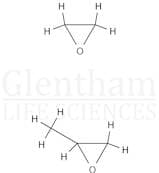
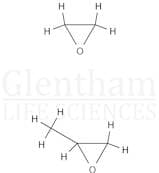
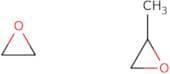
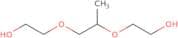
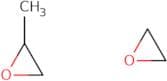
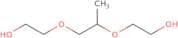
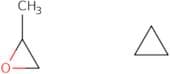
CAS 9003-11-6
:Ethylenoxid-Propylenoxid-Copolymer
- 333E
- 50Mb-26X
- 75H380000
- 75H90000
- 75Hb1440
- 80De40U
- Bloatguard
- CE
- Exocorpol
- Kwc-Q
- Magcyl
- Nixolen
- Oxalgon
- PAG
- Poloxalcol
- Poloxalene
- Poloxalkol
- Polyoxyethylene-polyoxypropylene
- Proksanol
- Proxanol
- Regulaid
- Slovanik
- Vepoloxamer
- α-Hydro-ω-hydroxy-poly(oxyethylene)-poly(oxypropylene)
- Glycols, polyethylene-polypropylene
- Oxirane, 2-methyl-, polymer with oxirane
- Oxirane, polymer with methyloxirane
- Oxirane, methyl-, polymer with oxirane
- Weitere Synonyme anzeigen
Poloxamer Solid
CAS:Nonionic surface-active agents,aromatic or modified aromatic,whether or not put up for retail saleFormel:HO(C2H4O)a(C3H6O)b(C2H4O)aHFarbe und Form:White Cream PowderMolekulargewicht:304.2931Poloxamer Liquid
CAS:Cationic organic surface-active agents,other than aromatic or modified aromatic, whether or not for retail sale, non-ionic, nesoiFormel:HO(C2H4O)12(C3H6O)20(C2H4O)12HFarbe und Form:Clear Cloudy LiquidMolekulargewicht:2235.47701Poloxalene
CAS:Organic surface active agents,other,aromatic or modified aromaticFormel:UVCBFarbe und Form:Colorless Liquid Viscous Oily LiquidMolekulargewicht:312.00405Pluronic F-68
CAS:Formel:(C3H6O·C2H4O)xFarbe und Form:White to almost white prills or flakesMolekulargewicht:(102.13)xPoloxamer 407
CAS:Poloxamer 407 is a nonionic surfactant.Reinheit:98%Farbe und Form:White Crystalline PowderMolekulargewicht:12000 (Average)Poloxamer Solid
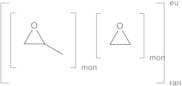
CAS:Kontrolliertes ProduktFormel:(C2H4O)mon(C3H6O)mon)ranFarbe und Form:NeatMolekulargewicht:102.13Poloxamer P84
CAS:Pluronic P84 is an amphiphilic non-ionic surfactant that is used as a pesticide, solvent, and emulsifying agent. The solubility of Pluronic P84 in water increases with the addition of ethylene glycol and decreases with temperature. This product also has a low surface tension and can be used for osmosis experiments. Pluronic P84 has been shown to have antibacterial activity against Staphylococcus aureus, which may be due to its ability to inhibit protein synthesis.
Formel:(C3H6O•C2H4O)xFarbe und Form:White PowderPoloxamer L62
CAS:Kontrolliertes ProduktPluronic L62 is a surfactant that is used to prevent air bubbles from forming in contact lens solutions. It is composed of synthetic block copolymers, which are a type of polymer with both hydrophobic and hydrophilic segments. Pluronic L62 can be used as an anti-inflammatory agent by inhibiting the production of prostaglandins, which are inflammatory mediators. This drug also has been shown to reduce choroidal neovascularization in mice by inhibiting vascular endothelial growth factor (VEGF). In vivo bioavailability data on pluronic L62 has not yet been published.
Formel:(C3H6O•C2H4O)xFarbe und Form:Clear LiquidPoloxamer 407
CAS:Poloxamer 407 is a chemically stable, biocompatible polymer that is used in a number of medical applications. It has an optimum concentration at between 2 and 5% by weight. Poloxamer 407 has been shown to limit renal injury in animals during ischemia-reperfusion (I/R) injury, as well as reducing the bioavailability of certain drugs. It also exhibits thermoreversible behaviour, which means it can change from a liquid to a gel when heated and back again when cooled. The surface methodology is based on the solvency of the polymer and its ability to form hydrogen bonds with water molecules. Poloxamer 407 has been shown to reduce the thermoresponsiveness of skin grafts in vivo and increase drug absorption through nasal passages, making it suitable for use as a nasal drug delivery system.
Formel:(C3H6O·C2H4O)xReinheit:Min. 95%Farbe und Form:White PowderPoloxamer F127
CAS:Pluronic F127 is a nonionic surfactant that is used in the treatment of wastewater. It has been shown to be effective against colorectal adenocarcinoma, with the ability to lyse cells. Pluronic F127 has been shown to have a high affinity for bacteria and its use can help in the removal of bacterial strains from wastewater. The use of this surfactant in water treatment plants as well as in surface methodology studies have shown that it has a high water permeability, which enables it to be used as an analytical method for measuring organics in water. It has also been shown to be toxic to humans at concentrations above 10% w/v and is not recommended for use with humans because of this toxicity. Pharmacokinetic studies have revealed that after intravenous administration, the drug is eliminated through hepatic elimination and biliary excretion.
Formel:(C3H6O·C2H4O)xFarbe und Form:White PowderPoloxamer F68
CAS:Kontrolliertes ProduktCell membrane stabilizer; anti-foaming agent
Formel:(C3H6O•C2H4O)xFarbe und Form:White PowderPoloxamer P65
CAS:Pluronic P65 is a non-ionic surfactant that has the ability to disperse, wet, and stabilize a variety of materials. It is used as an additive in many products such as cosmetics, pharmaceuticals, and food. Pluronic P65 is bifunctional in that it can be both hydrophilic (water soluble) and lipophilic (fat soluble). This allows for its use in acid solutions and in diethylene glycol. Pluronic P65 also has the ability to reduce surface tension by adsorbing onto the surface of water droplets. This property makes it useful in ophthalmic solutions as well as microscopy studies. The diameter of these particles is 1-5 nanometers, making them optimal for optical purposes.
Formel:(C3H6O)x•(C2H4O)xFarbe und Form:White PowderPoloxamer L101, average MW -3800
CAS:Pluronic L101 is a non-ionic surfactant. It has shown to be a P-glycoprotein (P-gp) inhibitor, which may be due to its chemical stability and ability to bind to the cell membrane. Pluronic L101 also has been shown to inhibit the growth of skin cancer cells by binding to the cell membrane and preventing the uptake of glycol ethers. The surfactant is also an antimicrobial agent that can inhibit bacteria such as Staphylococcus aureus, Escherichia coli, and Pseudomonas aeruginosa. The most common use for this product is in skin care products such as lotions and sunscreens. Pluronic L101 has been shown to have anti-inflammatory properties that are stronger than those of ibuprofen or aspirin when tested on rats with myocardial infarcts. This product is also used in analytical methods for measuring P-gp substrate concentrations in humanFarbe und Form:PowderPoly(ethylene glycol)-block-poly(propylene glycol)-block-poly(ethylene glycol)
CAS:Poly(ethylene glycol)-block-poly(propylene glycol)-block-poly(ethylene glycol) is a polymeric drug that has been synthesized to inhibit the activity of P-glycoprotein. This polymer is used to control the uptake of drugs into cells. It also has shown an effect on cancer cell viability, ATP levels, and hydrogen bond formation in vitro. Poly(ethylene glycol)-block-poly(propylene glycol)-block-poly(ethylene glycol) has also been found to be a nonsteroidal anti-inflammatory drug (NSAID). NSAIDs are used for the treatment of pain and inflammation caused by diseases such as osteoarthritis or rheumatoid arthritis. NSAIDs work by inhibiting cyclooxygenase, which is an enzyme that produces prostaglandins from arachidonic acid. The inhibition of prostaglandin synthesis leads to reduced inflammation and pain. NSAIDs can cause side effects
Formel:(C3H6O•C2H4O)xReinheit:Min. 95%Farbe und Form:SolidPoloxamer P123
CAS:Lubricant in metal working; anti-foaming aid; surface cleanser. Average MW 5800Formel:(C3H6O•C2H4O)xFarbe und Form:Colorless Powder