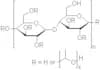
CAS 9004-64-2
:Cellulose, 2-Hydroxypropylether
Beschreibung:
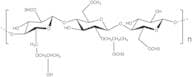
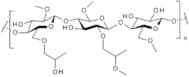
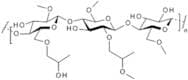
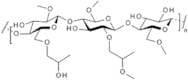
Cellulose, 2-Hydroxypropylether, allgemein bekannt als Hydroxypropylcellulose (HPC), ist ein nichtionisches, wasserlösliches Derivat der Cellulose. Es wird durch die Etherifizierung von Cellulose mit Propylenoxid hergestellt, was zur Einführung von Hydroxypropylgruppen in die Cellulose-Struktur führt. Diese Modifikation verbessert die Löslichkeit in Wasser und organischen Lösungsmitteln, was es in verschiedenen Anwendungen nützlich macht. HPC zeichnet sich durch seine Fähigkeit aus, klare, viskose Lösungen zu bilden, was es wertvoll als Verdickungsmittel, Film bildendes Mittel und Stabilisator in pharmazeutischen, kosmetischen und Lebensmittelprodukten macht. Es ist auch bekannt für seine Biokompatibilität und geringe Toxizität, was seine Anwendbarkeit in biomedizinischen Bereichen weiter erweitert. Darüber hinaus weist Hydroxypropylcellulose thermoplastische Eigenschaften auf, die es ermöglichen, sie in verschiedenen Formen zu verarbeiten. Ihre chemische Stabilität und Widerstandsfähigkeit gegen Abbau unter normalen Bedingungen tragen zu ihrer Langlebigkeit in Formulierungen bei. Insgesamt ist HPC ein vielseitiges Polymer mit erheblichem Nutzen in mehreren Branchen aufgrund seiner einzigartigen Eigenschaften.
Formel:C3H7O
InChl:InChI=1/C36H70O19/c1-19(37)9-45-17-27-29(47-11-21(3)39)31(48-12-22(4)40)34(51-15-25(7)43)36(54-27)55-30-28(18-46-10-20(2)38)53-35(52-16-26(8)44)33(50-14-24(6)42)32(30)49-13-23(5)41/h19-44H,9-18H2,1-8H3/t19?,20?,21?,22?,23?,24?,25?,26?,27?,28?,29?,30-,31?,32?,33?,34?,35?,36+/m1/s1
Synonyme:- AeroWhip
- HPC
- Hpc-E
- Hpc-Ef
- Hpc-Ef-G
- Hpc-H
- Hpc-Hf
- Hpc-L
- Hpc-L-Fp
- Hpc-Le-G
- Hpc-Lg
- Hpc-Ll
- Hpc-Lr
- Hpc-M
- Hpc-Mf
- Hpc-Mg
- Hpc-S
- Hpc-Sfp
- Hpc-Sl
- Hpc-Ssl
- Hpc-Ssl-Sfp
- Hydroxypropylcellulose
- Hyprolose
- Klucel
- L-Hpc
- Lacrisert
- Leogard
- O-(2-Hydroxypropyl)cellulose
- O-(Hydroxypropyl)cellulose
- Hydroxypropyl cellulose
- Cellulose hydroxypropyl ether
- Oxypropylated cellulose
- Hydroxypropyl ether of cellulose
- 1-[(5R)-3,4-bis(2-hydroxypropoxy)-6-(2-hydroxypropoxymethyl)-5-[(2S)-3,4,5-tris(2-hydroxypropoxy)-6-(2-hydroxypropoxymethyl)tetrahydropyran-2-yl]oxy-tetrahydropyran-2-yl]oxypropan-2-ol
- Hydroxypropyl cellulose, Average M.W. 100.000
- Cellulose, 2-hydroxypropyl ether
- Hydroxypropyl Cellulose (6-10mPa.s, 2% in Water at 20deg C)
- (HYDROXYPROPYL)CELLULOSE STANDARD 15'000
- HYDROXYPROPYLCELLULOSE,150-400CPS,NF
- Hydroxypropyl cellulose USP
- HYDROXYPROPYL CELLULOSE LOW-SUBSTITUTED
- syntheticvegetablegums
- low substituted hydroxypropyl cellulose(LH21)
- Hydroxypropyl Cellulose (500 mg)
- HYDROXYPROPYL CELLULOSE 6-10.0
- HYDROXYPROPYL CELLULOSE, 1000-4000 MPAS
- Hydroxypropyl Cellulose (1,000-4,000mPa.s, 2% in Water at 20deg C)
- cellulosehydroxypropylether
- HYDROXYPROPYL CELLULOSE, 150-400 MPAS
- HYDROXYPROPYL CELLULOSE, M.W. 1,000,000
- HYDROXYPROPYL CELLULOSE, AVERAGE MW. CA. 80,000
- hydroxypropyletherofcellulose
- Hydroxypropyl cellulose average Mw ~80,000, average Mn ~10,000, powder, 20 Mesh particle size (99% through)
- Hydroxypropyl Cellulose (200 mg)
- HPC, hydroxypropyl cellulose
- pm50(polymer)
- HYDROXYPROPYL CELLULOSE, 3-6CPS
- (HYDROXYPROPYL)CELLULOSE STANDARD 50'000
- HYDROXYPROPYL CELLULOSE, 3-6CPS: (2% IN WATER AT 20C)
- oxypropylatedcellulose
- HYDROXYPROPYLCELLULOSE,4,000-6,500CPS,NF
- HYDROXYPROPYL CELLULOSE, M.W. 370,000
- HYDROXYPROPYL CELLULOSE 2-2.9
- synthetic
- Hydroxypropyl cellulose, Average M.W. 100.000 250GR
- HYDROXYPROPYLCELLULOSE,75-100CPS,NF
- (HYDROXYPROPYL)CELLULOSE STANDARD 35'000
- HYDROXYPROPYL CELLULOSE, 6-10 MPAS
- Hydroxypropyl Cellulose (3-6mPa.s, 2% in Water at 20deg C)
- HYDROXYPROPYLCELLULOSE, M.W.60,000
- (HYDROXYPROPYL)CELLULOSE STANDARD 25'000
- (2% IN WATER AT 20)
- (HYDROXYPROPYL)CELLULOSE STANDARD 30'000
- Hydroxypropyl cellulose, Average M.W. 100.000 100GR
- Hydroxypropyl cellulose average Mw ~370,000, powder, 20 Mesh particle size (99% through)
- 2-Hydroxypropyl cellulose
- (HYDROXYPROPYL)CELLULOSE STANDARD 10'000
- Hydroxypropyl cellulose average Mw ~100,000, powder, 20 Mesh particle size (99% through)
- pm50
- L-Hydroxypropylcellulose
- HYDROXYPROPYL CELLULOSE, M.W. 100,000
- Hydroxypropyl Cellulose (150-400mPa.s, 2% in Water at 20deg C)
- Low-Substituted Hydroxypropyl cellulose
- Hydroxypropyl cellulose average Mw ~1,000,000, powder, 20 mesh particle size (99% through)
- (HYDROXYPROPYL)CELLULOSE STANDARD 20'000
- Ve(VitaminEAcetateOil
- hydroxypropyl
- HYDROXYPROPYL CELLULOSE 3-5.9
- HYDROXYPROPYL CELLULOSE, 3-5.9 MPAS
- Weitere Synonyme anzeigen
Sortieren nach
Reinheit (%)
0
100
|
0
|
50
|
90
|
95
|
100
Low-Substituted hydroxypropylcellulose
CAS:LH 21 is a low-substituted hydroxypropylcellulose. It is produced by the fluorination of cellulose, followed by substitution with a variety of monosaccharides and oligosaccharides to produce a complex carbohydrate. LH 21 is synthesized for custom needs, glycosylated, methylated, and modified at the sugar level with click chemistry. It has a CAS No. 9004-64-2 and is Carbohydrate in nature. LH 21 has high purity and can be used in many applications including as an excipient or additive in pharmaceutical formulations.Reinheit:Min. 95%Farbe und Form:PowderHydroxypropyl cellulose - Average MW 200,000
CAS:<p>In water, hydroxypropyl cellulose forms liquid crystals with many mesophases depending on concentration. These mesophases include isotropic, anisotropic, nematic and cholesteric, the latter resulting in many colors such as violet, green and red. Pharmaceutical applications include treatments for medical conditions such as dry eye syndrome (keratoconjunctivitis sicca), recurrent corneal erosions, decreased corneal sensitivity, exposure and neuroparalytic keratitis. It is also used as a binder in tablets. Hydroxypropylcellulose is also used as a thickener, a binder and emulsion stabiliser in foods with E number E463. HPC is used as a support matrix for DNA separations by capillary and microchip electrophoresis.</p>Farbe und Form:PowderHydroxypropyl cellulose - Average MW 1,000,000
CAS:<p>Binder in tablets; food additive; has several pharmaceutical applications</p>Reinheit:Min. 95%Hydroxypropyl cellulose - Average MW 100,000
CAS:In water, hydroxypropyl cellulose forms liquid crystals with many mesophases depending on concentration. These mesophases include isotropic, anisotropic, nematic and cholesteric, the latter resulting in many colors such as violet, green and red. Pharmaceutical applications include treatments for medical conditions such as dry eye syndrome (keratoconjunctivitis sicca), recurrent corneal erosions, decreased corneal sensitivity, exposure and neuroparalytic keratitis. It is also used as a binder in tablets. Hydroxypropylcellulose is also used as a thickener, a binder and emulsion stabiliser in foods with E number E463. HPC is used as a support matrix for DNA separations by capillary and microchip electrophoresis.Reinheit:Min. 95%Hydroxypropyl cellulose - Average MW 150,000
CAS:<p>In water, hydroxypropyl cellulose forms liquid crystals with many mesophases depending on concentration. These mesophases include isotropic, anisotropic, nematic and cholesteric, the latter resulting in many colors such as violet, green and red. Pharmaceutical applications include treatments for medical conditions such as dry eye syndrome (keratoconjunctivitis sicca), recurrent corneal erosions, decreased corneal sensitivity, exposure and neuroparalytic keratitis. It is also used as a binder in tablets. Hydroxypropylcellulose is also used as a thickener, a binder and emulsion stabiliser in foods with E number E463. HPC is used as a support matrix for DNA separations by capillary and microchip electrophoresis.</p>Ref: 3D-YH158877
Ausgelaufenes produkt