CAS 9057-02-7
:Pullulan
Beschreibung:
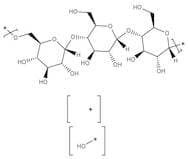
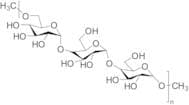
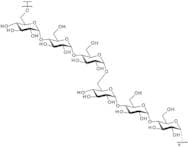
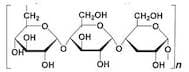
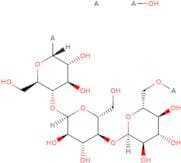
Pullulan ist ein Polysaccharidpolymer, das aus Maltotriose-Einheiten besteht, die durch α-1,6-glykosidische Bindungen verbunden sind. Es wird durch die Fermentation von Stärke durch den Pilz Aureobasidium Pullulans produziert. Pullulan zeichnet sich durch seine Wasserlöslichkeit, seine Fähigkeit zur Filmformung und seine Biodegradierbarkeit aus, was es zu einer vielseitigen Substanz in verschiedenen Anwendungen macht. Es erscheint als ein weißes bis gelbliches Pulver und ist bekannt für seine niedrige Viskosität in Lösung, die eine einfache Verarbeitung ermöglicht. Pullulan zeigt hervorragende Filmformungseigenschaften, was zu seiner Verwendung in der Lebensmittelverpackung, in der Pharmazie und in der Kosmetik führt, wo es als Beschichtungs- oder Kapselungsmittel dienen kann. Darüber hinaus wurde es auf seine potenziellen gesundheitlichen Vorteile untersucht, einschließlich seiner Rolle als Präbiotikum und seiner Fähigkeit, essbare Filme zu bilden, die die Lebensmittelkonservierung verbessern können. Seine ungiftige Natur und die Verträglichkeit mit anderen Substanzen tragen weiter zu seiner Attraktivität in industriellen und Verbrauchermärkten bei. Insgesamt wird Pullulan für seine funktionalen Eigenschaften und Nachhaltigkeit in verschiedenen Anwendungen geschätzt.
Formel:Unspecified
Synonyme:- Inagel V 140
- NPcaps
- P 10
- P 10 (carbohydrate)
- P 100
- P 100 (carbohydrate)
- P 20
- P 20 (carbohydrate)
- P 200
- P 200 (carbohydrate)
- P 400
- P 400 (carbohydrate)
- P 50
- P 50 (carbohydrate)
- P 800
- P 800 (carbohydrate)
- PF 10 (carbohydrate)
- PF 20 (carbohydrate)
- PF 30 (carbohydrate)
- PF 7 (carbohydrate)
- Pf 10
- Pf 20
- Pf 30
- Pf 7
- Pi 10
- Pi 20
- Plantcaps
- Plantcaps 2
- Pluran T 1600
- Pu 101
- Pullulan PF 10
- Pullulan PF 20
- Pullulane
- Pululano
- Px 1
- Pullulan standard 1600000
- Pullulan standard 5800
- Pullulan standard 186000
- Pullulan standard 24000
- Pullulan
- Pullulan standard 12000
- Pullulan
- Pullulan standard 48000
- Pululan
- Pullulan standard 100000
- Weitere Synonyme anzeigen
Sortieren nach
Reinheit (%)
0
100
|
0
|
50
|
90
|
95
|
100
14 Produkte gefunden.
Pullulan
CAS:This Thermo Scientific Chemicals brand product was originally part of the Alfa Aesar product portfolio. Some documentation and label information may refer to the legacy brand. The original Alfa Aesar product / item code or SKU reference has not changed as a part of the brand transition to Thermo SciFormel:(C18H30O15)AHOFarbe und Form:White to off white crystalline powderMolekulargewicht:NaNPullulan for Molar Mass Determination (800 kda)
CAS:Natural polymers & modified natural polymers, in primary forms, nesoiFormel:H(C36H60O30)nOHFarbe und Form:White PowderPullulan for Molar Mass Determination (400 kDa)
CAS:Natural polymers & modified natural polymers, in primary forms, nesoiFormel:H(C36H60O30)nOHFarbe und Form:White PowderPullulan for Molar Mass Determination (100 kDa)
CAS:Natural polymers & modified natural polymers, in primary forms, nesoiFormel:H(C36H60O30)nOHFarbe und Form:White PowderRef: IN-DA0035JJ
10g24,00€25g28,00€50g41,00€100g50,00€75g53,00€200g73,00€300g105,00€400g111,00€500g113,00€Pullulan
CAS:Pullulan is a glucan elaborated by the fungus Aureobasidium pullulans. The chemical structure is essentially repeating units of maltotriose joined by α-1,6 linkages. Pullulan dissolves readily in water to form stable, viscous solutions that do not gel. The polysaccharide can be moulded, made into fibres and forms clear soluble films. Applications are in foods as a low calorie ingredient and the polysaccharide forms water soluble films that have been used as seed coatings and to coat fruit. Pullulan can also be used in industrial applications as a binder, film former and in pharmaceutical applications. Average MW is typically 100-200kDa. Viscosity is ca 120 mm2/s. The image was kindly provided by Dr. Chris Lawson.Farbe und Form:White PowderPullulan
CAS:Pullulan is a polysaccharide that is made up of D-glucose units linked in a beta-1,6 configuration. Pullulan has been used as a model system to study the molecular mechanisms of intramolecular hydrogen transfer reactions. The process optimization of pullulan production was studied using skin cells and structural analysis. This polymer is also used in food hydrocolloids, where it can be used to control the phase transition temperature. Pullulan has also been shown to have anti-angiogenic effects on liver cells and water vapor absorption properties.
Formel:(C6H12O5)n