CAS 91-15-6
:Phthalonitril
Beschreibung:
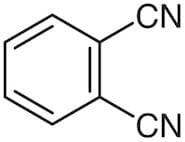
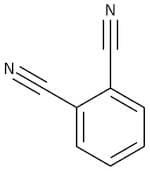
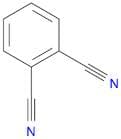
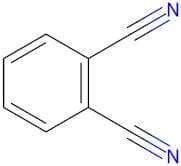
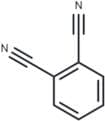
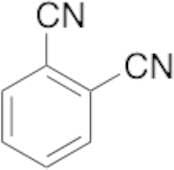
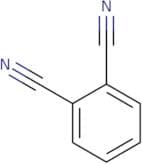
Phthalonitril, mit der CAS-Nummer 91-15-6, ist eine organische Verbindung, die durch ihre Struktur gekennzeichnet ist, die ein Derivat der Phthalsäure mit zwei Cyanogruppen (-C≡N) auf dem aromatischen Ring aufweist. Sie erscheint als kristalliner Feststoff von weiß bis hellgelb und ist bekannt für ihren hohen Schmelzpunkt und ihre geringe Löslichkeit in Wasser, was sie in organischen Lösungsmitteln wie Aceton und Ethanol besser löslich macht. Phthalonitril wird hauptsächlich in der Synthese verschiedener Polymere verwendet, insbesondere in der Herstellung von Phthalocyaninfarbstoffen und -pigmenten, die für ihre Stabilität und lebendigen Farben geschätzt werden. Darüber hinaus dient es als Zwischenprodukt in der Herstellung von Arzneimitteln und Agrochemikalien. Die Verbindung ist auch bemerkenswert für ihre potenziellen Anwendungen in elektronischen Materialien und als Vorläufer anderer stickstoffhaltiger Verbindungen. Aufgrund ihrer chemischen Struktur weist Phthalonitril Eigenschaften wie thermische Stabilität und Oxidationsbeständigkeit auf, was sie für Hochleistungsanwendungen geeignet macht. Sie sollte jedoch mit Vorsicht behandelt werden, da sie potenziell toxisch ist und Auswirkungen auf die Umwelt haben kann.
Formel:C8H4N2
InChl:InChI=1S/C8H4N2/c9-5-7-3-1-2-4-8(7)6-10/h1-4H
InChI Key:InChIKey=XQZYPMVTSDWCCE-UHFFFAOYSA-N
SMILES:C(#N)C1=C(C#N)C=CC=C1
Synonyme:- 1,2-Benzenedicarbonitrile
- 1,2-Benzodinitrile
- 1,2-Bis(cyano)benzene
- 2-Phthalodinitrile
- Benzene-1,2-dicarbonitrile
- Ftalonitrilo
- Nsc 17562
- O-Phthalonitrile
- Phtalonitrile
- Phthalodinitrile
- Phthalonitril
- Phthalonitrile
- o-Benzenedicarbonitrile
- o-Benzenedinitrile
- o-Benzodinitrile
- o-Cyanobenzonitrile
- o-Dicyanobenzene
- Weitere Synonyme anzeigen
Sortieren nach
Reinheit (%)
0
100
|
0
|
50
|
90
|
95
|
100
9 Produkte.
Phthalonitrile
CAS:Formel:C8H4N2Reinheit:>99.0%(GC)Farbe und Form:White to Almost white powder to crystalMolekulargewicht:128.13Phthalonitrile, 98%
CAS:Phthalonitrile is used as an intermediate for chemical synthesis in the production of building blocks for colorants and coatings, life science and agricultural chemicals. And also used as a precursor to phthalocyanine and other pigments, fluorescent brighteners, and photographic sensitizers. This TFormel:C8H4N2Reinheit:98%Farbe und Form:White or pale cream to pale brown, Powder or flakesMolekulargewicht:128.13Phthalonitrile
CAS:Phthalonitrile is an aromatic dinitrile compound widely used in the synthesis of phthalocyanine dyes and high-performance polymers
Formel:C8H4N2Reinheit:98.00%Farbe und Form:SolidMolekulargewicht:128.131,2-Dicyanobenzene
CAS:Kontrolliertes ProduktApplications Phthalodinitrile monomers can be polymerized thermally in the presence of small amounts of curing agents into thermosetting polymers. Phthalodinitrile is a precursor to phthalocyanine which is used as a dye or pigment.
References Sastri, S. B. and Keller, T. M.: J. Polym. Sci. A Polym. Chem., 36, 1885-1890(1998), Löbbert, G. Phthalocyanines. In Ullmann's Encyclopedia of Industrial Chemistry, (Ed.)., (2000).Formel:C8H4N2Farbe und Form:NeatMolekulargewicht:128.131Phthalonitrile
CAS:Phthalonitrile is a white crystalline solid that is soluble in water and polar organic solvents. The molecular weight of phthalonitrile is 104.11 g/mol. It has the chemical structure CH(CO)NH. Phthalonitrile is an organic compound with a hydroxyl group and a phenoxy group. This compound can be found in the form of its sodium salts, which are typically white solids that are soluble in water and polar organic solvents. The anhydrous salt is formed by heating the hydrate with phosphorus pentoxide at 250°C for 1 hour or by treating the hydrate with ammonia or ammonium chloride at 180°C for 2 hours.Formel:C8H4N2Reinheit:Min. 95%Farbe und Form:PowderMolekulargewicht:128.13 g/mol