CAS 91-58-7
:2-Chlornaphthalin
Beschreibung:
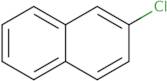
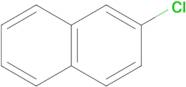
2-Chlornaphthalin ist eine aromatische organische Verbindung, die durch einen Naphthalenring gekennzeichnet ist, der an der zweiten Position mit einem Chloratom substituiert ist. Es hat eine chemische Formel von C10H7Cl und ein Molekulargewicht von etwa 164,62 g/mol. Diese Verbindung erscheint als farbloses bis blassgelbes Flüssigkeit mit einem charakteristischen aromatischen Geruch. Es ist relativ unlöslich in Wasser, aber löslich in organischen Lösungsmitteln wie Ethanol und Ether. 2-Chlornaphthalin wird hauptsächlich als Zwischenprodukt in der Synthese verschiedener Chemikalien, einschließlich Farbstoffen, Pestiziden und Arzneimitteln, verwendet. Es zeigt eine moderate Toxizität und kann bei Exposition Haut-, Augen- und Atemwegsreizungen verursachen. Darüber hinaus hat es einen Siedepunkt von etwa 218°C und einen Schmelzpunkt von etwa 5°C, was seinen flüssigen Zustand bei Raumtemperatur anzeigt. Aufgrund seiner chemischen Struktur kann es an elektrophilen Substitutionsreaktionen teilnehmen, was es zu einer wertvollen Verbindung in der organischen Synthese macht. Ein ordnungsgemäßer Umgang und Sicherheitsvorkehrungen sind beim Arbeiten mit dieser Substanz unerlässlich, um Gesundheitsrisiken zu mindern.
Formel:C10H7Cl
InChl:InChI=1S/C10H7Cl/c11-10-6-5-8-3-1-2-4-9(8)7-10/h1-7H
InChI Key:InChIKey=CGYGETOMCSJHJU-UHFFFAOYSA-N
SMILES:ClC1=CC2=C(C=C1)C=CC=C2
Synonyme:- 2-Chloro naphthalene
- Chloronaphthalene, beta
- Naphthalene, 2-chloro-
- Pcn 2
- beta-Chloronaphthalene
- β-Chloronaphthalene
- 2-Chloronaphthalene
Sortieren nach
Reinheit (%)
0
100
|
0
|
50
|
90
|
95
|
100
2-Chloronaphthalene
CAS:Kontrolliertes Produkt2-Chloronaphthalene is a polychlorinated naphthalene that has been shown to be an effective inducer of p450 activity, which is a cytochrome P450 enzyme. 2-Chloronaphthalene is also a structural analog of the polychlorinated biphenyls (PCBs), and has been shown to have similar toxic effects on the liver. 2-Chloronaphthalene is used as an intermediate in organic synthesis and as a precursor for other compounds. It can be used to synthesize malonic acid, which can be reacted with sodium hydroxide or carbon disulfide to produce polymeric matrices such as polyvinyl chloride.
Formel:C10H7ClReinheit:Min. 95%Farbe und Form:Colourless Or White To Pink SolidMolekulargewicht:162.62 g/mol2-Chloronaphthalene
CAS:Kontrolliertes ProduktFormel:C10H7ClReinheit:95%Farbe und Form:SolidMolekulargewicht:162.62