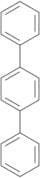
CAS 92-94-4
:p-Terphenyl
Beschreibung:
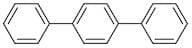
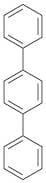
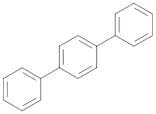
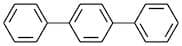
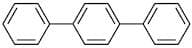
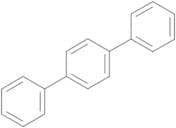
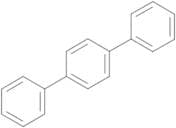
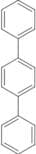
p-Terphenyl, mit der CAS-Nummer 92-94-4, ist eine organische Verbindung, die durch ihre Struktur gekennzeichnet ist, die aus drei verbundenen Phenylringen (C6H5) besteht, die linear angeordnet sind. Dieses aromatische Kohlenwasserstoff ist bei Raumtemperatur ein farbloser kristalliner Feststoff und ist bekannt für seinen hohen Schmelzpunkt und seine Stabilität unter verschiedenen Bedingungen. p-Terphenyl ist in Wasser unlöslich, aber in organischen Lösungsmitteln wie Benzol und Toluol löslich. Es zeigt eine bemerkenswerte thermische Stabilität und wird häufig als Wärmeübertragungsmedium in Hochtemperaturanwendungen verwendet. Darüber hinaus hat p-Terphenyl Anwendungen im Bereich der organischen Elektronik, insbesondere bei der Entwicklung von phosphoreszierenden Materialien und als Bestandteil in Szintillationsdetektoren aufgrund seiner Fähigkeit, Licht auszusenden, wenn es angeregt wird. Zu seinen chemischen Eigenschaften gehört die Fähigkeit, elektrophile Substitutionsreaktionen durchzuführen, die für aromatische Verbindungen typisch sind, was es zu einer vielseitigen Verbindung in der synthetischen organischen Chemie macht. Insgesamt ist p-Terphenyl sowohl in industriellen Anwendungen als auch in Forschungseinrichtungen von Bedeutung.
Formel:C18H14
InChl:InChI=1/C18H14/c1-3-7-15(8-4-1)17-11-13-18(14-12-17)16-9-5-2-6-10-16/h1-14H
InChI Key:InChIKey=XJKSTNDFUHDPQJ-UHFFFAOYSA-N
SMILES:C1(=CC=C(C=C1)C2=CC=CC=C2)C3=CC=CC=C3
Synonyme:- 1,1'-Biphenyl, 4-phenyl-
- 1,1′:4′,1′′-Terphenyl
- 1,4-Diphenylbenzene
- 1,4-Diphenylbenzol
- 4-Phenyl-1,1'-biphenyl
- 4-Phenylbiphenyl
- Nsc 6810
- P-Terfenilo
- P-Terphenyl
- PT
- PTP
- Santowax P
- T 3203
- TP
- TP (scintillator)
- p-Diphenylbenzene
- p-Phenylene trimer
- p-Terphenyle
- p-Triphenyl
- 1,1':4',1''-Terphenyl
- [1,1'
- biphenyl,4-phenyl
- diphenyl-1,4benzene
- 4-phenyl-1’-biphenyl
- Biphenyl, 4-phenyl-
- benzene,1,4-diphenyl-
- 4',1'']-Terphenyl
- para-terphenyl
- TERPHENYL, P-
- 4-Phenyldiphenyl
- 4-phenyl-bipheny
- Weitere Synonyme anzeigen
Sortieren nach
Reinheit (%)
0
100
|
0
|
50
|
90
|
95
|
100
12 Produkte.
p-Terphenyl
CAS:Formel:C18H14Reinheit:>99.0%(GC)Farbe und Form:White to Almost white powder to crystalMolekulargewicht:230.31p-Terphenyl, 99+%
CAS:p-Terphenyl is a specialty material, and may be used in ionized radiation detectors, nonpolar laser dye, and single molecule optical probe of scanning near-field microscopy. This Thermo Scientific Chemicals brand product was originally part of the Alfa Aesar product portfolio. Some documentation anFormel:C18H14Reinheit:99+%Farbe und Form:White, Crystals or powder or crystalline powderMolekulargewicht:230.31p-Terphenyl
CAS:p-Terphenyl is a triphenyl derivative used in industry as a heat transfer medium and dye carrier, and can be used for related research in the life sciences.Formel:C18H14Farbe und Form:SolidMolekulargewicht:230.3p-Terphenyl
CAS:Formel:C18H14Reinheit:≥ 98.5%Farbe und Form:White to off-white crystalline powderMolekulargewicht:230.31Ref: 54-OR46216
5g37,00€25g37,00€100g53,00€500g156,00€2.5kg615,00€10kg2.194,00€25kg5.027,00€50kg9.356,00€100kg17.322,00€950kg139.836,00€p-Terphenyl (purified by sublimation)
CAS:Formel:C18H14Reinheit:>99.5%(GC)Farbe und Form:White powder to crystalMolekulargewicht:230.31p-Terphenyl
CAS:Kontrolliertes ProduktApplications p-Terphenyl is used in analytical studies, it can be used as a neutron detector.
Not a dangerous good if item is equal to or less than 1g/ml and there is less than 100g/ml in the package
References Matei, C. et al.: Nucl. Instrum. Meth. A., 676, 135 (2012);Formel:C18H14Farbe und Form:WhiteMolekulargewicht:230.31,4-Diphenylbenzene
CAS:1,4-Diphenylbenzene is an aromatic hydrocarbon that has a phenyl group and four benzene rings. It has been shown to have x-ray crystal structures with hydroxyl groups that can be deprotonated to form anion radicals. 1,4-Diphenylbenzene has also been shown to have antioxidant properties in prostate cancer cells by scavenging anion radicals and preventing the oxidation of DNA bases. It also inhibits the growth of rat liver microsomes due to its chemical stability and ability to form conjugates with benzalkonium chloride. The synthesis methods for 1,4-diphenylbenzene include the acetate extract method, which uses acetone as a solvent and sodium or potassium acetate as a catalyst. Another method includes the etoac extract method, which uses ethanol as a solvent and sodium or potassium acetate as a catalyst.Formel:C18H14Reinheit:Min. 95%Farbe und Form:White Off-White PowderMolekulargewicht:230.3 g/mol