CAS 922-67-8
:Methylpropiolat
Beschreibung:
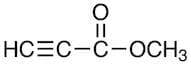
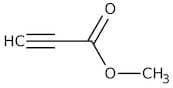
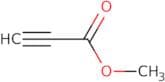
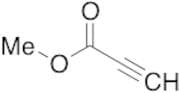
Methylpropiolat ist eine organische Verbindung mit der chemischen Formel C4H6O2, die als Ester klassifiziert wird. Sie zeichnet sich durch einen charakteristischen fruchtigen Geruch aus und ist typischerweise eine farblose Flüssigkeit bei Raumtemperatur. Die Verbindung weist eine Propionsäuregruppe auf, bei der die Carbonsäuregruppe mit Methanol verestert ist. Methylpropiolat ist bekannt für seine Reaktivität, insbesondere bei verschiedenen chemischen Reaktionen wie nucleophilen Additionen und Polymerisationen, was es nützlich in der organischen Synthese und als Zwischenprodukt in der Herstellung anderer Chemikalien macht. Es hat einen relativ niedrigen Siedepunkt und ist in organischen Lösungsmitteln löslich, aber weniger in Wasser. Aufgrund seiner Reaktivität sollte es mit Vorsicht behandelt werden, da es ein Haut- und Atemwegsreizstoff sein kann. Darüber hinaus ist es wichtig zu beachten, dass Methylpropiolat Umweltgefahren darstellen kann, was eine ordnungsgemäße Entsorgung und Sicherheitsmaßnahmen während der Handhabung erfordert. Insgesamt machen seine einzigartigen Eigenschaften es zu einer wertvollen Verbindung im Bereich der organischen Chemie.
Formel:C4H4O2
InChl:InChI=1S/C4H4O2/c1-3-4(5)6-2/h1H,2H3
InChI Key:InChIKey=IMAKHNTVDGLIRY-UHFFFAOYSA-N
SMILES:C(C#C)(OC)=O
Synonyme:- (Carbomethoxy)acetylene
- (Methoxycarbonyl)acetylene
- Methyl 2-propynoate
- Methyl Propiolate
- Methyl acetylenecarboxylate
- Methyl acetylenemonocarboxylate
- Methyl ethynecarboxylate
- Methyl propargylate
- Methyl propynoate
- Methylpropiolat
- Nsc 154164
- Propiolate De Methyle
- Propiolato De Metilo
- Propiolic acid, methyl ester
- Propynoic acid methyl ester
- Methyl propiolate,(Propiolic acid methyl ester)
- Methypropiolate
- methyl prop-2-ynoate
- Weitere Synonyme anzeigen
Sortieren nach
Reinheit (%)
0
100
|
0
|
50
|
90
|
95
|
100
9 Produkte.
Methyl Propiolate
CAS:Formel:C4H4O2Reinheit:>98.0%(GC)Farbe und Form:Colorless to Yellow clear liquidMolekulargewicht:84.07Methyl propiolate, 99%
CAS:Methyl propiolate was used in the synthesis of polysubstituted 3-arylaminoacrylate and tetrahydropyrimidin-2-one derivatives. It was also used as a thiol derivatizing agent for capillary electrophoresis. This Thermo Scientific Chemicals brand product was originally part of the Alfa Aesar product porFormel:C4H4O2Reinheit:99%Farbe und Form:Clear colorless to pale yellow, LiquidMolekulargewicht:84.07Methyl propiolate
CAS:Formel:HCCCO2CH3Reinheit:≥ 97.0%Farbe und Form:Clear, colourless liquidMolekulargewicht:84.07Methyl prop-2-ynoate
CAS:Methyl prop-2-ynoateFormel:C4H4O2Reinheit:≥95%Farbe und Form: clear. almost colourless liquidMolekulargewicht:84.07336g/molMethyl propiolate
CAS:Methyl propiolate is a pharmacological agent that is an enzyme inhibitor. It has been shown to inhibit the reaction mechanism of trifluoroacetic acid (TFA) and phosphoric acid, which are used in the synthesis of pharmaceuticals and agrochemicals. Methyl propiolate also inhibits papillary muscle contractions and prevents the development of kidney fibrosis. This drug has been shown to have anticancer and antimicrobial effects, as well as being useful for treating infectious diseases such as tuberculosis. Methyl propiolate binds to the pyrazole ring of bacterial enzymes, preventing them from binding to their substrates or altering their shape, thus inhibiting their catalytic activity. The nitrogen atoms on methyl propiolate coordinate with zinc ions in the active site of bacterial DNA gyrase, forming a covalent bond that blocks access by ATP. Methyl propiolate also binds to bacterial 16S ribosomal RNA and inhibits protein synthesis, leading to cellFormel:C4H4O2Reinheit:Min. 95%Farbe und Form:Colorless Clear LiquidMolekulargewicht:84.07 g/molMethyl Propiolate
CAS:Kontrolliertes ProduktApplications Methyl Propiolate is used as a reagent in the synthesis of a novel class of salicylic acid derivatives for inhibiting the protein tyrosine phosphatase YopH from Yersinia pestis.
Not a dangerous good if item is equal to or less than 1g/ml and there is less than 100g/ml in the package
References Paudyal, M.P., et al.: Bioorg. Med. Chem., 22, 6781 (2014)Formel:C4H4O2Farbe und Form:NeatMolekulargewicht:84.07