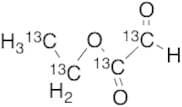
CAS 924-44-7
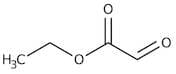
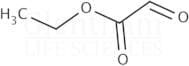
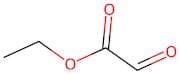
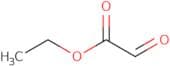
:Ethylglyoxylat
- Acetic acid, 2-oxo-, ethyl ester
- Acetic acid, oxo-, ethyl ester
- Ethyl 2-Oxoacetate
- Ethyl glyoxylate
- Ethyl oxoacetate
- Ethylglyoxylat
- Formyl ethoxy ketone
- Glioxilato De Etilo
- Glyoxalic acid ethyl ester
- Glyoxylate d'ethyle
- Glyoxylic acid ethyl ester
- Glyoxylsaureethylester
- Nsc 49206
- Weitere Synonyme anzeigen
Ethyl Glyoxylate Polymer form (47% in Toluene)
CAS:Formel:(CH3CH2OCOCHO)nFarbe und Form:Colorless to Almost colorlessclear liquidEthyl glyoxylate, ca 50% soln. in toluene
CAS:Ethyl glyoxylate is widely used as an intermediate in the synthesis of pharmaceuticals (high reactivity of aldehyde function). It is used in the synthesis of a biodegradable polymer, poly(ethyl glyoxylate). It is actively involved in the Friedel-Crafts alkylation reactions with thiophenes to give th
Formel:C4H6O3Farbe und Form:Solution, Clear colorless to pale yellowMolekulargewicht:102.09Ethyl glyoxylate, 50% solution in toluene
CAS:Formel:OHCCO2CH2CH3Reinheit:≥ 97.0%Farbe und Form:Colourless to pale yellow liquidMolekulargewicht:102.09Ethyl oxoacetate, 50% solution in toluene
CAS:Ethyl oxoacetate, 50% solution in tolueneFormel:C4H6O3Reinheit:techFarbe und Form: clear. almost colourless liquidMolekulargewicht:102.08864g/molEthyl 2-oxoacetate in 50% Toluene (polymerised)
CAS:Formel:C4H6O3Reinheit:97.0%Farbe und Form:Liquid, OilMolekulargewicht:102.089Ethyl glyoxalate - 50% in toluene
CAS:Ethyl glyoxalate is a fatty acid that has a hydroxyl group on the second carbon. It is used in palladium-catalyzed coupling reactions to form covalent linkages. This compound has been shown to be an effective antimicrobial agent against amine and ester hydrochloride, as well as being active against several bacteria strains. The asymmetric synthesis of this compound is achieved by reacting diethyl ketomalonate with acetaldehyde in the presence of catalytic quantities of palladium, which leads to formation of two different enantiomers. The reaction mechanism has been elucidated, revealing that the reaction proceeds via a carbonyl addition followed by nucleophilic attack on the ketone oxygen atom. Structural analysis demonstrates that the product formed can be either syn or anti depending on the orientation of reactants during reaction.
Formel:C4H6O3Reinheit:Min. 95%Farbe und Form:Colorless Clear LiquidMolekulargewicht:102.09 g/molEthyl Glyoxylate (>50% in Toluene)
CAS:Kontrolliertes ProduktFormel:C4H6O3Farbe und Form:Single SolutionMolekulargewicht:102.09Ethyl Glyoxylate-13C4
CAS:Kontrolliertes ProduktApplications Ethyl Glyoxylate-13C4 is an isotope labelled analog of Ethyl Glyoxylate. Ethyl Glyoxylate is used as a reagent in the synthesis of a new class of cinnamyl-triazole compounds which can be used as selective inhibitors of human aromatase (cytochrome P 450 19A1).
References McNulty, J., et al.: Bioorg. Med. Chem. Lett., 24, 4586 (2014)Formel:C4H6O3Farbe und Form:NeatMolekulargewicht:106.059