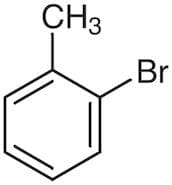
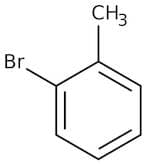
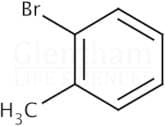
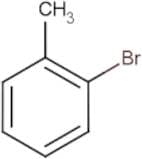
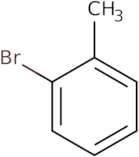
CAS 95-46-5
:2-Bromtoluol
- 1-Bromo-2-methylbenzene
- 2-Bromo-1-methylbenzene
- 2-Bromotolueno
- 2-Bromtoluol
- 2-Methyl-1-bromobenzene
- 2-Methylbromobenzene
- 2-Methylphenyl bromide
- 2-Tolyl bromide
- Benzene, 1-bromo-2-methyl-
- Nsc 6532
- Toluene, 2-Bromo-
- Toluene, o-bromo-
- o-Bromomethylbenzene
- o-Bromotoluene
- o-Methylbromobenzene
- o-Methylphenyl bromide
- Weitere Synonyme anzeigen
2-Bromotoluene
CAS:Formel:C7H7BrReinheit:>98.0%(GC)Farbe und Form:Colorless to Almost colorless clear liquidMolekulargewicht:171.042-Bromotoluene, 99%
CAS:2-Bromotoluene was used in the synthesis of ()-isocomene. Suzuki coupling of 2-bromotoluene with phenylboronic acid using palladium nanoparticles supported on alumina-based oxides as catalyst has been reported. 2-Bromotoluene is used in manufacturing pharmaceuticals (especially for nonsteroidal antFormel:C7H7BrReinheit:99%Farbe und Form:Clear colorless to pale yellow, LiquidMolekulargewicht:171.042-Bromotoluene
CAS:2-BromotolueneFormel:C7H7BrReinheit:98%Farbe und Form: clear. colourless liquidMolekulargewicht:171.03g/mol2-Bromotoluene pure, 98%
CAS:Formel:C7H7BrReinheit:min. 98%Farbe und Form:Clear, Colourless to pale yellow, LiquidMolekulargewicht:171.042-Bromotoluene
CAS:2-Bromotoluene is a molecule that consists of a benzene ring and two bromine atoms on opposite sides, with one carbon atom in the middle. It can be synthesized by reacting trifluoroacetic acid with palladium complexes. 2-Bromotoluene has been used for the industrial preparation of halides and as a precursor to diazonium salts. The molecule has been detected by magnetic resonance spectroscopy in rat liver microsomes, where it binds to cytochrome P450, causing an increase in the rate of reaction between substrate and enzyme. 2-Bromotoluene can be prepared by the reaction of sodium carbonate with an aryl halide, to form sodium bromide and 2-bromo-1-chlorobenzene. This process is known as the Kolbe electrolysis reaction, which uses electricity to separate the salt from the organic product.
Formel:C7H7BrReinheit:Min. 95%Farbe und Form:Colorless Clear LiquidMolekulargewicht:171.03 g/mol