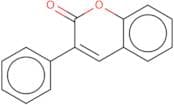
CAS 955-10-2
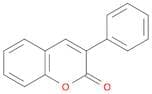
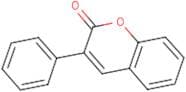
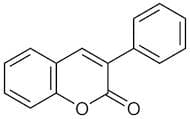
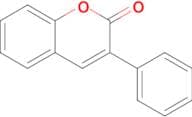
:3-Phenylcoumarin
Beschreibung:
3-Phenylcoumarin ist eine organische Verbindung, die zur Familie der Coumarine gehört und durch ihre verschmolzenen Benzol- und Chromonstrukturen gekennzeichnet ist. Sie erscheint typischerweise als kristalliner Feststoff von blassgelber bis weißer Farbe und ist bekannt für ihre aromatischen Eigenschaften. Die Verbindung hat eine molekulare Formel, die ihre Struktur widerspiegelt und sowohl phenylische als auch Coumarin-Moietäten enthält, die zu ihrem einzigartigen chemischen Verhalten beitragen. 3-Phenylcoumarin zeigt Fluoreszenz, was sie in verschiedenen Anwendungen von Interesse macht, einschließlich als fluoreszierende Sonde in biochemischen Studien. Sie ist auch bekannt für ihre potenziellen biologischen Aktivitäten, einschließlich antioxidativer und antimikrobieller Eigenschaften. Die Verbindung ist in organischen Lösungsmitteln löslich, hat jedoch eine begrenzte Löslichkeit in Wasser, was für viele Coumarinderivate typisch ist. Ihre Synthese umfasst oft die Kondensation von phenolischen Verbindungen mit geeigneten Carbonylquellen. Aufgrund ihrer strukturellen Merkmale kann 3-Phenylcoumarin an verschiedenen chemischen Reaktionen teilnehmen, was sie zu einer wertvollen Verbindung in der organischen Synthese und der medizinischen Chemie macht.
Formel:C15H10O2
InChl:InChI=1S/C15H10O2/c16-15-13(11-6-2-1-3-7-11)10-12-8-4-5-9-14(12)17-15/h1-10H
InChI Key:InChIKey=HWDSXZLYIKESML-UHFFFAOYSA-N
SMILES:O=C1C(=CC=2C(O1)=CC=CC2)C3=CC=CC=C3
Synonyme:- 2H-1-Benzopyran-2-one, 3-phenyl-
- 3-Phenyl-2-chromenone
- 3-Phenyl-2H-1-benzopyran-2-one
- 3-Phenyl-chromen-2-one
- 3-Phenylchromen-2-one
- 3-Phenylcoumarin
- 3-phenyl-2H-chromen-2-one
- Ai3-08084
- Coumarin, 3-phenyl-
- Nsc 14860
Sortieren nach
Reinheit (%)
0
100
|
0
|
50
|
90
|
95
|
100
5 Produkte.
3-Phenyl-2H-chromen-2-one
CAS:Formel:C15H10O2Reinheit:>98.0%(GC)Farbe und Form:White to Light yellow powder to crystalMolekulargewicht:222.243-Phenylcoumarin
CAS:<p>3-Phenylcoumarin is a naturally occurring compound that has been shown to have cytotoxic effects on cervical cancer cells. It is also a reactive and inflammatory agent, which can lead to the development of inflammatory diseases in humans. 3-Phenylcoumarin has been shown to inhibit the growth of cancer cells by inhibiting DNA synthesis and cell division, as well as by causing programmed cell death. This compound was found to be effective at an effective dose of 10µM in a rotarod test. The molecular modeling studies suggest that 3-phenylcoumarin binds to the active site of human liver microsomal cytochrome P450 enzymes and inhibits their activity. Viscosity has also been found to be an important factor for determining the solubility and stability of this compound.</p>Formel:C15H10O2Reinheit:Min. 95%Farbe und Form:PowderMolekulargewicht:222.24 g/mol