CAS 96-09-3
:Styroloxid
Beschreibung:
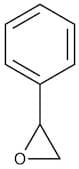
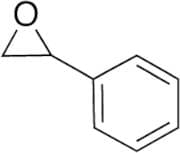
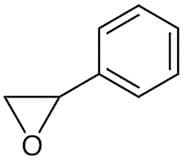
Styroloxid, mit der CAS-Nummer 96-09-3, ist eine organische Verbindung, die durch ihre Epoxidstruktur, die vom Styrol abgeleitet ist, gekennzeichnet ist. Sie erscheint als farblose Flüssigkeit mit einem süßen, aromatischen Geruch. Styroloxid ist bekannt für seine Reaktivität aufgrund des angespannten dreigliedrigen Epoxidrings, was es zu einem nützlichen Zwischenprodukt in der organischen Synthese macht. Es ist in organischen Lösungsmitteln löslich, hat jedoch eine begrenzte Löslichkeit in Wasser. Die Verbindung wird hauptsächlich in der Herstellung verschiedener Polymere und Harze verwendet, einschließlich Polystyrol und Styrol-Butadien-Gummi. Darüber hinaus kann Styroloxid verschiedenen chemischen Reaktionen unterzogen werden, wie z.B. Ringöffnungsreaktionen, die zur Bildung von Alkoholen, Aminen und anderen funktionellen Gruppen führen können. Es ist jedoch wichtig zu beachten, dass Styroloxid als gefährlich gilt, mit potenziellen gesundheitlichen Auswirkungen bei Exposition, einschließlich Reizungen der Haut, der Augen und des Atmungssystems sowie potenziellen krebserzeugenden Wirkungen. Ein ordnungsgemäßer Umgang und Sicherheitsvorkehrungen sind unerlässlich, wenn man mit dieser Verbindung in Labor- oder Industrieumgebungen arbeitet.
Formel:C8H8O
InChl:InChI=1S/C8H8O/c1-2-4-7(5-3-1)8-6-9-8/h1-5,8H,6H2
InChI Key:InChIKey=AWMVMTVKBNGEAK-UHFFFAOYSA-N
SMILES:C1(CO1)C2=CC=CC=C2
Synonyme:- (.+-.)-Phenylethylene oxide
- (.+-.)-Phenyloxirane
- (.+-.)-Styrene oxide
- (Epoxietil)Benceno
- (Epoxyethyl)Benzene
- (Epoxyethyl)benzol
- 1,2-Epoxyethylbenzene
- 1-Phenyl-1,2-epoxyethane
- 2-Phenyloxiran
- 2-Phenyloxirane
- Benzene, (epoxyethyl)-
- Epoxystyrene
- Ethane, 1,2-epoxy-1-phenyl-
- Nsc 637
- Nsc 7582
- Oxirane, 2-phenyl-
- Phenethylene oxide
- STO
- Styrene 1',2'-oxide
- Styrene 1′,2′-oxide
- Styrene 7,8-oxide
- Styrene epoxide
- Styryl oxide
- α,β-Epoxystyrene
- Styrene oxide-d8
- Oxirane, phenyl-
- epoxyethylbenzene
- Phenyloxirane, d8
- alpha,beta-epoxystyrene
- Weitere Synonyme anzeigen
Sortieren nach
Reinheit (%)
0
100
|
0
|
50
|
90
|
95
|
100
8 Produkte.
(+/-)-Styrene oxide, 98+%
CAS:Styrene oxide is used as an intermediate in medicine and perfume. This Thermo Scientific Chemicals brand product was originally part of the Alfa Aesar product portfolio. Some documentation and label information may refer to the legacy brand. The original Alfa Aesar product / item code or SKU referenFormel:C8H8OReinheit:98+%Farbe und Form:Clear colorless to yellow, LiquidMolekulargewicht:120.15rac Styrene Oxide
CAS:Kontrolliertes ProduktApplications A major (toxic) metabolite of Styrene (S687790), catalyzed by epoxide hydrolase.
References Shen, S. et al.: Drug Metab. Disp., 38, 1934 (2010); Carlson, G.P. et al.: J. Toxicol. Env. Health, 73, 1689 (2010)Formel:C8H8OFarbe und Form:NeatMolekulargewicht:120.15Styrene Oxide
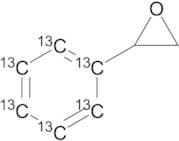
CAS:Formel:C8H8OReinheit:>98.0%(GC)Farbe und Form:Colorless to Light yellow clear liquidMolekulargewicht:120.15rac Styrene Oxide-13C6
CAS:Kontrolliertes ProduktFormel:C6C2H3OFarbe und Form:NeatMolekulargewicht:121.065rac styrene oxide
CAS:Rac-styrene oxide is a chemical substance that has been used in the production of polystyrene. It is a colorless liquid with a boiling point of 142.3°C and a melting point of -64.4°C. Rac-styrene oxide can be synthesized by the reaction of styrene with hydrogen peroxide, yielding hydroxyl groups on both ends of the molecule. This compound belongs to the category of glycol ethers and oxides, and has shown to have potent inducers for oxidative injury when administered orally to rats. Rac-styrene oxide has also been shown to exhibit amyloid protein formation, which may contribute to its toxicity as well as its ability to form adducts with proteins that can lead to mitochondrial membrane potential disruption. Rac-styrene oxide also forms x-ray crystal structures that are stable at room temperature, making it easier for researchers to study its properties and reactivity in detail.Formel:C8H8OReinheit:Min. 95%Farbe und Form:Clear LiquidMolekulargewicht:120.15 g/mol