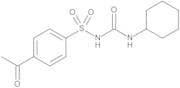
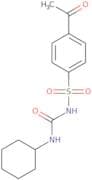
CAS 968-81-0
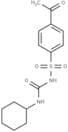
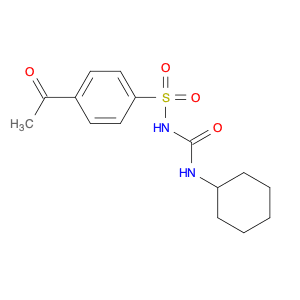
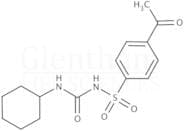
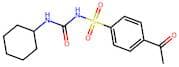
:Acetohexamid
- 1-(4-Acetylbenzenesulfonyl)-3-Cyclohexylurea
- 1-(4-Acetylphenyl)sulfonyl-3-cyclohexylurea
- 1-(p-Acetylbenzenesulfonyl)-3-cyclohexylurea
- 1-[(p-Acetylphenyl)sulfonyl]-3-cyclohexylurea
- 4-Acetyl-N-[(cyclohexylamino)carbonyl]benzenesulfonamide
- 4-acetyl-N-(cyclohexylcarbamoyl)benzenesulfonamide
- Acetohexamid
- Acetohexamida
- Benzenesulfonamide, 4-acetyl-N-[(cyclohexylamino)carbonyl]-
- Dimelin
- Dimelin (antidiabetic)
- Dimelor
- Dymelor
- Gamadiabet
- Hypoglicil
- Metaglucina
- Minoral
- N-(p-Acetylphenylsulfonyl)-N'-cyclohexylurea
- Ordimel
- Tsiklamid
- U 14812
- Urea, 1-[(p-acetylphenyl)sulfonyl]-3-cyclohexyl-
- Acetohexamide
- DyMelor-d6
- -d6 DiMelin-d6
- Hypoglicil-d6
- 4-Acetyl-N-[(cyclohexyl-d6-aMino)carbonyl]benzenesulfonaMide
- Acetohexamide (250 mg)
- AcetohexaMide-d6
- Cyclamide
- 1-(4-acetylphenyl)sulfonyl-3-cyclohexyl-urea
- 1-cyclohexyl-3-(4-ethanoylphenyl)sulfonyl-urea
- gamadiaber
- 1-[(p-Acetylphenyl)su
- 1-((p-acetylphenyl)sulfonyl)-3-cyclohexyl-ure
- GaMadiabet-d6
- 4-acetyl-n-[(cyclohexylamino)carbonyl]-benzenesulfonamid
- nci-c03247
- U 14812-d6
- 4-acetyl-n-benzenesulfonamide
- 1-(p-acetylbenzenesulfonyl)-3-cyclohexylure
- 1-(p-Acetylbenzenesulfonyl)
- OrdiMel-d6
- 4-acetyl-n-((cyclohexylamino)carbonyl)-benzenesulfonamid
- ACETOHEXAMIDE, USP GRADE ORAL HYPOGLYCEM IC AGE
- Metaglucina-d6
- u14812
- TsiklaMid-d6
- Minoral-d6
- Weitere Synonyme anzeigen
Acetohexamide
CAS:Acetohexamide (Acetohexamid) is an intermediate-acting, first-generation sulfonylurea with hypoglycemic activity.Formel:C15H20N2O4SReinheit:99.19% - 99.85%Farbe und Form:Crystals From 90% Aq EthanolMolekulargewicht:324.40Acetohexamide
CAS:Kontrolliertes ProduktApplications Acetohexamide is a sulfonylurea derivative. Acetohexamide is a hyopglycemic agent with moderate uricosuric activity. Acetohexamide is a first generation medication used in the treatment of diabetes metilus type 2.
References Yu, T-F. et al.: Metab. Clin. Exp., 17, 309 (1968); Harrower, A.D.B. et al.: Clin. Pharmacokin., 31, 111 (1996); Hirota, Y. et al.: Diab. Med., 26, 948 (2009);Formel:C15H20N2O4SFarbe und Form:White To Light RedMolekulargewicht:324.4Acetohexamide
CAS:Acetohexamide is a hypoglycemic drug that binds to the sulfonylurea receptor on pancreatic beta-cells and stimulates insulin release. It has been shown to have an oral hypoglycemic effect in humans, as well as in rats. Acetohexamide has been shown to inhibit the action of nonsteroidal anti-inflammatory drugs, such as indomethacin, through competitive inhibition. Acetohexamide also inhibits the enzyme activity of estradiol benzoate and acetohexamide hydrolase. This drug is not active against bacteria or fungi, but has been shown to be effective against some viruses. Acetohexamide is absorbed by the gastrointestinal tract and excreted unchanged in urine and feces. The drug does not bind to proteins and does not cross the blood-brain barrier.
Formel:C15H20N2O4SReinheit:Min. 95%Farbe und Form:PowderMolekulargewicht:324.4 g/mol