CAS 97-72-3
:Isobuttersäureanhydrid
Beschreibung:
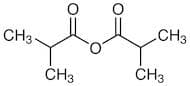
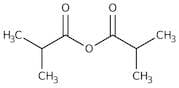
Isobuttersäureanhydrid, mit der CAS-Nummer 97-72-3, ist eine organische Verbindung, die als Derivat der Isobuttersäure dient. Sie ist durch ihre Anhydrid-Funktionalgruppe gekennzeichnet, die durch die Kondensation von zwei Molekülen Isobuttersäure entsteht, was zum Verlust von Wasser führt. Diese Verbindung erscheint typischerweise als farblose bis blassgelbe Flüssigkeit mit einem stechenden Geruch. Isobuttersäureanhydrid ist bekannt für seine Reaktivität, insbesondere in Acylierungsreaktionen, bei denen es Isobuttersäure-Acylgruppen in verschiedene Substrate einführen kann. Es ist in organischen Lösungsmitteln löslich, hat jedoch eine begrenzte Löslichkeit in Wasser. Aufgrund seiner chemischen Eigenschaften wird es in der Synthese von Estern, Amiden und anderen Derivaten in der organischen Chemie verwendet. Sicherheitsvorkehrungen sind beim Umgang mit dieser Verbindung unerlässlich, da sie die Haut, die Augen und das Atmungssystem reizen kann. Eine ordnungsgemäße Lagerung an einem kühlen, trockenen Ort, fern von inkompatiblen Materialien, wird ebenfalls empfohlen, um Stabilität und Sicherheit zu gewährleisten.
Formel:C8H14O3
InChl:InChI=1/C8H14O3/c1-5(2)7(9)11-8(10)6(3)4/h5-6H,1-4H3
InChI Key:InChIKey=LSACYLWPPQLVSM-UHFFFAOYSA-N
SMILES:C(OC(C(C)C)=O)(C(C)C)=O
Synonyme:- 2-Methylpropanoic acid anhydride
- 2-Methylpropanoic anhydride
- 2-Methylpropanoyl-2-methylpropanoate
- 2-Methylpropionic acid anhydride
- 2-Methylpropionic anhydride
- Anhidrido Isobutirico
- Anhydride isobutyrique
- Isobutanoic anhydride
- Isobuttersaeureanhydrid
- Isobuttersaureanhydrid
- Isobutyric Anhydride
- Isobutyric acid anhydride
- Isobutyryl anhydride
- Propanoic acid, 2-methyl-, 1,1'-anhydride
- ANIB
- Propanoic acid, 2-methyl-, anhydride
- A-METHYLPROPIONIC ANHYDRIDE
- Isobutryic anhydride
- anhydrideisobutyrique
- 2-methylpropanoicacidanhydride
- isobutyryloxide
- Propanoicacid,2-methyl-,anhydride
- (iso-C3H7CO)2O
- isobutyrylanhydride
- BIS(2-METHYLPROPIONIC ACID) ANHYDRIDE
- 1-Methylpropanoic anhydride
- DIMETHYLACETIC ANHYDRIDE
- 2-methyl-propanoicacianhydride
- isobutyricacidanhydride
- Weitere Synonyme anzeigen
Sortieren nach
Reinheit (%)
0
100
|
0
|
50
|
90
|
95
|
100
6 Produkte.
Isobutyric Anhydride
CAS:Formel:C8H14O3Reinheit:>95.0%(GC)(T)Farbe und Form:Colorless to Light yellow to Light orange clear liquidMolekulargewicht:158.20Isobutyric anhydride, 97%
CAS:Isobutyric anhydride is used in the preparation of 4-O-isobutyryl derivative by reacting with octyl beta-D-glucopyranoside using C2-symmetric chiral 4-pyrrolidinopyridine as a catalyst. It acts as a starting material for esters like sucrose acetate isobutyrate, dyes and agrochemicals. It finds appli
Formel:C8H14O3Reinheit:97%Farbe und Form:Liquid, Clear colorlessMolekulargewicht:158.20Isobutyric anhydride
CAS:Isobutyric anhydrideFormel:C8H14O3Reinheit:95%Farbe und Form: clear. colourless liquidMolekulargewicht:158.19g/molIsobutyric Anhydride
CAS:Kontrolliertes ProduktApplications Isobutyric Anhydride is used as a highly reactive and non-water producing acyl donor for hydrolase-catalyzed enantioselective esterification.
Not a dangerous good if item is equal to or less than 1g/ml and there is less than 100g/ml in the package
References Xu, J.-H., et al.: Appl. Microbiol. Biot., 43, 402 (1995)Formel:C8H14O3Farbe und Form:NeatMolekulargewicht:158.19Isobutyric anhydride
CAS:Isobutyric anhydride is a crystalline cellulose-derived chemical that is used as a solvent in pharmaceutical preparations. It is also used as a reactive agent in the production of antibiotics. Isobutyric anhydride reacts with the hydroxyl group on the antibiotic to form an ester, which in turn reacts with trifluoroacetic acid to form the final product. The mechanism of this reaction is kinetic and hydrochloric acid can be used as a catalyst. Isobutyric anhydride has been shown to have high reactivity with antibiotic-resistant strains of bacteria. This compound has high bioavailability when administered orally and exhibits high kinetic constants for both hydrolysis and esterification reactions, making it a useful drug for preventing bacterial growth in vivo.Formel:C8H14O3Reinheit:Min. 95%Farbe und Form:Clear LiquidMolekulargewicht:158.19 g/mol