CAS 97281-44-2
:Phosphatidylcholine, Ei
Beschreibung:
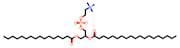
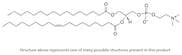
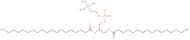
Phosphatidylcholine, die häufig aus Eigelb gewonnen wird, ist eine Klasse von Phospholipiden, die eine entscheidende Rolle in der Zellstruktur und -funktion spielen. Die Substanz, die durch die CAS-Nummer 97281-44-2 identifiziert wird, zeichnet sich durch ihre amphiphile Natur aus, die sowohl hydrophile (wasseranziehende) als auch hydrophobe (wasserabweisende) Eigenschaften besitzt, was sie für die Bildung biologischer Membranen unerlässlich macht. Phosphatidylcholine bestehen aus einem Glycerol-Rückgrat, zwei Fettsäureketten, einer Phosphatgruppe und einem Cholinmolekül. Sie sind bekannt für ihre Fähigkeit, Lipiddoppelschichten zu bilden, die grundlegend für die Integrität und Fluidität der Zellmembran sind. Darüber hinaus dienen Phosphatidylcholine als wichtige Signalmoleküle und sind an verschiedenen Stoffwechselprozessen beteiligt. Sie werden auch in der Lebensmittel-, Pharma- und Kosmetikindustrie aufgrund ihrer emulgierenden Eigenschaften eingesetzt. Insgesamt sind Phosphatidylcholine aus Eigelb sowohl für biologische Funktionen als auch für industrielle Anwendungen von Bedeutung, was ihre Vielseitigkeit und Wichtigkeit in verschiedenen Bereichen unterstreicht.
Formel:Unspecified
Synonyme:- Phosphatidylcholines, egg
Sortieren nach
Reinheit (%)
0
100
|
0
|
50
|
90
|
95
|
100
6 Produkte.
Phosphatidylcholine
CAS:Lecithins and other phosphoaminolipids, nesoiFormel:C8H18NO6P(R)(RFarbe und Form:White Off-White PowderMolekulargewicht:770.12Phosphatidylcholines,egg
CAS:Formel:C43H86NO8PReinheit:99%Farbe und Form:SolidMolekulargewicht:776.1186Phosphatidylcholines
CAS:Phosphatidylcholines are a class of compounds that consist of a glycerol backbone with two fatty acids esterified to the hydroxyl groups. They have a phase transition temperature between 18 and 34 degrees Celsius. Phosphatidylcholines are naturally occurring in biological systems and can be extracted from eggs, soybeans, and other sources. Monoclonal antibodies can be used to detect the presence of phosphatidylcholines in tumor cells. This technique is more sensitive than other methods such as immunohistochemistry or immunofluorescence. The phosphatidylcholine-binding site on the monoclonal antibody is composed of three amino acid residues: serine, lysine, and arginine. These amino acids form an alpha helix structure that interacts with the hydrophobic region of phosphatidylcholine molecules by hydrogen bonding. The monoclonal antibody binds to the surface of tumor cells,Reinheit:Min. 95%