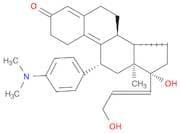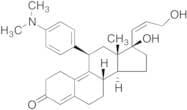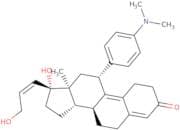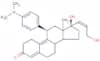
CAS 97747-88-1
:Lilopriston
- (11beta,17beta)-11-[4-(dimethylamino)phenyl]-17-hydroxy-17-[(1Z)-3-hydroxyprop-1-en-1-yl]estra-4,9-dien-3-one
- (11β,17β)-11-[4-(Dimethylamino)phenyl]-17-hydroxy-17-[(1Z)-3-hydroxy-1-propen-1-yl]estra-4,9-dien-3-one
- Estra-4,9-dien-3-one, 11-[4-(dimethylamino)phenyl]-17-hydroxy-17-[(1Z)-3-hydroxy-1-propen-1-yl]-, (11β,17β)-
- Estra-4,9-dien-3-one, 11-[4-(dimethylamino)phenyl]-17-hydroxy-17-[(1Z)-3-hydroxy-1-propenyl]-, (11β,17β)-
- Zk 98734
Lilopristone
CAS:Kontrolliertes ProduktApplications Lilopristone is a progesterone antagonist.
References Puri, C., et al.: Am. J. Obstet. Gynecol., 161, 248 (1989)Formel:C29H37NO3Farbe und Form:NeatMolekulargewicht:447.609Ligustrazine HCl
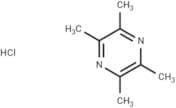
CAS:Kontrolliertes ProduktLigustrazine is a plant extract that has been shown to inhibit platelet aggregation and has anti-inflammatory properties. It also inhibits the production of nitric oxide, which may be related to its antiplatelet activity. Ligustrazine HCl is used as a pharmaceutical drug for the treatment of cardiovascular diseases such as hypertension and angina pectoris. Ligustrazine HCl inhibits the phosphodiesterase activity by blocking the enzyme's active site, thereby increasing levels of cyclic AMP (cAMP). This increase in cAMP leads to a decrease in calcium concentration, which reduces platelet aggregation. In addition, ligustrazine may have effects on glucose metabolism by inhibiting glucose injection into cells after an incubation period. This inhibitory effect also results in reduced insulin release from pancreatic beta cells and decreased glycogenolysis in liver cells. Ligustrazine HCl is also used in Chinese medicine to treat diabetes mellitus type II and
Formel:C8H12N2·HClReinheit:Min. 95%Molekulargewicht:172.66 g/molLilopristone
CAS:Lilopristone is an antagonist of progesterone.Formel:C29H37NO3Reinheit:98%Farbe und Form:SolidMolekulargewicht:447.61