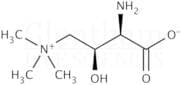
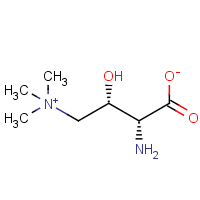
CAS 98063-21-9
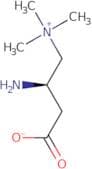
:(3R)-3-amino-4-(trimethylammonio)butanoat
(R)-Amino carnitine
CAS:Reinheit:≥ 97.0%Farbe und Form:Off-white to yellow or tan solidMolekulargewicht:160.21(R)-Aminocarnitine
CAS:(R)-AminocarnitineFormel:C7H16N2O3Reinheit:≥95%Farbe und Form: pale yellow solidMolekulargewicht:176.21g/mol(R)-Amino Carnitine
CAS:Kontrolliertes ProduktStability Hygroscopic
Applications An inhibitor of fatty acid oxidation. Aminocarnitine acts as a hypoglycemic and antiketogenic compound. It alters lipidic metabolism by inhibiting carnitine acetyltransferase (CAT) and carnitine palmitoyltransferase (CPT).
References Jenkins, D.L., et al.: J. Biol. Chem., 260, 14748 (1985), Kanamaru, T., et al.: M. Life Sci., 37, 217 (1985), Hulsmann, W.C., et al.: J. Biochim. Biophys. Acta., 1097, 263 (1991), Chiodi, P., et al.: Biochim, Biophys. Acta., 1127, 81 (1992),Formel:C7H16N2O2Farbe und Form:Off-White To BrownMolekulargewicht:160.21(R)-Amino carnitine
CAS:(R)-Amino carnitine is a pancreatic enzyme that is used as an experimental treatment for fatty liver disease. It has been shown to inhibit the synthesis of fatty acids, which are the main components of triglycerides. The inhibition of this enzyme leads to a decrease in the production of triglycerides and their accumulation in the liver, thereby reducing hepatic steatosis. (R)-Amino carnitine also has an inhibitory effect on protein synthesis, which is important for the conversion of amino acids into proteins essential for cell division and growth. This mechanism may explain its beneficial effects on insulin resistance, obesity, and diabetes.
Formel:C7H16N2O2Reinheit:Min. 95%Molekulargewicht:160.21 g/molAminocarnitine
CAS:Aminocarnitine inhibits fat oxidation, has hypoglycemic and antiketogenic effects, and blocks CAT and CPT enzymes.Formel:C7H16N2O2Farbe und Form:SolidMolekulargewicht:160.21