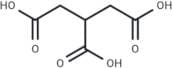
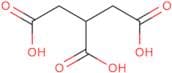
CAS 99-14-9
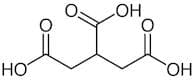
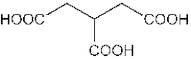
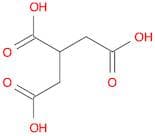
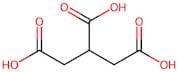
:1,2,3-Propantricarbonsäure
Beschreibung:
1,2,3-Propantricarbonsäure, allgemein bekannt als Zitronensäure, ist eine schwache organische Säure mit der chemischen Formel C6H8O7. Es handelt sich um eine farb- und geruchlose kristalline Substanz, die hochgradig in Wasser löslich ist. Zitronensäure zeichnet sich durch ihre drei Carboxylgruppen aus, die zu ihren sauren Eigenschaften beitragen und sie zu einem Schlüsselakteur in verschiedenen biochemischen Prozessen machen, insbesondere im Zitronensäurezyklus (Krebs-Zyklus) der Zellatmung. Diese Verbindung kommt weit verbreitet in Zitrusfrüchten vor und wird in der Lebensmittel- und Getränkeindustrie als natürliches Konservierungsmittel und Aromastoff aufgrund ihres sauren Geschmacks umfassend eingesetzt. Darüber hinaus dient Zitronensäure als Chelatbildner, der hilft, Metallionen zu binden, und wird in verschiedenen Anwendungen eingesetzt, einschließlich Kosmetika, Pharmazeutika und Reinigungsprodukten. Ihr Sicherheitsprofil ist gut etabliert, was sie zu einer beliebten Wahl in vielen Verbrauchsprodukten macht. Insgesamt ist Zitronensäure eine vielseitige Verbindung mit erheblicher industrieller und biologischer Relevanz.
Formel:C6H8O6
InChl:InChI=1S/C6H8O6/c7-4(8)1-3(6(11)12)2-5(9)10/h3H,1-2H2,(H,7,8)(H,9,10)(H,11,12)
InChI Key:InChIKey=KQTIIICEAUMSDG-UHFFFAOYSA-N
SMILES:C(CC(O)=O)(CC(O)=O)C(O)=O
Synonyme:- 1,2,3-Propanetricarboxylic acid
- 1,2,3-Tricarboxypropane
- 3-Carboxyglutaric acid
- Ai-942/42301799
- Carballylic acid
- NSC 2347
- Propane-1,2,3-Tricarboxylic Acid
- Rikacid TCR 100
- β-Carboxyglutaric acid
- Tricarballylic acid
Sortieren nach
Reinheit (%)
0
100
|
0
|
50
|
90
|
95
|
100
8 Produkte.
1,2,3-Propanetricarboxylic Acid
CAS:Formel:C6H8O6Reinheit:>98.0%(GC)(T)Farbe und Form:White to Almost white powder to crystalMolekulargewicht:176.12Tricarballylic acid, 98%
CAS:It is used as an alternative to DMDHEU (formaldehyde releasing cross- linking agent). This Thermo Scientific Chemicals brand product was originally part of the Alfa Aesar product portfolio. Some documentation and label information may refer to the legacy brand. The original Alfa Aesar product / itemFormel:C6H8O6Reinheit:98%Farbe und Form:White to cream to pale brown, Crystals or powder or crystalline powderMolekulargewicht:176.121,2,3-PropanetricarboxylicAcid
CAS:Formel:C6H8O6Reinheit:97%Farbe und Form:SolidMolekulargewicht:176.1241Propane-1,2,3-tricarboxylic acid
CAS:Propane-1,2,3-tricarboxylic acidReinheit:98%Molekulargewicht:176.12g/molTricarballylic acid
CAS:Tricarballylic acid (Carballylic acid) is an inhibitor of aconitase.Formel:C6H8O6Reinheit:99.95% - >99.99%Farbe und Form:Off-White To Light Brown Fine Crystalline PowderMolekulargewicht:176.12Tricarballylic acid
CAS:Tricarballylic acid (TCA) is a carboxylate with a hydroxyl group on one side and an x-ray crystal structure. It is the most common carboxylate in the citric acid cycle. TCA has been shown to bind to the monoclonal antibody C3, which inhibits the production of various cytokines. This binding also inhibits T cell proliferation, leading to immunosuppression. TCA has been used as a structural probe for studying fatty acids and liver cells. In addition, it has been shown that TCA can be synthesized from protocatechuic acid, which is found in many plants such as grapes, strawberries, apples and pears. Tricarballylic acid also forms a disulfide bond with glutathione reductase in the cytochrome P450 system of mammals.Formel:C6H8O6Reinheit:Min. 95%Molekulargewicht:176.12 g/mol