:internalReference - lead-sulfate
Es wurde leider kein Produkt mit der Referenz :internalReference gefunden, aber bitte schauen Sie sich die folgenden ähnlichen Produkte an:
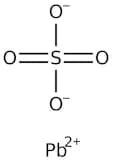
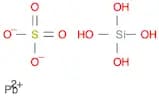
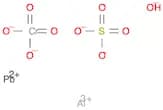
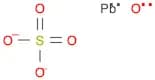
Lead(II) sulfate, Puratronic™, 99.999% (metals basis)
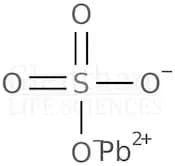
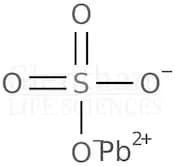
CAS:<p>This Thermo Scientific Chemicals brand product was originally part of the Alfa Aesar product portfolio. Some documentation and label information may refer to the legacy brand. The original Alfa Aesar product / item code or SKU reference has not changed as a part of the brand transition to Thermo Sci</p>Formel:O4PbSReinheit:99.999%Molekulargewicht:303.30Lead(II) sulfate, Reagent Grade
CAS:<p>Lead(II) sulfate is used in pigments, galvanic batteries, lithography, weighting fabrics. It is also used as intermediates. This Thermo Scientific Chemicals brand product was originally part of the Alfa Aesar product portfolio. Some documentation and label information may refer to the legacy brand. </p>Formel:O4PbSFarbe und Form:Powder, White to pale creamMolekulargewicht:303.30Lead(II) sulfate, 99%
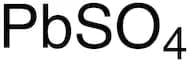
CAS:<p>Lead(II) sulfate, 99%</p>Formel:PbSO4Reinheit:99%Farbe und Form:white pwdr.Molekulargewicht:303.25Lead(II) Sulfate
CAS:Formel:PbSO4Reinheit:>98.0%(T)Farbe und Form:White to Almost white powder to crystalMolekulargewicht:303.26Lead(II) sulfate, 99.999%
CAS:Formel:PbSO4Reinheit:≥ 99.999%Farbe und Form:White powder or solidMolekulargewicht:303.25Lead(II) sulfate, 98%
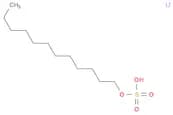
CAS:Formel:PbSO4Reinheit:≥ 98.0%Farbe und Form:White powder or chunksMolekulargewicht:303.25Sulfuric acid, monododecyl ester, lithium salt (1:1)
CAS:Formel:C12H25LiO4SReinheit:98%Farbe und Form:SolidMolekulargewicht:272.3305IDUA rabbit pAb
This gene encodes an enzyme that hydrolyzes the terminal alpha-L-iduronic acid residues of two glycosaminoglycans, dermatan sulfate and heparan sulfate. This hydrolysis is required for the lysosomal degradation of these glycosaminoglycans. Mutations in this gene that result in enzymatic deficiency lead to the autosomal recessive disease mucopolysaccharidosis type I (MPS I). [provided by RefSeq, Jul 2008],S13A1 rabbit pAb
The protein encoded by this gene is an apical membrane Na(+)-sulfate cotransporter involved in sulfate homeostasis in the kidney. Defects in this gene lead to many pathophysiologic problems. [provided by RefSeq, May 2016],Arylsulfatase A rabbit pAb
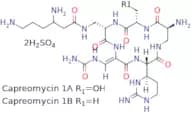
The protein encoded by this gene hydrolyzes cerebroside sulfate to cerebroside and sulfate. Defects in this gene lead to metachromatic leucodystrophy (MLD), a progressive demyelination disease which results in a variety of neurological symptoms and ultimately death. Alternatively spliced transcript variants have been described for this gene. [provided by RefSeq, Dec 2010],Capreomycin sulfate
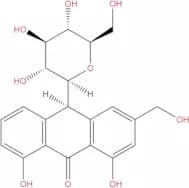
CAS:Capreomycin sulfate (Capastat sulfate) , a cyclic peptide antibiotic, binds to the 70S ribosomal unit leading to inhibition of protein synthesis.Formel:C25H46N14O11SReinheit:98% - 99.54%Farbe und Form:White PowderMolekulargewicht:752.76Aloin B
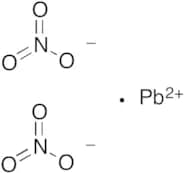
CAS:Dietary supplementation of aloe components (aloin, aloesin and aloe-gel) can ameliorate intestinal inflammatory responses in a 3% dextran sulfate sodium (DSS)-induced ulcerative colitis rat model, in particular, aloesin is the most potent inhibitor. The extract of A. vera and its active ingredient aloin cause melanin aggregation leading to skin lightening via alpha adrenergic receptor stimulation.Formel:C21H22O9Reinheit:95%~99%Molekulargewicht:418.398Lead(II) Nitrate
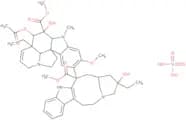
CAS:<p>Applications Lead(II) Nitrate, is toxic, an oxidising agent, and is categorized as probably carcinogenic to humans . It is shown to inhibit bacterial oxidation of ferrous iron in sulfate-rich systems. Other Lead(II) Nitrate applications include use as a heat stabilizer in nylon and polyesters, as a coating for photothermographic paper, and in rodenticides.<br> Not a dangerous good if item is equal to or less than 1g/ml and there is less than 100g/ml in the package<br>References Hongmei, w., et al.: J Hazard. Mat., 244, 718 (2013); Greenwoos, N. N., et al.: 388 (1997); Pauley, J. L., et al.: J. Amer. Chem. Soci., 76 (16), 4220 (1954);<br></p>Formel:NO3·PbFarbe und Form:NeatMolekulargewicht:331.21Vinblastine sulfate, 96%
CAS:Kontrolliertes Produkt<p>Vinblastine sulfate, 96%, is a chemotherapeutic agent, which is a semi-synthetic derivative of natural alkaloids extracted from the Madagascar periwinkle plant, Catharanthus roseus. This compound functions through the disruption of microtubule formation by binding to tubulin, effectively inhibiting mitosis. By preventing the assembly of microtubules, vinblastine sulfate interferes with the metaphase stage of cell division, leading to cell cycle arrest and subsequent apoptosis of rapidly dividing cancer cells.</p>Formel:C46H60N4O13SReinheit:Min. 96 Area-%Farbe und Form:PowderMolekulargewicht:909.05 g/mol2-Amino-3-nitrobenzoic acid
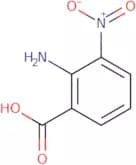
CAS:<p>2-Amino-3-nitrobenzoic acid (2ABN) is a peroxide that is used as an antiviral. 2ABN has been shown to inhibit the formation of reactive oxygen species in cancer cells, leading to apoptosis. It also inhibits the growth of carcinoma cell lines and tissues. 2ABN reacts with chloral hydrate to form a particle that can be encapsulated for delivery and release in vivo. This drug has been expressed in Escherichia coli, which may lead to improved stability and ease of production. 2ABN is thought to have anti-inflammatory properties due to its ability to inhibit the production of prostaglandins. The reactivity of 2ABN with surfactants such as sodium laureth sulfate (SLES) has been shown, which leads to it being used as an emulsifying agent for topical application.</p>Formel:C7H6N2O4Reinheit:Min. 95%Farbe und Form:PowderMolekulargewicht:182.13 g/molAtropine sulfate monohydrate
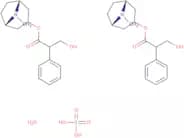
CAS:Kontrolliertes Produkt<p>Atropine sulfate monohydrate is a tropane alkaloid derivative, which is primarily sourced from plants of the Solanaceae family, such as Atropa belladonna. This compound functions by competitively inhibiting the action of acetylcholine on muscarinic receptors, thereby exerting anticholinergic effects. By blocking these receptors, atropine sulfate monohydrate impedes parasympathetic nervous system activity, which can lead to increased heart rate, pupil dilation, and reduced glandular secretions.</p>Formel:C34H50N2O11SReinheit:(Aqueous Acidbase Titration) 98.0 To 102.0%Farbe und Form:White PowderMolekulargewicht:694.83 g/molN,N'-Bis-Boc-1-guanylpyrazol
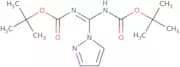
CAS:<p>N,N'-Bis-Boc-1-guanylpyrazol is a tetrapeptide that is used as a reagent in organic synthesis. It has been shown to have an inhibitory effect on the production and release of melanocortin and its related peptides, which are important for the regulation of body weight, appetite, and mood. N,N'-Bis-Boc-1-guanylpyrazol binds to sulfate groups on chondroitin sulfate proteoglycans. The inhibition of these sulfated proteoglycans leads to decreased levels of hyaluronic acid and a lack of water retention in the joints. This can cause symptoms such as pain and stiffness in joints, particularly those affected by osteoarthritis.</p>Formel:C14H22N4O4Reinheit:Min. 95%Farbe und Form:White PowderMolekulargewicht:310.35 g/mol