AC-39122 - benzyl-alcohol-for-analysis | 100-51-6
Es wurde leider kein Produkt mit der Referenz AC-39122 gefunden, aber bitte schauen Sie sich die folgenden ähnlichen Produkte an:
Benzyl 4-aminobenzoate
CAS:Benzyl-P-aminobenzoate is a biodegradable polymer that can be synthesized from benzoic acid, benzyl alcohol, and ammonia. This compound has been shown to be chromatographically stable, chemoselectively hydrogenated and nitrated under hydrochloric acid conditions. Benzyl-P-aminobenzoate can also be synthesized from amines and benzaldehyde in the presence of hydrogen gas. The optimal reaction temperature for this synthesis is 130°C. Radiation processing may increase the activity of this polymer by breaking the carbon-nitrogen bonds in the molecules. Polylactic acid (PLA) may also be used to produce this polymer because it is scalable, biodegradable, and can be produced using renewable resources. Structural analysis of these polymers have revealed that they are composed of long chains with alternating amide groups (-CONH-) and ester groups (-COOR).Formel:C14H13NO2Reinheit:Min. 95%Farbe und Form:PowderMolekulargewicht:227.26 g/mola-[2-(Methylamino)ethyl]benzyl alcohol
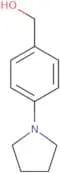
CAS:<p>a-[2-(Methylamino)ethyl]benzyl alcohol is a zwitterion that forms an imine when reacted with piperazine. It has been shown to have antibacterial activity in subcritical water extraction and HPLC analysis. This compound also has a profile of impurities, including β-unsaturated aldehydes and pseudoephedrine.</p>Formel:C10H15NOReinheit:Min. 95%Farbe und Form:PowderMolekulargewicht:165.23 g/mol(4-Pyrrolidin-1-ylphenyl)methanol
CAS:<p>4-Pyrrolidin-1-ylphenol is a protease enzyme inhibitor that has been shown to inhibit the catalytic activity of serine proteases. It reversibly binds to the active site of these enzymes and inhibits their ability to hydrolyze peptide bonds, which are required for protein digestion. 4-Pyrrolidin-1-ylphenol has been shown to be a specific inhibitor of hepatitis C virus protease. This drug has also been used as a reagent in the synthesis of peptides and proteins, and is being investigated as a potential drug in the treatment of HIV infection. 4-Pyrrolidin-1-ylphenol is an asymmetric chiral molecule that can be synthesized using Grignard reaction with benzyl alcohol and an amino phenyl boronic acid. The stereochemistry of this molecule is determined by its molecular modeling and conformational analysis. The amino group in this molecule is orientated such that it</p>Formel:C11H15NOReinheit:Min. 95%Molekulargewicht:177.25 g/mol5-Phenylhexanoic acid
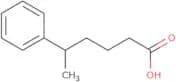
CAS:5-Phenylhexanoic acid is an organic compound that belongs to the group of alcohols. It can be synthesised by a two-step process, which involves oxidation of benzylic alcohols and fission of the resulting aldehydes. The kinetic analysis of this reaction has shown that it proceeds with a rate law that follows first order kinetics. The analyses have also shown that 5-phenylhexanoic acid is oxidised in the presence of cobaltic perchlorate, which leads to the formation of cyanide as well as alkyl bromides and hydrocarbons.Formel:C12H16O2Reinheit:Min. 95%Molekulargewicht:192.25 g/mol(+)-cis-Abienol
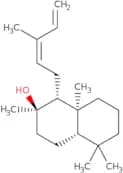
CAS:<p>(+)-Cis-abienol is a diterpene that is found in the leaves of the tobacco plant. It has been suggested to be involved in the synthesis of abscisic acid, which is an important hormone related to plant responses to water and salt stress. (+)-Cis-abienol may also have insecticidal properties and may play a role in resistance to insects. (+)-Cis-abienol has shown activity as an analytical reagent for the detection of hydroxyl groups, due to its UV absorption at 275 nm. The signal peptide sequence for this compound has been determined by analysis of tobacco sequences. This molecule's phase behavior can be predicted from its X-ray crystal structures and it is soluble in organic solvents such as benzyl alcohols or ethers. The mechanism for the reaction between (+)-cis-abienol and dehydroabietic acid has not yet been elucidated but it is thought that benzyl</p>Formel:C20H34OReinheit:Min. 95%Farbe und Form:PowderMolekulargewicht:290.48 g/mol(S)-1-Benzyl-pyrrolidin-3-ol
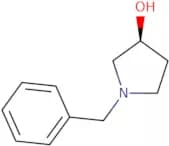
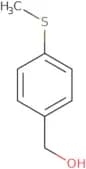
CAS:<p>(S)-1-Benzyl-pyrrolidin-3-ol is an enantiopure chiral drug that is used as a reagent for the synthesis of sodium salts. It is also used in environmental pollution studies, where it was found to inhibit the reaction between sulfate and sodium salts. (S)-1-Benzyl-pyrrolidin-3-ol has been shown to be stereoselective and has been used for the analysis of sulfate fractions in environmental samples. The compound can also be alkylated with various alcohols to form compounds with different properties, such as antiviral properties. (S)-1-Benzyl-pyrrolidin-3-ol is a chiral molecule that exists as two enantiomers: capitatum and helicatum. When analyzed by HPLC, these two forms can be distinguished by their retention times on a sds polyacrylamide gel electrophoresis system.</p>Formel:C11H15NOReinheit:Min. 95%Molekulargewicht:177.24 g/mol4-(Methylthio)benzyl Alcohol
CAS:<p>4-(Methylthio)benzyl Alcohol (MSBA) is a sulfate salt of 4-(methylthio)benzol, which is used as an inhibitor for cytochrome P450 enzymes. MSBA forms a covalent bond with cytochrome P450 and inhibits the oxidation of substrates to form reactive metabolites. This inhibitor can also be used to identify the active site of cytochrome P450 enzymes by docking analysis. The inhibition by MSBA has been demonstrated in recombinant cytochrome P450s using acetonitrile and stilbene derivatives as substrates. The inhibitory potency of MSBA is related to its methoxy groups and sulfate salt groups, which are important for binding with the enzyme. MSBA has been shown to metabolize into primary alcohols, such as 2-propynyl ethyl alcohol, that have inhibitory activities against cytochrome P450 enzymes.</p>Formel:C8H10OSReinheit:Min. 95%Molekulargewicht:154.23 g/mol4-tert-Butylbenzyl bromide
CAS:<p>4-tert-Butylbenzyl bromide is a chemical reagent that is used in the synthesis of other organic compounds. It is a hydrated, hydrogen sulfate salt that can be prepared by reacting trifluoroacetic acid with benzyl alcohol. 4-tert-Butylbenzyl bromide can also be synthesized by treating 4-bromobenzaldehyde with potassium hydroxide and water in an autoclave. It reacts as a nucleophile, attacking the electrophilic carbon atom of an ethoxylate to form a butyric acid ester. This reaction mechanism has been confirmed by both gravimetric analysis and structural analysis of the product. Hydrogen bonding between molecules may play an important role in this reaction, as well as intermolecular hydrogen bonding between the aromatic ring and the alkyl chain. The reaction rate is dependent on temperature and pressure, which are controlled through distillation or vacuum distillation</p>Formel:C11H15BrReinheit:Min. 95%Molekulargewicht:227.14 g/mol2-(4-Methylbenzylidene)-malononitrile
2-(4-Methylbenzylidene)-malononitrile is a compound that has been shown to be nonlinear and kinetic. It has been stabilized by alkaline hydrolysis, which is the conversion of an ester into an alcohol by reaction with base. The electron-withdrawing substituent on the benzylic position increases the electrophilicity of 2-(4-methylbenzylidene)-malononitrile. This means that this compound can undergo reactions at a faster rate than other compounds because it can more readily accept electrons from nucleophiles in order to form covalent bonds. Quantitative analysis of 2-(4-methylbenzylidene)-malononitrile was achieved through kinetic measurements and resonance experiments. The hydroxide ion (OH-) is a good nucleophile for 2-(4-methylbenzylidene)-malononitrile, which stabilizes this compound and prevents itFormel:C11H8N2Reinheit:Min. 95%Molekulargewicht:168.19 g/molO-Benzyl-N,N'-diisopropylisourea
O-Benzyl-N,N'-diisopropylisourea is a chiral reagent that can be prepared by the reaction of the corresponding chlorides with sodium hydroxide in tetrahydrofuran. It is used to assess the biological activity of drugs, especially those that are diastereomeric. The efficacy of O-benzyl-N,N'-diisopropylisourea as a coupling reagent has been demonstrated in reactions involving the formation of bonds between an alcohol and a halogenated hydrocarbon. This compound has also been shown to produce high yields in reactions involving hplc analysis.Formel:C14H22N2OReinheit:Min. 95%Molekulargewicht:234.34 g/molEthyl 2-hydroxycyclohexanecarboxylate
Ethyl 2-hydroxycyclohexanecarboxylate is a conjugate of benzyl group and chiral alcohol. It has been shown to have stereoselective activity against the MCR-7 breast cancer cell line, with activity at a ratio of 1:1. This compound has also been found to inhibit the growth of E. coli cells and inhibit the production of amino acids, such as glutamic acid, from both chlorella and yeast extract. The radical scavenging activity was determined by chemical composition analysis using high performance liquid chromatography (HPLC). Ethyl 2-hydroxycyclohexanecarboxylate showed strong radical scavenging activity in dilution experiments with an inhibition rate of 98%.Formel:C9H16O3Reinheit:Min. 95%Molekulargewicht:172.22 g/molRef: 3D-DAA44472
Ausgelaufenes produktBenzyl cinnamate
Benzyl cinnamate is a natural compound that has been used as an analytical method to measure benzoate in wastewater. Benzyl cinnamate reacts with benzoate to form benzyl-benzoate, which is measured by the reaction solution and quantified by spectrophotometry. The biological properties of benzyl cinnamate have been studied in vitro. It has been shown to be an effective antimicrobial agent against bacteria and fungi, but not against viruses, and has a matrix effect on control analysis. This compound may be used as a control for benzyl alcohol in vivo studies.Formel:C16H14O2Reinheit:Min. 95%Molekulargewicht:238.28 g/mol4-Fluorobenzyl Phenyl Sulfide
4-Fluorobenzyl phenyl sulfide is a picolinic acid derivative. It can be used as an oxidant of organic compounds, such as acetonitrile, benzyl alcohol and picolinate. 4-Fluorobenzyl phenyl sulfide is a white solid that has a melting point of 115-118°C and decomposes at 230°C. The compound was characterized by mass spectroscopy, IR and NMR analysis. The reaction kinetics for the oxidation of benzene by 4-fluorobenzyl phenyl sulfide were studied in detail using the UV/VIS spectrophotometer to measure the absorbance at 270 nm. The compound is soluble in methanol, ethanol, acetone and ethylene glycol and insoluble in water. It reacts with anions to form coordination complexes with metals and has been shown to undergo oxidation reactions with sulfides to form sulfoxides or sulfones.Formel:C13H11FSReinheit:Min. 95%Molekulargewicht:218.29 g/mol5-Methyl-1,3-dihydro-2H-benzimidazol-2-one
Benzyl alcohol is an organic compound that belongs to the group of terpenes. It can be found in a variety of plants and has been shown to have anti-inflammatory effects. The chemical structure of benzyl alcohol contains a benzene ring attached to an alcohol functional group. Benzyl alcohol is used as a solvent, as a preservative, and as an antimicrobial agent. This substance is colorless and has a sweet odor. It is volatile at room temperature and has a boiling point of 154°C (309°F). Benzyl alcohol also has the ability to react with other compounds such as aliphatic compounds, which are analyzed using electronic equipment such as gas chromatography. The intensities of these aliphatics are then plotted on graphs using regression analysis or spectrometry. Some nitrogen-containing compounds can be identified by sensors that measure their volatile properties, including benzyl alcohols.>>END>>Formel:C8H8N2OReinheit:Min. 95%Molekulargewicht:148.16 g/molZ-L-Threonine α-benzyl ester
The synthesis of Z-L-Threonine α-benzyl ester is accomplished by a two step sequence. The first step is the catalytic conversion of benzyl alcohol to benzyl chloride with sulfuric acid and zinc dust in trifluoromethane. The second step is the reaction of the benzyl chloride with threonine in the presence of tetrazole, followed by purification. The yield obtained was approximately 35%. This method is efficient because it does not require an expensive reagent, such as phosphorus pentoxide, for protection against side reactions. It also does not require high temperatures or vacuum conditions during synthesis. The synthesized product has carbonyl groups, which can be analyzed using various analytical methods. The synthetic Z-L-threonine α-benzyl ester contains a residue that can be analyzed using various techniques including acid analysis or gas chromatography. Z-L-Threonine α-benzyl esFormel:C19H21NO5Reinheit:Min. 95%Farbe und Form:White Slightly Yellow PowderMolekulargewicht:343.37 g/mol2-Methylthio-3,5-methylpyrazin
2-Methylthio-3,5-methylpyrazin is an organic compound that is used as a flavorant in food and drink. It has a fruity odor with a sulfurous, sweet taste. 2-Methylthio-3,5-methylpyrazin can be found in the pentanoate (hexanoate) ester form. This chemical has been shown to have antioxidant properties by inhibiting lipid peroxidation and inhibiting the formation of reactive oxygen species. Analysis of 2-methylthio-3,5-methylpyrazin has also been used to identify pentanoic acid and ethyl pentanoate as components of this chemical. 2-Methylthio-3,5-methylpyrazin is found in volatile compounds such as dipropyl (propene), benzyl alcohol, furfuryl acetate, and aldehydes. The molecular weight of this chemical is 192.2 g/molFormel:C7H10N2SReinheit:Min. 95%Molekulargewicht:154.23 g/mol




![a-[2-(Methylamino)ethyl]benzyl alcohol](/_next/image/?url=https%3A%2Fstatic.cymitquimica.com%2Fproducts%2F3D%2Fthumb-webp%2FFM02610.webp&w=3840&q=75)