Unter den Marken unserer mehr als 25 Partner sticht TargetMol hervor
We have reached an agreement with TargetMol: CymitQuimica clients will benefit for a 20% discount on all TargetMol products until the end of the year.On our website you can find the products offered by this partner, which has become one of the world's most recognised compound libraries and small molecule inhibitors supplier. TargetMol offers approximately 120 compound libraries and a wide range of chemical products and kits for life sciences.
Endet am 31. Dez.( 8 verbleibende Tage )
Boc-L-Cys(Propargyl)-OH (DCHA)
<p>Boc-L-Cys(Propargyl)-OH (DCHA) is a reagent utilized in click chemistry and can be applied in various biochemical studies.</p>Formel:C23H40N2O4SMolekulargewicht:440.27088(2R,4S)-Boc-D-Pro(4-N3)-OH (DCHA)
(2R,4S)-Boc-D-Pro(4-N3)-OH (DCHA) is a click chemistry reagent containing azide groups. It can undergo copper-catalyzed azide-alkyne cycloaddition (CuAAC) reactions with molecules that have alkyne groups. Additionally, it can partake in strain-promoted alkyne-azide cycloaddition (SPAAC) reactions with molecules containing DBCO or BCN groups.Formel:C23H43N5O4Molekulargewicht:453.3315Boc-Ser(O-propargyl)-OH (DCHA)
Boc-Ser(O-propargyl)-OH (DCHA) is a click chemistry reagent containing a propargyl group.Formel:C23H40N2O5Molekulargewicht:424.29372(S)-N3-HABA (DCHA)
(S)-N3-HABA (DCHA) is a reagent used in click chemistry, notable for its application in bonding nucleic acids, lipids, proteins, and other molecules due to its high yield, specificity, and simplicity. This compound contains an Azide group, enabling a copper-catalyzed Azide-Alkyne Cycloaddition (CuAAC) with molecules that have an Alkyne group, as well as a Strain-Promoted Azide-Alkyne Cycloaddition (SPAAC) with molecules containing DBCO or BCN groups.Formel:C16H30N4O3Molekulargewicht:326.23179DAPOA (DCHA)
DAPOA DCHA, a compound containing azide groups, serves as a pivotal chemical reagent. It is utilized in peptide synthesis as a linker and can be further modified via the Staudinger ligation or click chemistry on azide groups. This compound acts as a building block for dendritic structures. It engages in copper-catalyzed azide-alkyne cycloaddition reactions (CuAAc) with molecules containing alkyne groups and undergoes strain-promoted alkyne-azide cycloaddition (SPAAC) with molecules bearing DBCO or BCN groups.Formel:C17H31N7O3Molekulargewicht:381.24884H-L-Dbu(N3)-OH hydrochloride
<p>H-L-Dbu(N3)-OH is a click chemistry reagent that contains an azide group. Click chemistry has significant potential for applications in the coupling of nucleic acids, lipids, proteins, and other molecules due to its beneficial features such as high yield, high specificity, and simplicity. This compound can react with molecules containing alkyne groups via copper-catalyzed azide-alkyne cycloaddition (CuAAC). It is also capable of undergoing strain-promoted alkyne-azide cycloaddition (SPAAC) with molecules that have DBCO or BCN groups.</p>Formel:C4H9ClN4O2Molekulargewicht:180.0414MeO-PEG-alkyne (MW 750Da)
<p>MeO-PEG-alkyne (MW 750Da) is a click chemistry reagent that includes an alkyne group. It possesses an azide group, allowing for copper-catalyzed azide-alkyne cycloaddition (CuAAc) with alkyne-containing molecules. Additionally, it can undergo strain-promoted azide-alkyne cycloaddition (SPAAC) with molecules containing DBCO or BCN groups.</p>Me-PMeOx(100)-N3 (MW 8.5kDa)
<p>Me-PMeOx(100)-N3 (MW 8.5kDa) is a reagent utilized in click chemistry, which offers significant potential for joining nucleic acids, lipids, proteins, and other molecules. Valued for its high yield, specificity, and simplicity, it sees widespread application in various research fields. Equipped with an Azide group, it can undergo copper-catalyzed azide-alkyne cycloaddition (CuAAc) with molecules containing an Alkyne group. Additionally, it participates in strain-promoted azide-alkyne cycloaddition (SPAAC) with molecules containing DBCO or BCN groups.</p>Adenosine 5′-O-1-thiotriphosphate (disodium)
Adenosine 5′-O-(1-thiotriphosphate) (disodium) is an adenosine nucleotide modified at the alpha-phosphate.Formel:C10H14N5Na2O12P3SMolekulargewicht:566.93679pppApA sodium
<p>pppApA sodium is a linear dinucleotide intermediate involved in the enzymatic production of bacterial signaling nucleotide c-diAMP. It is formed by the linkage of two ATP molecules.</p>Formel:C20H26N10Na2O19P4Molekulargewicht:880.01216Carbonic anhydrase inhibitor 19
CAS:<p>Carbonic anhydrase inhibitor19 (compound 26a) targets glaucoma-associated isozymes hCA II and hCA XII, with inhibition constants (Kis) of 9.4 nM and 6.7 nM, respectively. This compound is effective in reducing intraocular pressure.</p>Formel:C23H25N3O6S2Molekulargewicht:503.59Carbonic anhydrase inhibitor 18
<p>Carbonic anhydrase inhibitor18 (Compound 9) is an inhibitor of human carbonic anhydrase (hCA) isozymes, with Ki values of 604.8 nM for hCA I, 333.6 nM for hCA II, 1.9 nM for hCA IX, and 6.7 nM for hCA XII. Carbonic anhydrase inhibitor18 is applicable in cancer research.</p>Formel:C26H28N4O6S2Molekulargewicht:556.14503hCAIX/XII-IN-11
<p>hCAIX/XII-IN-11 (Compound 6c) is an inhibitor of hCA IX and hCA XII, exhibiting Ki values of 0.7 μM for both isoforms. This compound is applicable in cancer research.</p>Formel:C13H10FN3O4Molekulargewicht:291.06553Butyryl-Coenzyme A trisodium
Butyryl-Coenzyme A (trisodium) is a microbial metabolite that can be synthesized into butyric acid or butyrate.Formel:C25H39N7Na3O17P3SMolekulargewicht:903.10291SPC-alkyne
SPC-alkyne (compound 9) is an alkyne derivative that inhibits IL-2 production and the reporter genes AP-1 and NFAT.Formel:C19H12N4O2SMolekulargewicht:360.0681Plant 14-3-3-IN-1
Plant 14-3-3-IN-1 (Compound 2) is an inhibitor of the Arabidopsis thaliana 14-3-3 protein, with an IC50 of 1.21 μM. It exhibits varying inhibitory activity against different 14-3-3 isoforms and promotes the closure of leaf stomata.Formel:C22H19NO7SMolekulargewicht:441.08822Aripiprazole N,N-Dioxide
CAS:AripiprazoleN,N-Dioxide is a metabolite of the atypical antipsychotic drug aripiprazole, formed through its oxidation.Formel:C23H27Cl2N3O4Molekulargewicht:480.3818:1 DGS-NTA(Ni)
CAS:18:1 DGS-NTA(Ni) is a nickel-chelating lipid. It exhibits high affinity for histidine tags and can bind to the histidine tags on recombinant proteins. This compound is useful in the preparation of liposomes and nanomultilamellar vesicles (NMV), which are employed in studies of protein and peptide binding as well as for antigen delivery.Formel:C53H94N2NiO15Farbe und Form:SolidMolekulargewicht:1058.01Dibutyl phosphate
CAS:Dibutyl phosphate (DBUP) is a metabolite of organophosphate esters (OPEs) found in urine. The presence of dibutyl phosphate is positively correlated with an increased risk of sarcopenia.Formel:C8H19O4PFarbe und Form:SolidMolekulargewicht:210.21(±)14(15)-DiHETE
CAS:(±)14(15)-DiHETE is an oxidized lipid and a metabolite of Eicosapentaenoic Acid, which is an orally active Omega-3 long-chain polyunsaturated fatty acid (ω-3 LC-PUFA).Formel:C20H32O4Farbe und Form:SolidMolekulargewicht:336.472'(3')-O-(2-Aminoethylcarbamoyl)adenosine-5'-O-diphosphate trisodium
2'(3')-O-(2-Aminoethylcarbamoyl)adenosine-5'-O-diphosphate (2'(3')-AEC-ADP) trisodium is a derivative of Adenosine 5'-diphosphate (ADP).Farbe und Form:Odour SolidZolpyridine
CAS:Zolpyridine is a degradation product of Zolpidem tartrate.Formel:C14H14N2OFarbe und Form:SolidMolekulargewicht:226.27Cipepofol glucuronide
Cipepofolglucuronide (Ciprofol Glucuronide) (M4) is a glucuronide metabolite of Ciprofol. This compound does not significantly inhibit P450s or UDP-glucuronosyltransferase (UGT) enzymes and poses a low risk as a perpetrator of drug-drug interactions (DDIs). Cipepofolglucuronide is used in anesthesia research.Farbe und Form:Odour SolidEtonitazene N-oxide
Etonitazene N-oxide (EtN-NOX) is a metabolite of the opioid compound Etonitazene.Farbe und Form:Odour SolidRp-dCTPαS tetrasodium
Rp-dCTPαS tetrasodium is a sulfur-containing isomer of dGTP.Farbe und Form:Odour Solid(R)-2-formamido-4-methylpentanoic acid
CAS:(R)-2-formamido-4-methylpentanoic acid is a derivative of leucine.Formel:C7H13NO3Farbe und Form:SolidMolekulargewicht:159.18Diversity Library-37k
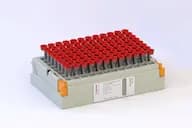
The Diversity Core Library Part2 collects 25920 compounds from 1.3 million in-stock compounds. With drug-like properties remained, the library ensures structural diversity to provide a comprehensive compound selection for customers involved in drug discovery projects, optimizing the input-output ratio for discovering lead compounds.Farbe und Form:Odour Solid