Kategorien, die mit "categories" Suche übereinstimmen:
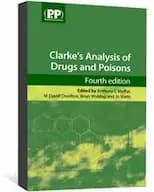
Clarke's Analysis of Drugs and Poisons
Moffat, Anthony C; Osselton, M David; Widdop, Brian; Watts, Jo
Fourth edition
Scheduled closure of pharmpress.com
Edited by Anthony C Moffat - Emeritus Professor, Centre for Pharmaceutical Analysis, The School of Pharmacy, University of London, UK, M David Osselton - Head, Centre for Forensic Sciences, School of Conservation Studies, Bournemouth University, UK, Brian Widdop - Emeritus Doctor. Formerly, Laboratory Director, Medical Toxicology Unit, Guy's Hospital, London, UK, and Jo Watts - Executive Development Editor, Royal Pharmaceutical Society of Great Britain, London, UK
ISBN 978 0 85369 711 4
Published May 2011
Hardback276 x 219mm (2736pp)
DESCRIPTION:
Clarke's Analysis of Drugs and Poisons is the definitive source of analytical data for drugs and poisons. Written by over 40 international experts, the resource also boasts an editorial advisory board of over 45 world renowned scientists.
This reference work has been completely revised and updated for the new edition, and comprises two volumes.
The book is essential for all forensic and clinical toxicologists, pathologists, hospital pharmacists, pharmaceutical analysts, clinical pharmacologists, clinical and forensic laboratories, and poison information centres.
CONTENTS:
Volume one
Part one: methodology and analytical techniques
Contains 44 chapters by leading international scientists covering the practice areas and analytical procedures used in toxicology
Volumes two
Parts two and three: analytical and toxicological data
Contains 2111 drug and poison monographs detailing physical properties, analytical methods, pharmacokinetic data and toxicity data.
Part four: Indexes to analytical data
This part contains indexes of analytical data, including all data for colour tests, chromatography, ultraviolet spectrophotometry, infrared spectrometry and mass spectrometry.
REVIEWS:
2011, Journal of Forensic Science
"This continues to be an invaluable reference for pharmaceutical scientists, clinical and forensic toxicologists and environmental chemists...Both the number of substances discussed in the monograph section and the depth of information presented are quite impressive."
Randall C. Baselt, Ph.D., Journal of Forensic Science, 2011
2011, TIAFT Bulletin
"Pathologists, clinicians, lawyers and students will find the new Clarke engaging, systematic in its approach and daunting in the massive amount of information provided. It is not until you become accustomed with the layout and logical style of the book that one appreciates the thought that has gone into producing this excellent and essential reference. No toxicologist should be without one!"
Dimitri Gerostamoulos, TIAFT Bulletin 41(2), 2011
10-Jul-2011, Chromatographia
"The work provides a compilation and easy access to analytical data for numerous compounds that can give an overview without the need of an extensive database search. This is especially true for data of older compounds that cannot be easily found elsewhere...the reader is provided with substantial information making the work an incomparable reference book in drug analysis."
Gerhard K.E. Scriba, Department of Pharmaceutical Chemistry, University of Jena, Chromatographia, 10 July 2011
From the reviews of the previous edition
'Some things in life are worth the wait and truly this 3rd edition of Clarke's Analysis of Drugs and Poisons falls into this category the quality is superb' Australian Journal of Forensic Sciences
'Clarke has gained an international reputation as a reliable source of information for the analyses of drugs, and this new highly-expanded edition is the 21st century's successor.' Veterinary and Human Toxicology
'The content is comprehensive, absorbing and layout is well planned and executed. Without doubt, this volume will be a much well thumbed institution in any serious analytical laboratory and will assist generations of scientists in years to come.' Pharmacy Education
WHAT'S NEW?:
- Volume one has been greatly expanded from 31 to 44 chapters providing extensive coverage of all methodology and analytical techniques. Of significant interest include:
Quality control and assessment - separated into two chapters to reflect the differing situations/purposes/remits of the toxicology laboratory versus the pharmaceutical industry (accreditation with ISO17025 becoming the international standard in labs)
Method development and validation - now present since reliable analytical techniques and data should be of the utmost importance to any analyst
'Sampling, storage and stability', 'Measuring and reporting uncertainty' and 'Interpretation of results' now included to cover all aspects accreditation
Pharmacokinetics now coupled with Pharmacogenomics
- All chapters have been updated, for instance the colour test chapter now includes the analysis of metals, while newer analytical techniques, such as liquid chromatography-mass spectrometry (LC-MS) and atomic absorption spectrometry-inductively coupled- mass spectrometry (AAS-ICP-MS) are also covered. Parts two and three now contain 2111 monographs (1730 in 3rd edition). This includes over 200 new monographs with retention of all monographs included in previous edition. New monographs include metals, natural toxins and weapons of mass destruction Over 300 updated monographs including amphetamine, morphine and MDMA
DIGITAL PRODUCTS:
Farbe und Form:276 x 219mmEssentials of Nonprescription Medications and Devices
Mackowiak, Elaine
First edition
Scheduled closure of pharmpress.com
Elaine D Mackowiak - Professor, Department of Pharmacy Practice, Temple University School of Pharmacy, Philadelphia, PA, USA
ISBN 978 0 85369 861 6
Published Nov 2009
Paperback 234 x 156mm (240pp)
DESCRIPTION:
The United States is seeing a large increase in the number of people assuming more responsibility for their own health care. Essentials of Nonprescription Medications and Devices provides a quick, comprehensive reference of products available for self-care.
Each chapter covers a common medical condition, including information derived from FDA monographs and current references, and includes:
- an overview of the condition
- drug categories and indication for use
- mode of action
- warning and precautions
- recommended doses
- products available
This invaluable text aims to aid both pharmacy students with didactic courses and experiential components of the curriculum, as well as to provide pharmacists, pharmacy students, and individuals interested in self-care an easy-to-use reference for common conditions and products available for prevention and treatment.
Essentials of Nonprescription Medications and Devices is also available as an eBook.
CONTENTS:
1. FDA Regulation of the Nonprescription Drug Market
2. OTC Diagnostic Home Test Kits
3. Gastrointestinal System
4. Respiratory System
5. Central Nervous System
6. Genitourinary System
7. Topical Ophthalmic, Otic and Oral Cavity Products
8. Topical Dermatological Products
9. Miscellaneous Products
RESOURCES:
Updates to this book are posted here, and will include information on new and discontinued products. In order to view the PDF files, Acrobat Reader should be installed on your computer.
December 2014 update
December 2013 update
June 2013 update
December 2012 update
June 2012 update
December 2011 update
June 2011 update
December 2010 update
June 2010 update
Farbe und Form:234 x 156mmHandbook of Pharmaceutical Excipients Ninth edition
Paul J Sheskey, Bruno C Hancock, Gary P Moss, David J Goldfarb
Ninth Edition
Scheduled closure of pharmpress.com
ISBN 9780 85711 375 7
Published Oct 2020
Hardback276 × 219 mm (1296pp)
DESCRIPTION:
The Handbook of Pharmaceutical Excipients is internationally recognised as the worlds most authoritative source of information on pharmaceutical excipients. It provides you with a one stop resource when researching an excipient for use. The 400+ monographs are also thoroughly cross referenced and indexed to allow their identification by chemical, non proprietary or trade names. Extensive content updates in the new edition include: - Over 420 fully referenced excipient monographs, many including IR, Raman, and NIR spectra - 13 new monographs including several amino acids and hydrated silicon dioxide - 250 existing monographs reviewed - New chapters include excipient selection for orally inhaled and injectable formulations Order your copy today and: Get the full picture on excipients - all the information you need on the physical properties of excipients Save research time - each monograph contains everything you need to ensure the correct excipient is selected Ease of use - monographs are thoroughly cross-referenced and indexed so that excipients can easily be identified by either a chemical, a non-proprietary or a trade name Get up to speed quickly on unfamiliar areas with educational chapters on topics such as the characteristics of excipients in formulations
CONTENTS:
Table of Contents
New Formulation Considerations and Related Information chapters on:
Functional Categories of Pharmaceutical Excipients
Pharmaceutical Excipients in Pediatric Formulations
The Selection of Excipients for Oral Solid Dosage Forms
The Selection of Excipients for Injectable Formulations
Formulation Considerations for Orally Inhaled Dosage Forms
Reactive Components in Pharmaceutical Excipients
Biological Effects of Pharmaceutical Excipients
The Use of Counter-ions and Co-formers in the Creation of Salt and Co-crystal Forms of Active Pharmaceutical Ingredients (APIs)
Over 400 Monographs benefiting from a standardized, easy-to-use template including:
pharmacopoeial information from the UK, Europe, Japan and the United States
non-proprietary names and synonyms
chemical name and structure, CAS Registry number, empirical formula, molecular weight
functional category, applications and incompatibilities
material description and typical excipient properties
safety, stability, storage and handling information
method of drug manufacture
related substances
primary references
editorial comments
author details and revision date
Appendices
Suppliers directory
List of Monographs by Functional Category
List of Related Substances
List of Excipients by E number
List of Excipients by EINECS number
List of Excipients by CAS number
Pharmaceutical Excipients Assessed by the FDA Select Committee on GRAS Substances (SCOGS)
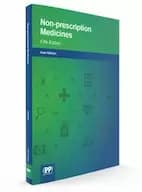
Non-Prescription Medicines Fifth Edition
Alan Nathan
Scheduled closure of pharmpress.com
ISBN 9780857113979
Published Oct 2020
Paperback 234 x 156 mm (320pp)
DESCRIPTION:
Non-prescription Medicines is the only publication in the UK that deals with available OTC medicines comprehensively and in depth. The new edition has been revised and updated to reflect amendments in legal category status of several products from Prescription-only (POM) to Pharmacy sale (P) status. Over-the-counter (OTC) medicines currently available in the UK are reviewed in alphabetically arranged chapters on the conditions that they are licensed to treat. 42 common conditions are covered and includes a new chapter on erectile dysfunction. Each chapter includes: an introduction to the condition detailed description of the available products, including side-effects, cautions and contraindications, interactions and dosage product selection points product recommendations Non-Prescription Medicines will enable you to make well-informed recommendations and give sound advice to your patients.
CONTENTS:
1.Acne
2.Athletes foot
3.Benign prostatic hyperplasia
4.Cardiovascular medicines
5.Colds
6.Cold sores
7.Constipation
8.Corns and calluses
9.Cough
10.Cradle cap
11.Cystitis
12.Dandruff and seborrhoeic dermatitis
13.Diarrhoea
14.Dry skin
15.Ear problems
16.Emergency hormonal contraception
17.Erectile dysfunction
18.Eye conditions
19.Fungal nail infection (onychomycosis)
20.Haemorrhoids
21.Hay fever
22.Head lice
23.Indigestion
24.Insect bites and stings
25.Irritable bowel syndrome
26.Irritant and allergic dermatitis and mild eczema
27.Migraine
28.Motion sickness
29.Mouth ulcers
30.Nappy rash
31.Obesity management
32.Oral thrush
33.Pain
34.Pattern baldness
35.Premenstrual syndrome
36.Scabies
37.Smoking cessation products
38.Sore throat
39.Temporary sleep disturbance
40.Threadworm
41.Vaginal candidiasis
42.Verrucas and warts
PORIM rabbit pAb
This gene encodes a highly glycosylated transmembrane protein with a high content of threonine and serine residues in its extracellular domain, similar to a broadly defined category of proteins termed mucins. Exposure of some cell types to anti-PORIMIN (pro-oncosis receptor inducing membrane injury) antibody, crosslinks this protein on the cell surface and induces a type of cell death termed oncosis. Oncosis is distinct from apoptosis and is characterized by a loss of cell membrane integrity without DNA fragmentation. This gene product is proposed to function as a cell surface receptor that mediates cell death. [provided by RefSeq, Jul 2008],Connexin-26 rabbit pAb
This gene encodes a member of the gap junction protein family. The gap junctions were first characterized by electron microscopy as regionally specialized structures on plasma membranes of contacting adherent cells. These structures were shown to consist of cell-to-cell channels that facilitate the transfer of ions and small molecules between cells. The gap junction proteins, also known as connexins, purified from fractions of enriched gap junctions from different tissues differ. According to sequence similarities at the nucleotide and amino acid levels, the gap junction proteins are divided into two categories, alpha and beta. Mutations in this gene are responsible for as much as 50% of pre-lingual, recessive deafness. [provided by RefSeq, Oct 2008],Meis1 rabbit pAb
Homeobox genes, of which the most well-characterized category is represented by the HOX genes, play a crucial role in normal development. In addition, several homeoproteins are involved in neoplasia. This gene encodes a homeobox protein belonging to the TALE ('three amino acid loop extension') family of homeodomain-containing proteins. [provided by RefSeq, Jul 2008],Membrane Protein-targeted Compound Library
Membrane proteins are a class of proteins widely found in biological cell membranes, playing essential roles in the structure and function of cells. Based on their location and function, membrane proteins can be classified into three main categories: peripheral membrane proteins, integral membrane proteins, and lipid-anchored proteins. Membrane proteins encompass a variety of functional proteins, including glycoproteins, carrier proteins, and enzymes. They are often linked to carbohydrate molecules, which can transmit signals into the cell by undergoing structural changes, participating in signal transduction processes. Membrane proteins perform a range of critical functions, including substance transport, signal transduction, cell recognition, and energy conversion. In drug development, membrane proteins, especially G protein-coupled receptors (GPCRs), ion channels, and transporters, are of particular interest. Many diseases are related to the malfunction of specific membrane proteins. Therefore, drugs designed to target these proteins can regulate their activity, aiming to treat diseases. TargetMol has collected 6422 compounds that target membrane proteins, which can be used for membrane protein-related scientific research and drug screening, suitable for high-throughput and high-content screening.Farbe und Form:Odour SolidRef: TM-L1520
1mgNachfragen10μL*10mM (DMSO)Nachfragen20μL*10mM (DMSO)Nachfragen30μL*10mM (DMSO)Nachfragen50μL*10mM (DMSO)Nachfragen100μL*10mM (DMSO)Nachfragen250μL*10mM (DMSO)NachfragenAld-Ph-amido-PEG3-C2-Pfp ester
CAS:Ald-Ph-amido-PEG3-C2-Pfp ester is a noncleavable antibody-drug conjugate (ADC) linker that falls under the category of polyethylene glycol (PEG) linkers.Formel:C23H22F5NO7Reinheit:98%Farbe und Form:SolidMolekulargewicht:519.42Anilazine
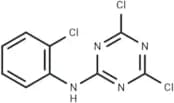
CAS:Anilazine is a pesticide that is used on crops. It comes under the category of triazine fungicides.Formel:C9H5Cl3N4Reinheit:98%Farbe und Form:White To Tan Crystals Solvents Insoluble In Water Melting Point 159°CMolekulargewicht:275.52DHFR-IN-22
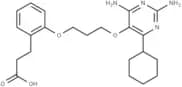
CAS:DHFR-IN-22 (Compound 8) is a DHFR (Dihydrofolate Reductase) inhibitor that falls under the category of 2,4-diaminopyrimidine compounds. It demonstrates significant inhibitory activity against isolated DHFR enzyme and major nontuberculous mycobacteria (NTM) species, specifically Mycobacterium avium and Mycobacterium abscessus. The compound has an IC50 of 1.1 nM and a MIC of 1.5 μg/mL for M. abscessus, and an IC50 of 6.3 nM and a MIC of 0.1 μg/mL for M. avium, while its IC50 for human DHFR is 2100 nM. DHFR-IN-22 may be promising for developing new strategies to combat NTM infections.Formel:C22H30N4O4Farbe und Form:SolidMolekulargewicht:414.52-APB hydrochloride
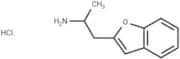
CAS:2-APB is an analog of 6-APB and falls under the category of benzofuran derivatives, known for its psychoactive properties. Certain benzofuran derivatives also exhibit monoamine oxidase-A (MAO-A) inhibitory activity.Formel:C11H14ClNOFarbe und Form:SolidMolekulargewicht:211.69Propargyl-PEG14-OH
Propargyl-PEG14-OH, a PROTAC linker from the PEG category, is employed in the synthesis of various PROTAC molecules. It serves as a click chemistry reagent, containing an alkyne group that can participate in a copper-catalyzed azide-alkyne cycloaddition reaction (CuAAc) with molecules containing azide groups.Formel:C31H60O15Farbe und Form:SolidMolekulargewicht:672.39322Benzyl-PEG8-azide
Benzyl-PEG8-azide is a PROTAC linker within the PEG category, used in the synthesis of PROTAC molecules. This compound serves as a click chemistry reagent, featuring an Azide group capable of Cu-catalyzed azide-alkyne cycloaddition reaction (CuAAC) with alkyne-containing molecules. Additionally, it can undergo a strain-promoted alkyne-azide cycloaddition reaction (SPAAC) with molecules containing DBCO or BCN groups.Formel:C23H39N3O8Farbe und Form:SolidMolekulargewicht:485.27372Benzyl-PEG13-THP
Benzyl-PEG13-THP is a PROTAC linker, classified under the PEG category, and is used for the synthesis of PROTAC molecules.Formel:C38H68O15Molekulargewicht:764.45582Benzyl-PEG9-acid
Benzyl-PEG9-acid is a PROTAC linker that falls under the PEG category and is utilized in the synthesis of PROTAC molecules.Formel:C26H44O11Farbe und Form:SolidMolekulargewicht:532.28836THP-PEG11-THP
THP-PEG11-THP is a PROTAC linker classified under the PEG category and is utilized in the synthesis of PROTAC molecules.Formel:C32H62O14Farbe und Form:SolidMolekulargewicht:670.41396Benzyl-PEG7-t-butyl ester
Benzyl-PEG7-t-butyl ester is a type of PROTAC linker within the PEG category, suitable for the synthesis of PROTAC molecules.Formel:C26H44O9Farbe und Form:SolidMolekulargewicht:500.29853Benzyl-PEG13-alcohol
Benzyl-PEG13-alcohol is a PROTAC linker classified under the PEG category, suitable for the synthesis of PROTAC molecules.Formel:C33H60O14Farbe und Form:SolidMolekulargewicht:680.39831Benzyl-PEG16-alcohol
Benzyl-PEG16-alcohol is a PROTAC linker within the PEG category, used for synthesizing PROTAC molecules.Formel:C39H72O17Farbe und Form:SolidMolekulargewicht:812.47695