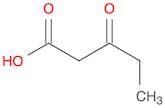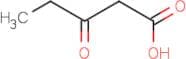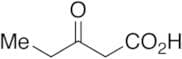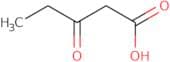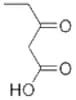
CAS 10191-25-0
:Ácido 3-oxopentanoico
- 3-Ketopentanoic acid
- 3-Ketovaleric acid
- 3-Oxo-n-valeric acid
- 3-Oxopentanoic acid
- 3-Oxovaleric Acid
- Pentanoic acid, 3-oxo-
- Propanoylacetic acid
- Propionylacetic acid
- Valeric acid, 3-oxo-
- β-Ketopentanoic acid
3-Oxopentanoic acid
CAS:3-Oxopentanoic acid
Fórmula:C5H8O3Pureza:0.98Forma y color: beige solidPeso molecular:116.12g/mol3-Oxopentanoic Acid
CAS:Producto controladoApplications Urinary metabolite of isoleucine found in patients with methylmalonic and proprionic acidemia.
Not a dangerous good if item is equal to or less than 1g/ml and there is less than 100g/ml in the package
References Kuhara, T. et al.: Biomed, Mass Spec., 10, 629 (1983); Duran, M. et al.: J. Inher. Metab. Dis., 1, 105 (1978);Fórmula:C5H8O3Forma y color:NeatPeso molecular:116.123-Oxopentanoic acid
CAS:3-Oxopentanoic acid is a fatty acid that is produced by the subunits of the liver. It is metabolized to propionyl CoA and then converted to 3-hydroxybutyrate or acetoacetate in the mitochondria. The conversion of propionyl CoA to 3-oxopentanoic acid is catalyzed by an amide synthetase, while the conversion of 3-oxopentanoic acid to acetoacetate is catalyzed by a β-ketothiolase. This fatty acid has been shown to be useful for the treatment of diabetes because it suppresses insulin secretion from pancreatic β cells and improves glucose uptake in muscle cells. It has also been speculated that this compound may have anti-inflammatory properties due to its inhibition of prostaglandin synthesis.
Fórmula:C5H8O3Pureza:Min. 95%Forma y color:PowderPeso molecular:116.12 g/mol