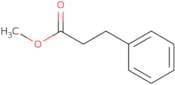
CAS 103-25-3
:Metil 3-fenilpropionato
Descripción:
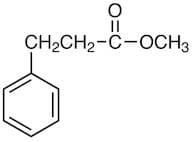
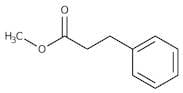
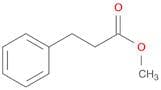
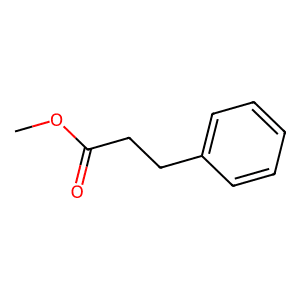
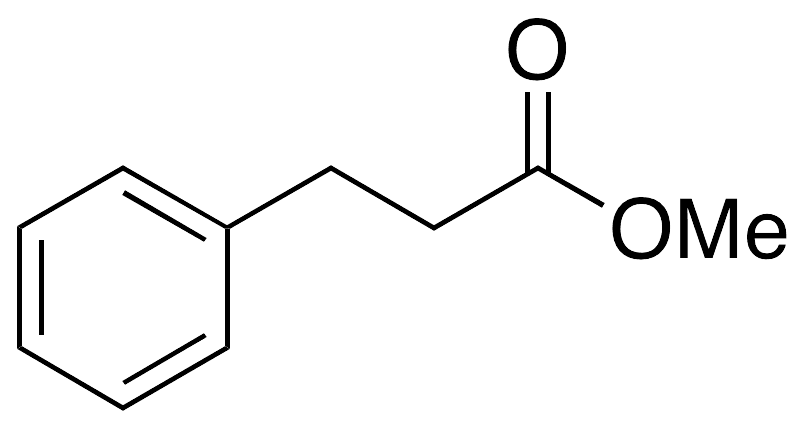
Metil 3-fenilpropionato, con el número CAS 103-25-3, es un compuesto orgánico clasificado como un éster. Se caracteriza por su estructura molecular, que consiste en un grupo metilo unido a un esqueleto de 3-fenilpropionato. Este compuesto generalmente aparece como un líquido incoloro a amarillo pálido con un olor agradable y afrutado, lo que lo hace útil en aplicaciones de sabor y fragancia. Metil 3-fenilpropionato es soluble en disolventes orgánicos pero tiene una solubilidad limitada en agua. Su fórmula química es C12H14O2, y tiene un punto de ebullición moderado, lo que indica que puede existir en fases líquidas y de vapor bajo condiciones estándar. Se conoce que el compuesto es estable en condiciones normales, pero puede sufrir hidrólisis en presencia de ácidos o bases fuertes. Además, es importante manejar esta sustancia con cuidado, ya que puede causar irritación al contacto con la piel o los ojos. En general, Metil 3-fenilpropionato es valorado en diversas aplicaciones industriales debido a sus propiedades aromáticas y versatilidad química.
Fórmula:C10H12O2
InChI:InChI=1S/C10H12O2/c1-12-10(11)8-7-9-5-3-2-4-6-9/h2-6H,7-8H2,1H3
Clave InChI:InChIKey=RPUSRLKKXPQSGP-UHFFFAOYSA-N
SMILES:C(CC(OC)=O)C1=CC=CC=C1
Sinónimos:- 3-Methl phenylpropionate
- 3-Phenylpropanoic acid methyl ester
- 3-Phenylpropionic Acid Methylester
- 3-Phenylpropionic acid methyl ester
- Benzenepropanoic acid, methyl ester
- Benzenepropanoicacid,Methylester
- Dihydrocinnamic acid methyl ester
- Hydrocinnamic Acid Methyl Ester
- Methyl 3-Phenylpropanoate
- Methyl benzenepropanoate
- Methyl dihydrocinnamate
- Methyl hydrocinnamate
- Methyl β-phenylpropionate
- NSC 10128
- NSC 404188
- Ver más sinónimos
Ordenar por
Pureza (%)
0
100
|
0
|
50
|
90
|
95
|
100
Encontrado 10 productos.
Methyl 3-Phenylpropionate
CAS:Fórmula:C10H12O2Pureza:>98.0%(GC)Forma y color:Colorless to Light yellow to Light orange clear liquidPeso molecular:164.20Methyl 3-phenylpropionate, 98%
CAS:Methyl 3-phenylpropionate, is used as an important raw material and intermediate used in organic Synthesis, pharmaceuticals, agrochemicals and dyestuff. 3-Phenylpropionic Acid Methyl Ester is an ester derivative of 3-phenylpropionic acid that is sometimes present in fragrance ingredients. It is alsoFórmula:C10H12O2Pureza:98%Forma y color:Liquid, Clear colorlessPeso molecular:164.20Methyl 3-phenylpropanoate
CAS:Methyl 3-phenylpropanoateFórmula:C10H12O2Pureza:98%Forma y color: colourless liquidPeso molecular:164.20g/molMethyl-3-phenylpropionate
CAS:Fórmula:C10H12O2Pureza:(GC) ≥ 98.0%Forma y color:Colourless or light-yellow liquidPeso molecular:164.20Methyl 3-phenylpropionate
CAS:Fórmula:C10H12O2Pureza:98.0%Forma y color:Liquid, ClearPeso molecular:164.204Methyl 3-phenylpropanoate
CAS:Methyl 3-phenylpropanoate (3-Phenylpropionic acid methyl ester) is a huamn endogenous metabolite.Fórmula:C10H12O2Pureza:99.72%Forma y color:SolidPeso molecular:164.2Methyl 3-Phenylpropionate(3-Phenylpropionic Acid Methyl Ester)
CAS:Producto controladoApplications 3-Phenylpropionic Acid Methyl Ester is an ester derivative of 3-phenylpropionic acid that is sometimes present in fragrance ingredients.
References Belsito, D. et al.: Food Chem. Toxicol., 49, S256 (2011):Fórmula:C10H12O2Forma y color:NeatPeso molecular:164.2Methyl 3-phenylpropionate
CAS:Methyl 3-phenylpropionate is an organic compound that belongs to the group of phenylpropionic acid derivatives. It is a colorless liquid that can be synthesized by the palladium-catalyzed coupling reaction of methyl acetoacetate and phenylacetic acid. Methyl 3-phenylpropionate has potent inhibitory activity against melanin production and is used as a topical treatment for hyperpigmentation disorders such as melasma, lentigo senilis, and chloasma. Methyl 3-phenylpropionate is not genotoxic or mutagenic in bacteria, yeast or mammalian cells. This agent also has anti-inflammatory properties because it inhibits prostaglandin synthesis. Methyl 3-phenylpropionate has been shown to cause blood disorders when administered intravenously in rats at high doses.Fórmula:C10H12O2Pureza:Min. 95%Peso molecular:164.2 g/mol