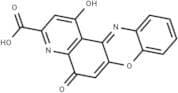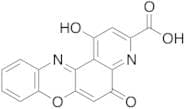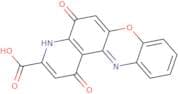
CAS 1043-21-6
:pirenoxina
- 1,5-Dioxo-4H-pyrido[3,2-a]phenoxazine-3-carboxylic acid
- 1,5-dioxo-1,5-dihydro-4H-pyrido[3,2-a]phenoxazine-3-carboxylic acid
- 1-Hydroxy-3-carboxy-5H-pyrido[3,2-a]phenoxazin-5-one
- 1-Hydroxy-5-oxo-5H-pyrido[3,2-a]phenoxazine-3-carboxylic acid
- 1-Hydroxy-5H-pyrido-[3,2-a]phenoxazin-5-one-3-carboxylic Acid
- 1043-21-6
- 257-181-6
- 5H-Pyrido[3,2-a]phenoxazine-3-carboxylic acid, 1-hydroxy-5-oxo-
- Catalin
- Catalin (pharmaceutical)
- Catalin K
- Clarvisan
- Kary-Uni
- Pirfenoxone
- Pyrphenoxone
- Bernetine
- Catalin【opthalmic remedy】
- 1-Hydroxy-5-oxo-5H-pyrido[3,2-]phenoxazine-3-carboxylicacid
- Ver más sinónimos
Pirenoxine
CAS:Pirenoxine is an agent with anti-cataractogenesis activity by interacting with calcium ions or selenite which could lead to the formation of lens cataract.Fórmula:C16H8N2O5Forma y color:SolidPeso molecular:308.25Pirenoxine
CAS:Producto controladoApplications Pirenoxine, is a medication used in the possible treatment and prevention of cataracts.
References Liao, J. H. et al.: Inorganic Chemistry. 50 (1): 365–377.Fórmula:C16H8N2O5Forma y color:NeatPeso molecular:308.25Pirenoxine
CAS:Pirenoxine is a synthetic drug that is used as an antimicrobial agent. It has been shown to protect corneal endothelial cells from oxidative injury. Pirenoxine reacts with the sulfhydryl groups of proteins and forms disulfide bonds. This reaction prevents protein denaturation and protects against oxidative stress by scavenging free radicals. The structure of pirenoxine was determined using particle-beam and synchronous fluorescence techniques, which showed it to have a calcium binding site in addition to its previously known calcium pantothenate site. Pirenoxine has been shown to have a physiological function of regulating the release of catecholamines from adrenal medulla or from nerve terminals in response to stimulation by acetylcholine or other agonists.
Fórmula:C16H8N2O5Pureza:Min. 95%Forma y color:Yellow PowderPeso molecular:308.25 g/mol