CAS 1070-70-8
:1,4-butanodiol diacrilato
Descripción:
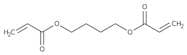
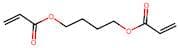
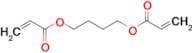
1,4-butanodiol diacrilato (BDDA) es un éster diacrilato comúnmente utilizado en química de polímeros y ciencia de materiales. Se caracteriza por sus dos grupos funcionales acrilato, que le permiten participar en la polimerización por radicales libres, lo que lo convierte en un monómero valioso en la producción de polímeros y resinas entrecruzados. El BDDA es típicamente un líquido incoloro a amarillo pálido con baja viscosidad, y tiene un punto de ebullición relativamente bajo. Es soluble en disolventes orgánicos como acetona y acetato de etilo, pero es insoluble en agua. Se conoce que el compuesto mejora las propiedades mecánicas y la resistencia química de los polímeros resultantes. Sin embargo, también es importante señalar que el BDDA puede ser un irritante para la piel y los ojos, y se deben tomar las medidas de seguridad adecuadas al manipularlo. Sus aplicaciones abarcan diversas industrias, incluidas recubrimientos, adhesivos y materiales dentales, donde sus capacidades de entrecruzamiento son particularmente beneficiosas.
Fórmula:C10H14O4
InChI:InChI=1/C10H14O4.C2H6O2/c1-3-9(11)13-7-5-6-8-14-10(12)4-2;3-1-2-4/h3-4H,1-2,5-8H2;3-4H,1-2H2
Clave InChI:InChIKey=JHWGFJBTMHEZME-UHFFFAOYSA-N
SMILES:C(OCCCCOC(C=C)=O)(C=C)=O
Sinónimos:- 1,4-Bis(acryloyloxy)butane
- 1,4-Butylene diacrylate
- 1,4-Butylene glycol diacrylate
- 1,4-Butyleneglycol diacrylate
- 2-Propenoic acid, 1,1′-(1,4-butanediyl) ester
- 2-Propenoic acid, 1,4-butanediyl ester
- Acrylic acid, tetramethylene ester
- Bdda
- Butane-1,1-Diyl Bisprop-2-Enoate
- Butane-1,4-Diyl Bisprop-2-Enoate
- Butane-1,4-diyl diacrylate
- Butylene glycol diacrylate
- Fa 124As
- Fancryl FA 124AS
- Fancryl FA 124SA
- Laromer BDDA
- M 204
- Miramer 204
- SR 213 (ester)
- Sartomer 213
- Sm 624
- Sr 213
- Tetramethylene acrylate
- Tetramethylene diacrylate
- Tetramethylene glycol diacrylate
- Viscoat 195
- Viscoat V 195
- n-Butane-1,4-diyl diacrylate
- 1,4-Butanediol, diacrylate
- 4-(Acryloyloxy)butyl acrylate
- ACRYLICACID,DIESTERWITH1,4-BUTANEDIOL
- acrylicacid,tetramethyleneester
- 1,4-BUTANEDIOL DIACRYLATE, TECH., 90%
- 2-Propenoicacid,1,4-butanediylester
- tetramethyleneacrylate
- 1,4-butanediyl diacrylate
- butylenediacrylate
- Butylene diacrylate
- sr213
- 1,4-butylenediacrylate
- Ver más sinónimos
Ordenar por
Pureza (%)
0
100
|
0
|
50
|
90
|
95
|
100
Encontrado 5 productos.
1,4-Butanediol diacrylate, 85+%, stab. with 50-105 ppm hydroquinone
CAS:1,4-Butanediol diacrylate is used as a multifunctional crosslinker. It is used in drying technology for paintings, coatings, inks, resins and adhesives. It serves as an intermediate product for polymer synthesis in the chemical industry. This Thermo Scientific Chemicals brand product was originallyFórmula:C10H14O4Pureza:85+%Forma y color:Clear, viscous liquidPeso molecular:198.221,4-Butanediol Diacrylate
CAS:1,4-Butanediol DiacrylatePureza:90% (stabilized with 200~400ppm MEHQ)Peso molecular:198.22g/mol1,4-Bis(acryloyloxy)butane (stabilized with MEHQ)
CAS:Fórmula:C10H14O4Pureza:>88.0%(GC)Forma y color:Colorless to Light yellow to Light orange clear liquidPeso molecular:198.221,4-Bis(acryloyloxy)butane(stabilizedwithMEHQ)
CAS:Pureza:85%(stabilized with MEHQ)Peso molecular:198.2181,4-Butanediol biscrylate - Hydroquinone as inhibitor
CAS:Producto controlado1,4-Butanediol biscrylate - Hydroquinone as inhibitor is a glycol ester that is used in the process of laser ablation. It has been shown to be a biocompatible polymer that can be used for surface methodology. This polymer is synthesized by reacting monosodium salt of butanediol with hydroquinone and sodium carbonate in aqueous solution. 1,4-Butanediol biscrylate - Hydroquinone as inhibitor has been tested using cervical cancer cells and it was found to have a cytotoxic effect on these cells.
Fórmula:C10H14O4Pureza:Min. 95%Peso molecular:198.22 g/molRef: 3D-FB30663
Producto descatalogado