CAS 1078-61-1
:Ácido dihidrocaféico
Descripción:
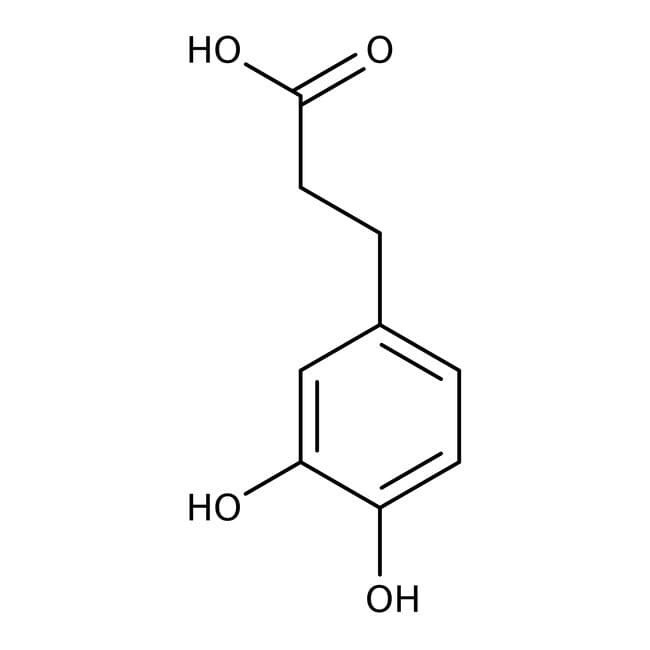
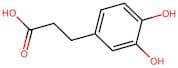
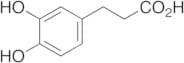
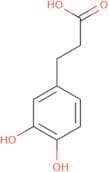
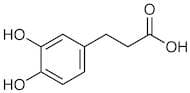
Ácido dihidrocaféico, con el número CAS 1078-61-1, es un compuesto fenólico que está estructuralmente relacionado con el ácido cafeico. Se caracteriza por sus dos grupos hidroxilo y un doble enlace en el anillo aromático, que contribuyen a sus propiedades antioxidantes. Este compuesto se encuentra típicamente en diversas fuentes vegetales y es conocido por sus posibles beneficios para la salud, incluidos efectos antiinflamatorios y neuroprotectores. Ácido dihidrocaféico es soluble en solventes polares, lo que facilita su extracción de materiales vegetales. Su estructura química le permite participar en diversas reacciones bioquímicas, lo que lo hace de interés tanto en la investigación nutricional como farmacéutica. Además, puede desempeñar un papel en el metabolismo de otros compuestos fenólicos y contribuir a los beneficios generales para la salud asociados con dietas ricas en frutas y verduras. A medida que la investigación avanza, se están explorando el rango completo de sus actividades biológicas y posibles aplicaciones en salud y medicina.
Fórmula:C9H10O4
InChI:InChI=1S/C9H10O4/c10-7-3-1-6(5-8(7)11)2-4-9(12)13/h1,3,5,10-11H,2,4H2,(H,12,13)
Clave InChI:InChIKey=DZAUWHJDUNRCTF-UHFFFAOYSA-N
SMILES:C(CC(O)=O)C1=CC(O)=C(O)C=C1
Sinónimos:- 3,4-Dihydroxy-β-phenylpropionic acid
- 3,4-Dihydroxybenzenepropanoic acid
- 3,4-Dihydroxybenzenepropionic acid
- 3,4-Dihydroxydihydrocinnamic acid
- 3,4-Dihydroxyhydrocinnamic acid
- 3-(3,4-Dihydroxyphenyl)Propanoate
- 3-(3,4-Dihydroxyphenyl)Propanoic Acid
- 3-(3,4-Dihydroxyphenyl)propionic acid
- Benzenepropanoic acid, 3,4-dihydroxy-
- Dihydrocaffeic acid
- Hydrocaffeic acid
- Hydrocinnamic acid, 3,4-dihydroxy-
- NSC 407275
- NSC 624007
- Ver más sinónimos
Ordenar por
Pureza (%)
0
100
|
0
|
50
|
90
|
95
|
100
Encontrado 11 productos.
3-(3,4-Dihydroxyphenyl)propionic acid, 98+%
CAS:3-(3,4-Dihydroxyphenyl)propionic acid it can be used to produce 3-(3,4-dihydroxy-phenyl)-propionic acid octyl ester by heating. This Thermo Scientific Chemicals brand product was originally part of the Alfa Aesar product portfolio. Some documentation and label information may refer to the legacy braFórmula:C9H10O4Pureza:98+%Forma y color:Pale cream to cream to brown or pale pink, Crystals or powder or crystalline powderPeso molecular:182.18Dihydrocaffeic acid
CAS:Dihydrocaffeic acid analytical standard provided with w/w absolute assay, to be used for quantitative titration.Fórmula:C9H10O4Pureza:(HPLC) ≥98%Forma y color:PowderPeso molecular:182.18Dihydrocaffeic acid
CAS:Dihydrocaffeic acid, a chlorogenic acid metabolite, has antioxidant, anti-Alzheimer's, neuroprotective, and lipid-lowering properties.Fórmula:C9H10O4Pureza:98.63%Forma y color:SolidPeso molecular:182.173-(3,4-Dihydroxyphenyl)propanoic acid
CAS:Fórmula:C9H10O4Pureza:98%Forma y color:SolidPeso molecular:182.17333-(3,4-Dihydroxyphenyl)Propionic Acid
CAS:3-(3,4-Dihydroxyphenyl)Propionic AcidPureza:98%Peso molecular:182.18g/mol3-(3,4-Dihydroxyphenyl)propionic acid
CAS:3-(3,4-Dihydroxyphenyl)propionic acid (3,4-DHPA) is a chlorogenic acid that is found in the leaves of the coffee plant. It has been shown to have a synergic effect with benzalkonium chloride on postprandial blood glucose levels. 3,4-DHPA also has a hypoglycemic effect and can be used as a dietary supplement for people with diabetes. 3,4-DHPA was extracted from coffee leaves using solid phase microextraction and then analyzed by gas chromatography. The rate constant for the reaction was found to be 0.917 min-1 at 25 °C and pH 7.0. The biocompatible polymer poly(L-lactic acid) was used as the stationary phase in this experiment to improve the selectivity of separation.Fórmula:C9H10O4Pureza:Min. 95%Forma y color:Off-White PowderPeso molecular:182.17 g/mol3-(3,4-Dihydroxyphenyl)propionic acid
CAS:Fórmula:C9H10O4Pureza:95%Forma y color:No data available.Peso molecular:182.1753,4-Dihydroxyhydrocinnamic Acid
CAS:Fórmula:C9H10O4Pureza:>98.0%(GC)(T)Forma y color:White to Brown powder to crystalPeso molecular:182.18