CAS 1092460-91-7
:Ordenar por
Pureza (%)
0
100
|
0
|
50
|
90
|
95
|
100
Encontrado 3 productos.
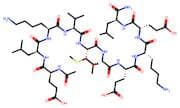
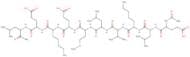
(4S,7S,10S,13S,16S,19S,22S,25S,28S)-28-Acetamido-4-(((S)-1-amino-4-methyl-1-oxopentan-2-yl)carbamoyl)-7,22-bis(4-aminobutyl)-10-(2-carboxyethyl)-16,25-diisobutyl-19-isopropyl-13-(2-(methylthio)ethyl)-
CAS:(4S,7S,10S,13S,16S,19S,22S,25S,28S)-28-Acetamido-4-(((S)-1-amino-4-methyl-1-oxopentan-2-yl)carbamoyl)-7,22-bis(4-aminobutyl)-10-(2-carboxyethyl)-16,25-diisobutyl-19-isopropyl-13-(2-(methylthio)ethyl)-Pureza:98%Peso molecular:1272.58g/molRAGE antagonist peptide
CAS:RAGE antagonist blocks S100P/A4, HMGB-1; hinders glioma growth, metastasis; reduces PDAC cell growth, NF-κB activity; counters TDI effects in mice.Fórmula:C57H101N13O17SPureza:98%Forma y color:SolidPeso molecular:1272.56RAGE antagonist peptide
CAS:The RAGE antagonist peptide is a peptide that binds to RAGE and inhibits its pro-angiogenic effects. This peptide has been shown to inhibit the growth of prostate cancer cells in vitro and in vivo, as well as induce the apoptosis of these cells. The RAGE antagonist peptide also blocks the activation of nuclear DNA, which prevents transcriptional regulation and protein synthesis. In addition, this peptide can bind to calcium ions and inhibit the activity of toll-like receptor 4 (TLR4). The RAGE antagonist peptide has also been shown to have anti-angiogenic effects on a variety of cancers, including prostate cancer tissues.Fórmula:C57H101N13O17SPureza:Min. 95%Peso molecular:1,272.6 g/mol