CAS 112-27-6
:Trietilenglicol
Descripción:
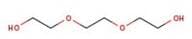
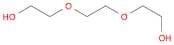
Trietilenglicol (TEG) es un líquido incoloro, inodoro y higroscópico que pertenece a la clase de los glicoles, específicamente a los glicoles de polietileno. Tiene una fórmula molecular de C6H14O4 y un peso molecular relativamente alto en comparación con otros glicoles. Se conoce que el TEG tiene una excelente solubilidad en agua y en una variedad de disolventes orgánicos, lo que lo convierte en un compuesto versátil en aplicaciones industriales. Tiene un alto punto de ebullición y baja volatilidad, lo que contribuye a su estabilidad bajo calor. El TEG se utiliza comúnmente como humectante, disolvente y plastificante, así como en la producción de resinas y como intermediario en la síntesis de otros productos químicos. Además, sirve como agente deshidratante en el procesamiento de gas natural y como refrigerante en diversas aplicaciones. Aunque generalmente se considera seguro, es importante manejar el TEG con cuidado, ya que puede causar irritación al contacto con la piel o los ojos y puede representar riesgos para la salud si se ingiere o inhala en cantidades significativas.
Fórmula:C6H14O4
InChI:InChI=1S/C6H14O4/c7-1-3-9-5-6-10-4-2-8/h7-8H,1-6H2
Clave InChI:InChIKey=ZIBGPFATKBEMQZ-UHFFFAOYSA-N
SMILES:C(COCCO)OCCO
Sinónimos:- 1,2-Bis(2-hydroxyethoxy)ethane
- 1,2-Di(β-hydroxyethoxy)ethane
- 1,8-Dihydroxy-3,6-dioxaoctane
- 2,2'-(1,2-Ethanediyl bis (oxy))-bisethanol
- 2,2'-(Ethylendioxy)diethanol
- 2,2'-(Etilendioxi)Dietanol
- 2,2'-Ethylenedioxybis(ethanol)
- 2,2'-Ethylenedioxydiethanol
- 2,2'-[1,2-Ethanediylbis(oxy)]bisethanol
- 2,2'-[Ethane-1,2-Diylbis(Oxy)]Diethanol
- 2,2-(Ethylenedioxy)Diethanol
- 2,2′-(Ethane-1,2-diylbis(oxy))bis(ethanol)
- 2,2′-[1,2-Ethanediylbis(oxy)]bis[ethanol]
- 2-[2-(2-Hydroxyethoxy)ethoxy]ethan-1-ol
- 2-[2-(2-Hydroxyethoxy)ethoxy]ethanol
- 3,6-Dioxaoctane-1,8-diol
- Crestwood A
- Ethanol, 2,2'-[1,2-ethanediylbis(oxy)]bis-
- Ethanol, 2,2'-bis[1,2-ethanediylbis(oxy)]bis-
- Glycol bis(hydroxyethyl) ether
- Hanlon TEG
- Nsc 60758
- Octane-1,8-Diol, 3,6-Dioxa-
- TEG
- TEG (glycol)
- Tgme
- Triaethylenglykol
- Triethylene Glycol Anhydrous
- Trigen
- Triglycol
- Trigol
- Trigol 95+ % (GLC)
- Ver más sinónimos
Ordenar por
Pureza (%)
0
100
|
0
|
50
|
90
|
95
|
100
Encontrado 15 productos.
Triethylene Glycol
CAS:Fórmula:C6H14O4Pureza:>99.0%(GC)Forma y color:Colorless to Almost colorless clear liquidPeso molecular:150.17Triethylene glycol, 99%
CAS:Triethylene glycol is used as a plasticizer, as an additive for hydraulic fluids and brake fluids, and as a disinfectant. It is an active component of certain pigments, printing dyes, inks and paste. It finds application as a liquid desiccant and used in the dehydration of natural gas, carbon dioxFórmula:C6H14O4Pureza:99%Forma y color:Liquid, Clear colorlessPeso molecular:150.17Triethylene Glycol
CAS:Ether-alcohols and their halogenated, sulfonated, nitrated or nitrosated derivatives, nesoiFórmula:C6H14O4Forma y color:Colorless Clear LiquidPeso molecular:150.08921Triethylene glycol
CAS:Fórmula:C6H14O4Pureza:≥ 99.0%Forma y color:Clear, colourless to almost colourless liquidPeso molecular:150.17Triethylene glycol
CAS:Triethylene glycol is a PEG-based PROTAC linker that can be used to synthesise PROTAC molecules.Fórmula:C6H14O4Pureza:99.51%Forma y color:Colourless LiquidPeso molecular:150.172,2′-(Ethane-1,2-diylbis(oxy))diethanol
CAS:Fórmula:C6H14O4Pureza:95.0%Forma y color:Liquid, ClearPeso molecular:150.174Triethylene glycol
CAS:Triethylene glycol is a polyether that is used as a solvent and an additive in various products. Triethylene glycol can be found in water-based paints, cosmetics, and polyurethane plastics. It has a low toxicity to humans and animals. The rate constant of the reaction between triethylene glycol and coumarin derivatives has been determined by fluorescence probe techniques. The polymerization mechanism of triethylene glycol has been studied with the aid of polyvinyl alcohol (PVA) as a model system. This polymerization mechanism depends on the coordination geometry of the reactants. The polymerization of triethylene glycol is initiated by oxidative addition to produce the monoethyl ether followed by elimination to form the corresponding diols, which are then oxidized to give the final product. Triethylene glycol is also used in cell nuclei staining techniques to identify nuclear morphology or DNA content.Fórmula:C6H14O4Pureza:Min. 98 Area-%Forma y color:Clear LiquidPeso molecular:150.17 g/molTriglycol
CAS:Producto controladoApplications Triglycol is used in a mixture with 2-amino-2-methyl-1-propanol in a CO2 absorption-regeneration process.
References Zheng, C., et. al.: Ind. Eng. Chem. Res., 51, 11236 (2012)Fórmula:C6H14O4Forma y color:ColourlessPeso molecular:150.17Triethylene Glycol extrapure AR, 99%
CAS:Fórmula:C6H14O4Pureza:min. 99%Forma y color:Clear, Colourless, Viscous liquidPeso molecular:150.17Triethylene Glycol extrapure, 99%
CAS:Fórmula:C6H14O4Pureza:min. 99%Forma y color:Clear, Colourless to pale yellow, Viscous LiquidPeso molecular:150.17