

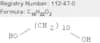
CAS 112-47-0
:1,10-Decanodiol
- 1,10-Decamethylene glycol
- 1,10-Decamethylenediol
- 1,10-Decandiol
- 1,10-Decyleneglycol
- 1,10-Dihydroxydecane
- D 0014
- Decamethylene glycol
- Decamethylenediol
- Decan-1,10-diol
- Decane-1,10-diol
- Decano-1,10-Diol
- Nsc 17165
- Speziol C 10/2
- α,ω-Decanediol
- 1,10-Decanediol, (Decamethylene glycol
- 1,10-Decanediol
- Ver más sinónimos
1,10-Decanediol
CAS:Fórmula:C10H22O2Pureza:>97.0%(GC)Forma y color:White to Almost white powder to lumpPeso molecular:174.281,10-Decanediol, 97%
CAS:1,10-Decanediol is an minor intermediate in the production of polyesters. It also used in essence, perfumes and in pharmaceuticals. The diacrylate is hydrophobic and used for flexible dental materials, radiation curable coatings, and for lenses. This Thermo Scientific Chemicals brand product was oriFórmula:C10H22O2Pureza:97%Forma y color:Powder or flakes, WhitePeso molecular:174.28Decamethylene glycol
CAS:Decamethylene glycol, a reagent for studying modified oligonucleotides with anticancer effects, is also researched in myrrh and frankincense oil composition.Fórmula:C10H22O2Pureza:98%Forma y color:White Crystals Or PowderPeso molecular:174.281,10-Decanediol
CAS:1,10-Decanediol is an organic compound that belongs to the group of glycols. It has a melting point of 117°C and a boiling point of 285°C. 1,10-Decanediol is an asymmetric molecule with two different stereoisomers: cis-1,10-decanediol and trans-1,10-decanediol. The melting point for cis-1,10-decanediol is higher than that for trans-1,10-decanediol. This indicates that the cis form is more stable at room temperature than the trans form. 1,10-Decanediol can be used in the synthesis of fatty acids and dna duplexes. It has also been shown to inhibit the replication of HIV by binding to its reverse transcriptase enzyme and preventing it from functioning properly.
Fórmula:C10H22O2Pureza:Min. 98 Area-%Forma y color:White PowderPeso molecular:174.28 g/mol1,10-Decanediol
CAS:Producto controladoApplications 1,10-Decanediol is a substance used in the pharmaceutical study on the composition of essential oils obtained from myrrh and frankincense and their potential anticancer activities. Also used as a reagent in the biological study of modified oligonucleotide with in vivo antitumoral activity.
References Chen, Y., et al.: Oncol. Lett., 6, 1140 (2013); Herdewijn, P., et al.: Biomed. Health Res., 24, 182 (1998)Fórmula:C10H22O2Forma y color:NeatPeso molecular:174.28













