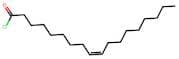
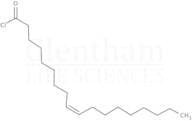
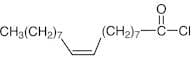
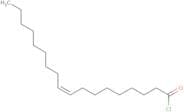
CAS 112-77-6
:cloruro de oleilo
- (9Z)-1-chlorooctadec-9-ene
- (9Z)-9-Octadecenoyl chloride
- (9Z)-octadec-9-enoyl chloride
- (Z)-9-Octadecenoyl chloride
- 9-(Z)-Octadecen-1-oyl chloride
- 9-Octadecenoyl chloride, (9Z)-
- 9-Octadecenoyl chloride, (Z)-
- 9-Octadecenoyl chloride, (Z)- (9CI)
- Nsc 97299
- Octadec-9-Enoyl Chloride
- Oleic acid chloride
- Oleic chloride
- Oleyl chloride
- cis-9-Octadecenoyl chloride
- Oleoyl chloride
- Oleoyl chloride
- 9-OCTADECENOYL CHLORIDE
- (z)-9-octadecenoylchlorid
- oleoylchloride,(mixturewithca.35-40%elaidicacidchloride)
- OLEOYL CHLORIDE, TECH., 85%
- OCTADECENOYLCHLORIDE
- (Z)-9-Octadecenoic acid chloride
- techn,mixturewithca.35-40%Elaidicacidchloride
- (Z)-9-Octadecenoylchloride
- DELTA 9 CIS-OCTADECENOYL CHLORIDE
- [(9Z)-1-Oxo-9-octadecenyl] chloride
- Oleoyl
- Ver más sinónimos
Oleoyl Chloride
CAS:Fórmula:C18H33ClOPureza:>80.0%(GC)Forma y color:Colorless to Light orange to Yellow clear liquidPeso molecular:300.91Oleoyl Chloride
CAS:Producto controladoStability Moisture Sensitive
Applications Oleyl Chloride is used as a chemical reagent in the preparation of Vitamin E analogs as well as antiviral nucleoside phosphoramidate prodrugs used in the treatment of HIV and HBV.
References Cho, J. et al.: Bioorg. Med. Chem., 22, 6665 (2014); Iwata, R. et al.: Bioorg. Med. CHem. Lett., 25, 815 (2015);Fórmula:C18H33ClOForma y color:NeatPeso molecular:300.907Oleoyl chloride
CAS:Oleoyl chloride is a monosodium salt of oleic acid. It is a biocompatible polymer that has been shown to have antimicrobial properties and has been used as a natural drug in the treatment of microbial infections. Oleoyl chloride inhibits bacterial growth by binding to receptors on the surface of cells, especially those with high resistance to antibiotics. Oleoyl chloride has been found to be effective against Gram-positive bacteria, such as vancomycin-resistant Enterococcus faecium and methicillin-resistant Staphylococcus aureus (MRSA), and Gram-negative bacteria, such as Salmonella enterica serovar Typhimurium. Oleoyl chloride also has anti-inflammatory properties that are related to its ability to inhibit the production of prostaglandins. This compound can be synthesized from natural compounds containing nitrogen atoms, such as amino acids and proteins, and hydroxyl groups, such as alcohols.
Fórmula:C18H33ClOPureza:Min. 95%Peso molecular:300.91 g/mol