CAS 115-80-0
:Trietil ortopropionato
Descripción:
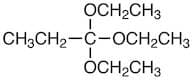
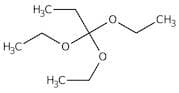
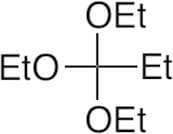
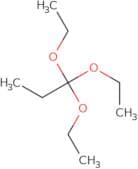
Trietil ortopropionato, con el número CAS 115-80-0, es un compuesto orgánico clasificado como un éster. Se caracteriza por su forma líquida clara e incolora y un olor afrutado, que es típico de muchos ésteres. La fórmula molecular de Trietil ortopropionato es C11H22O4, lo que indica que contiene tres grupos etilo y un grupo propionato. Este compuesto es soluble en disolventes orgánicos como el etanol y el éter, pero tiene una solubilidad limitada en agua. Trietil ortopropionato se utiliza principalmente como reactivo en la síntesis orgánica y como disolvente en varios procesos químicos. También puede servir como agente saborizante en la industria alimentaria debido a su agradable aroma. Además, se utiliza en la producción de ciertos polímeros y como intermediario en la síntesis de productos farmacéuticos. Se deben observar precauciones de seguridad al manipular este compuesto, ya que puede causar irritación en la piel y los ojos, y se recomienda una ventilación adecuada para evitar la inhalación de vapores.
Fórmula:C9H20O3
InChI:InChI=1/C9H20O3/c1-5-9(10-6-2,11-7-3)12-8-4/h5-8H2,1-4H3
Clave InChI:InChIKey=FGWYWKIOMUZSQF-UHFFFAOYSA-N
SMILES:C(OCC)(OCC)(OCC)CC
Sinónimos:- 1,1,1-Triethoxypropane
- Ethyl orthopropionate
- NSC 5604
- Orthopropionic acid triethyl ester
- Propane, 1,1,1-triethoxy-
- Teop
- Triethyl orthopropanoate
- Triethyl orthopropionate
- Orthopropionic acid ethyl
- 1,1,1-triethoxy-propan
- Orthopropionic acid ethyl ester
- O-PROPIONIC ACID TRIETHYL ESTER
- triethjyl orthopropionate
- TRIETHYL ORTHOPROPRIONATE
- Triethyl orthopropionate, 98+%
- TRIETHYL-O-PROPIONATE
- Triethylorthopropionat
- Triethyl-O-propionic acid
- Triethyl orthopiopionate
- Ver más sinónimos
Ordenar por
Pureza (%)
0
100
|
0
|
50
|
90
|
95
|
100
Encontrado 6 productos.
Triethyl Orthopropionate
CAS:Fórmula:C9H20O3Pureza:>96.0%(GC)Forma y color:Colorless to Almost colorless clear liquidPeso molecular:176.26Triethyl orthopropionate, 97%
CAS:Used as intermediates in pharmaceutical chemical and organic synthesize. It can react with N-benzoyl-glycine in the presence of 4-(dimethylamino)pyridine and acetic anhydride to produce 4-(1-ethoxy-propylidene)-2-phenyl-4H-oxazol-5-one. It is also applied as a starting material in the synthesis ofFórmula:C9H20O3Pureza:97%Forma y color:Clear colorless, LiquidPeso molecular:176.26Triethyl Orthopropionate (Technical Grade)
CAS:Producto controladoStability Moisture Sensitive
Applications Triethyl orthopropionate is used as a starting material in the synthesis of Triethyl orthoacrylate. Triethyl orthopropionate is also commonly used in Claisen rearrangement reactions that yield γ,δ-unsaturated esters.
Not a dangerous good if item is equal to or less than 1g/ml and there is less than 100g/ml in the package
References Ghosh, A. & Moon, D.: Org. Lett., 9, 2425 (2007); Ito, H. & Taguchi, T.: Tetrahedron Lett., 38, 5829 (1997); Sarkar, D., et al.: Tetrahedron Lett., 50, 1431 (2009)Fórmula:C9H20O3Forma y color:NeatPeso molecular:176.251,1,1-Triethoxypropane
CAS:Fórmula:C9H20O3Pureza:95.0%Forma y color:Liquid, ClearPeso molecular:176.256Triethyl orthopropionate
CAS:Triethyl orthopropionate is a triester derived from propionic acid and ethanol. It has been shown to have receptor activity in the toll-like receptor family, which are molecules that bind to specific molecules on the surface of cells and activate an immune response. Triethyl orthopropionate also inhibits fatty acid synthesis by binding to the pyrazole ring of the enzyme acetyl-CoA carboxylase, thereby inhibiting its activity. This inhibition leads to higher levels of free fatty acids in the bloodstream, which can lead to metabolic disorders such as diabetes mellitus and autoimmune diseases like lupus erythematosus. The molecule also has a hydroxyl group that can form hydrogen bonds with other molecules, such as methanol solvent or dinucleotide phosphate. These interactions can be used in synthesis methods involving intramolecular hydrogen transfer reactions.Fórmula:C9H20O3Pureza:Min. 95%Forma y color:Clear LiquidPeso molecular:176.25 g/mol