CAS 1191-41-9
:Linolenato de etilo
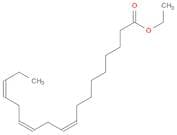
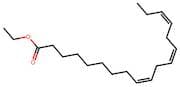
- (Z,Z,Z)-9,12,15-Octadecatrienoic acid ethyl ester
- 9,12,15-Octadecatrienoic acid ethyl ester
- 9,12,15-Octadecatrienoic acid, ethyl ester, (9Z,12Z,15Z)-
- 9,12,15-Octadecatrienoic acid, ethyl ester, (Z,Z,Z)-
- Ethyl (Z,Z,Z)-9,12,15-octadecatrienoate
- Ethyl cis,cis,cis-9,12,15-octadecatrienoate
- Ethyl linolenoate
- Ethyl α-linolenate
- Linolenic acid ethyl ester
- ethyl (9E,12E,15E)-octadeca-9,12,15-trienoate
- ethyl (9Z,12Z,15Z)-octadeca-9,12,15-trienoate
- Ver más sinónimos
9,12,15-Octadecatrienoic acid, ethyl ester, (9Z,12Z,15Z)-
CAS:Fórmula:C20H34O2Pureza:80%Forma y color:LiquidPeso molecular:306.4828(9Z,12Z,15Z)-Ethyl Octadeca-9,12,15-Trienoate
CAS:(9Z,12Z,15Z)-Ethyl Octadeca-9,12,15-TrienoatePureza:80%Peso molecular:306.48g/molEthyl 9(Z),12(Z),15(Z)-Octadecatrienoate
CAS:Fórmula:C20H34O2Pureza:>99%Forma y color:LiquidPeso molecular:306.48Ethyl 9(Z),12(Z),15(Z)-Octadecatrienoate 80%
CAS:Fórmula:C20H34O2Pureza:>80%Forma y color:Colorless LiquidPeso molecular:306.48Ethyl 9(Z),12(Z),15(Z)-Octadecatrienoate 90%
CAS:Fórmula:C20H34O2Pureza:>90%Forma y color:Colorless LiquidPeso molecular:306.48Ethyl linolenate
CAS:Ethyl linolenate, a fatty acid ester, suppresses melanogenesis and tyrosinase activity, demonstrating anti-melanogenic effects for pigmentation disorder and skin-lightening studies.Fórmula:C20H34O2Forma y color:Physical Description Clear Colorless Liquid (Ntp 1992)Peso molecular:306.48Linolenic Acid Ethyl Ester-d5
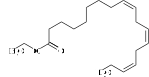
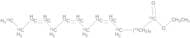
CAS:Producto controladoApplications Linolenic Acid Ethyl Ester-d5 is the isotope labelled analog of Linolenic Acid Ethyl Ester (L467645); the ethyl ester derivative of Linolenic Acid (L467650) which is an essential fatty acid that occurs mostly as the glyceride in most drying oils. Also a nutrient.
References Folch, J., et al.: J. Biol. Chem., 226, 497 (1957); Orban, E., et al.: J. Food Sci., 68, 128 (2003); Tritt, K., et al.: J. Agric. Food Chem., 53, 5304 (2005)Fórmula:C20D5H29O2Forma y color:NeatPeso molecular:311.51Linolenic Acid Ethyl Ester
CAS:Producto controladoStability Light Sensitive
Applications Linolenic Acid Ethyl Ester is the ethyl ester derivative of Linolenic Acid (L467650); an essential fatty acid that occurs mostly as the glyceride in most drying oils. Also a nutrient.
References Folch, J., et al.: J. Biol. Chem., 226, 497 (1957); Orban, E., et al.: J. Food Sci., 68, 128 (2003); Tritt, K., et al.: J. Agric. Food Chem., 53, 5304 (2005)Fórmula:C20H34O2Forma y color:NeatPeso molecular:306.48Linolenic acid ethyl ester
CAS:Linolenic acid ethyl ester (LAE) is a polyunsaturated fatty acid with 18 carbons and three double bonds. LAE is produced from linolenic acid by the addition of an ethyl group. This compound is soluble in acetone, chloroform, and ether, but not water. LAE has been shown to be synthesized by plants as well as animals. It has been used for the production of caproic acid, which is an analog to linolenic acid ethyl ester. This compound can be used as a natural compound or as a synthetic material in the pharmaceutical industry.Fórmula:C20H34O2Pureza:Min. 95%Peso molecular:306.48 g/mol