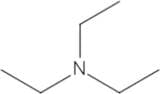
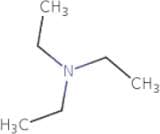
CAS 121-44-8
:Ethanamina, N,N-diethyl-
- (Diethylamino)ethane
- Atb 0489
- Le 11-5Rg
- N,N,N-Triethylamine
- N,N-Diethylethanamine
- T 0886
- TEA
- Tri-Ethylamine
- Triaethylamin
- Triethylamin
- Triethylamine
- Trietilamina
- Trietilammina
- トリエチルアミン
- Ethanamine, N,N-diethyl-
- N,N-diethylethanamine acetate (1:1)
- TETN
- N,N-diethylethanaminium bromide
- ethanamine
- N,N-diethylethanamine sulfate
- Triethyl Amine
- N,N-diethylethanamine sulfate (1:1)
- N,N-diethylethanaminium
- Diethylethanamine
- TEN
- Triethylamine, Free Base (1.08217)
- AKOS BBS-00004381
- N,N-Diethylethanamin
- (C2H5)3N
- ai3-15425
- Trethylamine
- Ver más sinónimos
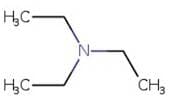
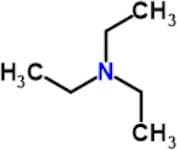
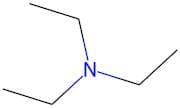
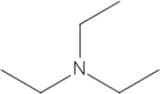
Triethylamine
CAS:Fórmula:C6H15NPureza:>99.0%(GC)(T)Forma y color:Colorless clear liquidPeso molecular:101.19Triethylamine, 99%
CAS:Triethylamine is a base used to prepare esters and amides from acyl chlorides as well as in the synthesis of quaternary ammonium compounds. It acts as a catalyst in the formation of urethane foams and epoxy resins, dehydrohalogeantion reactions, acid neutralizer for condensation reactions and SwernFórmula:C6H15NPureza:99%Forma y color:Liquid, Clear colorless to very pale yellowPeso molecular:101.19Triethylamine, 99+%
CAS:Triethylamine is a base used to prepare esters and amides from acyl chlorides as well as in the synthesis of quaternary ammonium compounds. It acts as a catalyst in the formation of urethane foams and epoxy resins, dehydrohalogeantion reactions, acid neutralizers for condensation reactions and SwernFórmula:C6H15NPureza:99+%Forma y color:Liquid [EU & US]Peso molecular:101.19Triethylamine anhydrous
CAS:Fórmula:C6H15NPureza:99.0%Forma y color:Liquid, Clear LiquidPeso molecular:101.193Triethylamine
CAS:Acyclic monoamines and their derivatives, nesoiFórmula:C6H15NForma y color:Clear Colorless LiquidPeso molecular:101.12045Triethylamine
CAS:Fórmula:C6H15NPureza:≥ 99.0%Forma y color:Clear, colourless liquidPeso molecular:101.19Triethylamine
CAS:TriethylamineFórmula:C6H15NPureza:99%Forma y color: clear. almost colourless liquidPeso molecular:101.19g/molTriethylamine, GlenDry™, anhydrous
CAS:Fórmula:C6H15NPureza:≥ 99.8%Forma y color:Clear, colourless liquidPeso molecular:101.19Canada Residual Solvents Mixture 1046 5000 µg/mL in Triacetin
CAS:Producto controlado- 100-66-3
- 108-21-4
- 109-60-4
- 109-66-0
- 109-94-4
- 110-19-0
- 121-44-8
- 123-51-3
- 123-86-4
- 141-78-6
- 142-82-5
- 1634-04-4
- 60-29-7
- 64-17-5
- 64-18-6
- 64-19-7
- 67-63-0
- 67-64-1
- 67-68-5
- 71-23-8
- 71-36-3
- 71-41-0
- 78-83-1
- 78-92-2
- 78-93-3
- 79-20-9
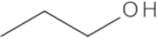
Fórmula:C3H8OForma y color:MixturePeso molecular:60.10Triethylamine, GlenDry™, anhydrous over molecular sieve
CAS:Fórmula:C6H15NPureza:(GC) ≥ 99.8%Forma y color:Clear, colourless liquidPeso molecular:101.19Triethylamine, GlenPure™, analytical grade
CAS:Fórmula:C6H15NPureza:≥ 99.8%Forma y color:Clear, colourless liquidPeso molecular:101.19Triethylamine
CAS:Producto controladoApplications Triethylamine is used as a competing base for the separation of acidic basic and neutral drugs by reverse-phased high-performance liquid chromatography (HPLC). Triethylamine induces visual disturbances (such as foggy vision) in humans (1), and is also used in industry as a quenching agent in the ozonolysis of alkenes (e.g. (E)-2-Pentene [P227315]). Triethylamine is used in the purification of drugs which are pharmacologically or chemically similar through separation in reverse-phase HPLC (2).Drinking water contaminant candidate list 3 (CCL 3) compound as per United States Environmental Protection Agency (EPA). Environmental contaminants; Food contaminants.
Not a dangerous good if item is equal to or less than 1g/ml and there is less than 100g/ml in the package
References 1. Akesson B. et al.: Int Arch Occup Environ Health. 1986;57(4):297-302. 2. Roos RW. et al.: J Chromatogr. 1986 Dec 24;370(3):403-18.Fórmula:C6H15NForma y color:ColourlessPeso molecular:101.19Triethylamine [for HPLC]
CAS:Fórmula:C6H15NPureza:>99.5%(GC)Forma y color:Colorless to Almost colorless clear liquidPeso molecular:101.19Triethylamine 100 µg/mL in Acetonitrile
CAS:Fórmula:C6H15NForma y color:Single SolutionPeso molecular:101.19GB 24410-2009 VOC Mixture 640 1000 µg/mL in Methanol
CAS:Producto controlado- 100-41-4
- 106-42-3
- 107-21-1
- 107-98-2
- 108-01-0
- 108-88-3
- 109-86-4
- 110-12-3
- 110-80-5
- 111-46-6
- 111-76-2
- 112-34-5
- 121-44-8
- 122-99-6
- 123-86-4
- 124-68-5
- 144-19-4
- 29911-28-2
- 34590-94-8
- 504-63-2
- 5131-66-8
- 57-55-6
- 64-17-5
- 67-63-0
- 67-64-1
- 71-23-8
- 71-36-3
- 71-43-2
- 770-35-4
- 872-50-4
- 95-47-6
Forma y color:MixtureTriethylamine for HPLC, 99.5%
CAS:Fórmula:C6H15NPureza:min. 99.5%Forma y color:Clear, Colourless, Liquid, max. 10Peso molecular:101.19
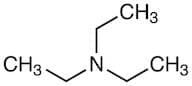

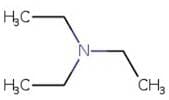










![Triethylamine [for HPLC]](/_next/image/?url=https%3A%2Fstatic.cymitquimica.com%2Fproducts%2F3B%2Fthumb%2FT4021.jpg&w=3840&q=75)