CAS 121808-62-6
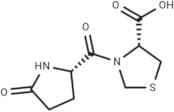
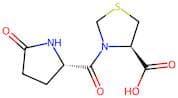
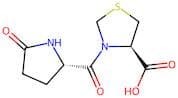
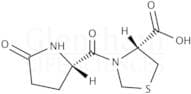
:Pidotimod
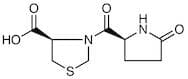
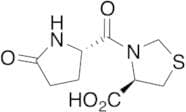
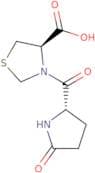
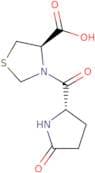
- (4R)-3-[[(2S)-5-Oxo-2-pyrrolidinyl]carbonyl]-4-Thiazolidinecarboxylic acid
- 4-Thiazolidinecarboxylic acid, 3-[(5-oxo-2-pyrrolidinyl)carbonyl]-, [R-(R*,S*)]-
- 4-Thiazolidinecarboxylic acid, 3-[[(2S)-5-oxo-2-pyrrolidinyl]carbonyl]-, (4R)-
- Adimod
- Axil (pharmaceutical)
- Onaka
- Pidotimond
- Pigitil
- Polimod
- Pidotimod
(4R)-3-{[(2S)-5-oxopyrrolidin-2-yl]carbonyl}-1,3-thiazolidine-4-carboxylic acid
CAS:Fórmula:C9H12N2O4SPureza:98%Forma y color:SolidPeso molecular:244.2676Pidotimod
CAS:Pidotimod is a synthetic dipeptide with immunomodulatory properties.Fórmula:C9H12N2O4SPureza:97.56% - 99.74%Forma y color:Almost White To White Crystalline PowderPeso molecular:244.27(R)-3-((S)-5-Oxopyrrolidine-2-Carbonyl)Thiazolidine-4-Carboxylic Acid
CAS:(R)-3-((S)-5-Oxopyrrolidine-2-Carbonyl)Thiazolidine-4-Carboxylic AcidPureza:98%Peso molecular:244.27g/molPidotimod
CAS:Fórmula:C9H12N2O4SPureza:>98.0%(T)(HPLC)Forma y color:White to Almost white powder to crystalPeso molecular:244.27Pidotimod
CAS:Producto controladoApplications Immunostimulant used in patients with cell-mediated immunodepression.
References Gu, C., et al.: Pharm. Res., 25, 979 (2008), Fliri, A., et al.: J. Med. Chem., 52, 8038 (2009), Giagulli, C., et al.: Int. Immunopharmacol., 9, 1366 (2009),Fórmula:C9H12N2O4SForma y color:NeatPeso molecular:244.27Pidotimod
CAS:Pidotimod is a small molecule (dipeptide) that acts as immunomodulator. It activates the immune system by binding to Toll-like receptor (TLR) 4 and TLR2 and it is involved in the regulation of TLRs signaling pathways. Pidotimod has chemokine activity on CXC chemokine receptor 3 (CXCR3) that triggers monocyte adhesion and migration by activation of tyrosine phosphorylation-based cell signaling. Recent studies showed that pidotimod can be used to treat acute respiratory tract infections (RTIs) and its pharmacokinetic studies has shown its ability to boost the immunoresponse and favouring the increase in the level of immunoglobulins (IgA, IgM, IgG) and T-lymphocytes (CD3+, CD4+). Pidotimod also exhibits anti-inflammatory properties by inhibiting the production of pro-inflammatory molecules such as IL-6 and TNF-α, which are linked to autoimmune diseases
Fórmula:C9H12N2O4SPureza:Min 98%Forma y color:White PowderPeso molecular:244.27 g/molPidotimod - Bio-X ™
CAS:Pidotimod is a small molecule (dipeptide) that acts as immunomodulator. It activates the immune system by binding to Toll-like receptor (TLR) 4 and TLR2 and it is involved in the regulation of TLRs signaling pathways. Pidotimod has chemokine activity on CXC chemokine receptor 3 (CXCR3) that triggers monocyte adhesion and migration by activation of tyrosine phosphorylation-based cell signaling. Recent studies showed that pidotimod can be used to treat acute respiratory tract infections (RTIs) and its pharmacokinetic studies has shown its ability to boost the immunoresponse and favouring the increase in the level of immunoglobulins (IgA, IgM, IgG) and T-lymphocytes (CD3+, CD4+). Pidotimod also exhibits anti-inflammatory properties by inhibiting the production of pro-inflammatory molecules such as IL-6 and TNF-α, which are linked to autoimmune diseases.
Fórmula:C9H12N2O4SForma y color:PowderPeso molecular:244.27 g/mol(R)-3-((S)-5-Oxopyrrolidine-2-carbonyl)thiazolidine-4-carboxylic acid
CAS:Fórmula:C9H12N2O4SPureza:98%Forma y color:SolidPeso molecular:244.27
![(4R)-3-{[(2S)-5-oxopyrrolidin-2-yl]carbonyl}-1,3-thiazolidine-4-carboxylic acid](/_next/image/?url=https%3A%2Fstatic.cymitquimica.com%2Fproducts%2FIN%2Fthumb%2FDA00162L.jpg&w=3840&q=75)