CAS 124123-15-5
:Polipéptido activador de la adenilato ciclasa pituitaria (1-38) amida (humano, ovino, rata)
Descripción:
El péptido activador de la adenilato ciclasa de la pituitaria (PACAP) es un neuropeptido que desempeña un papel crucial en varios procesos fisiológicos, incluyendo la neuroprotección, la neurotransmisión y la secreción hormonal. La forma específica conocida como PACAP (1-38) amida se refiere a un péptido de 38 aminoácidos que está amidado en su C-terminal, lo que mejora su estabilidad y actividad biológica. Este péptido está altamente conservado entre especies, incluidos los humanos, ovejas (ovinas) y ratas, lo que indica su importancia biológica fundamental. PACAP ejerce sus efectos principalmente a través de la unión a receptores específicos, lo que lleva a la activación de la adenilato ciclasa y a aumentos subsiguientes en los niveles de AMP cíclico intracelular. Está involucrado en numerosas funciones, como la regulación de los ritmos circadianos, la modulación de las respuestas al estrés y la influencia en las funciones reproductivas. Además, se ha implicado a PACAP en diversas condiciones patológicas, incluidas las enfermedades neurodegenerativas y los trastornos del estado de ánimo, lo que lo convierte en un tema de interés tanto en la investigación básica como clínica. Su número CAS, 124123-15-5, es un identificador único utilizado para fines regulatorios y de investigación, facilitando el seguimiento y estudio de este péptido en la literatura científica.
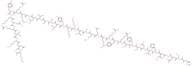
Fórmula:C203H331N63O53S
Sinónimos:- H-His-Ser-Asp-Gly-Ile-Phe-Thr-Asp-Ser-Tyr-Ser-Arg-Tyr-Arg-Lys-Gln-Met-Ala-Val-Lys-Lys-Tyr-Leu-Ala-Ala-Val-Leu-Gly-Lys-Arg-Tyr-Lys-Gln-Arg-Val-Lys-Asn-Lys-NH2
Ordenar por
Pureza (%)
0
100
|
0
|
50
|
90
|
95
|
100
Encontrado 3 productos.
PACAP-38 (human, mouse, ovine, porcine, rat)
CAS:Kojro et al. observed that the PAC1 agonists PACAP-27 (H-1172) and PACAP-38 strongly increased the activity of α-secretase. Upregulation of this APP-degrading enzyme promotes the non-amyloidogenic processing of APP, i.e. reduces the production of Aβ40/42, and thus may help to prevent Alzheimer’s disease. Nasally applied PACAP-38 in APP[V717I]-transgenic mice additionally enhanced the production of the Aβ-degrading enzyme neprilysin via induction of somatostatin.Fórmula:C203H331N63O53SPureza:97.6%Forma y color:WhitePeso molecular:4534.32PACAP38 (Human)
CAS:PACAP38 is a ligand that belongs to the family of peptides. It binds to the PAC1 receptor and activates it. PACAP38 has been shown to inhibit ion channels, such as potassium channels and calcium channels, in neuronal cells. The protein interactions of PACAP38 are not yet fully understood.Fórmula:C203H331N63O53SPureza:Min. 95%Peso molecular:4,534.3 g/molPACAP-38 (human, mouse, ovine, porcine, rat) trifluoroacetate salt
CAS:PACAP-38 is a peptide that has been shown to have a variety of physiological effects, including the regulation of brain functions and immunological responses. PACAP-38 has been found to bind to toll-like receptor 4 (TLR4) in macrophages and neutrophils, which stimulates the production of proinflammatory cytokines. It also interacts with adenylate cyclase, which leads to an increase in cAMP levels. This may be the mechanism by which PACAP-38 regulates brain functions. The biological function of PACAP-38 is not yet clear but it may act as a signal peptide, regulating protein synthesis and gene expression.Fórmula:C203H331N63O53SPureza:Min. 95%Peso molecular:4,534.26 g/mol