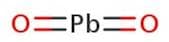
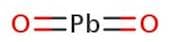
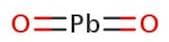
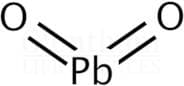
CAS 1309-60-0
:Dióxido de plomo
- Blei(IV)-oxid
- Bleidioxid
- Dioxido De Plomo
- Dioxoplumbane
- Dioxyde de plomb
- Lead Brown
- Lead oxide
- Lead oxide (PbO2)
- Lead oxide (PbO<sub>2</sub>)
- Lead oxide,brown
- Lead peroxide
- Lead peroxide (PbO2)
- Lead peroxide (PbO<sub>2</sub>)
- Lead superoxide
- Lead(IV) oxide
- Oxyde de plomb(IV)
- Plumbic acid
- Plumbic oxide
- Thiolead A
- C.I. 77580
- Ver más sinónimos
Lead(IV) oxide, Puratronic™, 99.995% (metals basis)
CAS:It is employed in manufacture of matches and electrodes. This Thermo Scientific Chemicals brand product was originally part of the Alfa Aesar product portfolio. Some documentation and label information may refer to the legacy brand. The original Alfa Aesar product / item code or SKU reference has noFórmula:O2PbPureza:99.995%Peso molecular:239.20Lead(IV) oxide, ACS, 97.0% min
CAS:Maximum level of impurities: Acid-insoluble matter 0.2%, Carbon compounds (as C) 0.04%, Cl 0.002%, NO3 0.02%, SO4 0.05%, Mn 5ppm, Ca 0.02%, Cu 0.05%, K 0.05%, Na 0.1%Fórmula:O2PbPureza:97.0%Peso molecular:239.20Lead(IV) oxide, 97%
CAS:Lead(IV) oxide is used in the manufacture of matches, pyrotechnics, dyes and other chemicals. It is also has several important applications in electrochemistry, in particular in the positive plates of lead acid batteries. This Thermo Scientific Chemicals brand product was originally part of the AlfaFórmula:O2PbPureza:97%Forma y color:Brown or black, powderPeso molecular:239.20Lead(IV) oxide
CAS:Fórmula:PbO2Pureza:≥ 97.0%Forma y color:Brown to black powderPeso molecular:239.19Lead(IV) oxide, 97+% (ACS)
CAS:Lead(IV) oxide, 97+% (ACS)
Fórmula:PbO2Pureza:97+%Forma y color:red to brown pwdr.Peso molecular:239.19Lead Dioxide (Lead Peroxide) extrapure, 95%
CAS:Fórmula:PbO2Pureza:min. 95%Forma y color:Dark brown to black, Fine powderPeso molecular:239.20Lead Dioxide
CAS:Lead dioxide is a compound with the chemical formula PbO. It is used in wastewater treatment and as a pigment in paints and enamels. Lead dioxide is insoluble in water and has a high surface tension, which allows it to be used as an anti-fouling agent by coating the inside of sewage pipes. The solubility of lead dioxide decreases with an increase in temperature, so it precipitates at higher temperatures due to its low solubility. Lead dioxide is thermodynamically stable up to about 400 degrees Celsius. It reacts with water through transfer reactions, where the lead is oxidized to PbO2+ ions. Lead dioxide has a hydrophobic effect, which may be due to its ability to form clathrates with organic molecules. It can also react with other substances such as CO2, HCl and NH3 to form lead salts. Lead dioxide can also be used as an optical sensor or thermometer because of its dependence on temperature for phase transition
Fórmula:O2PbPureza:Min. 95%Peso molecular:239.2 g/mol