CAS 1317-80-2
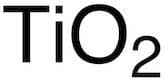
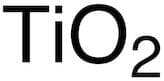
:Rutilo (TiO2)
Descripción:
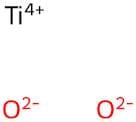
El rutilo, con la fórmula química TiO2 y el número CAS 1317-80-2, es un mineral que se encuentra de forma natural y una de las formas primarias de dióxido de titanio. Se caracteriza por su alto índice de refracción y fuerte absorción de luz UV, lo que lo convierte en un pigmento importante en diversas aplicaciones, incluyendo pinturas, recubrimientos y plásticos. El rutilo se encuentra típicamente en una estructura cristalina tetragonal, exhibiendo una gama de colores que van desde marrón rojizo hasta negro, dependiendo de las impurezas. Es insoluble en agua y la mayoría de los disolventes orgánicos, pero puede reaccionar con ácidos y bases fuertes. El rutilo también es conocido por su alta estabilidad térmica y resistencia a la corrosión química, lo que contribuye a su uso en aplicaciones a alta temperatura. Además, es un semiconductor con aplicaciones potenciales en fotocatálisis y conversión de energía solar. Debido a su abundancia y propiedades favorables, el rutilo se extrae y procesa extensamente para uso industrial, particularmente en la producción de metal de titanio y pigmentos de dióxido de titanio.
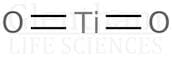
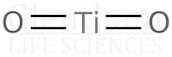
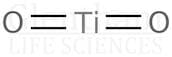
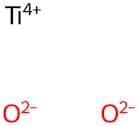
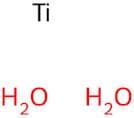
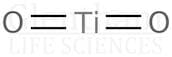
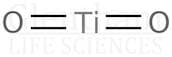
Fórmula:O2Ti
InChI:InChI=1S/2O.Ti
Clave InChI:InChIKey=GWEVSGVZZGPLCZ-UHFFFAOYSA-N
SMILES:[Ti](=O)=O
Sinónimos:- A 20-13
- Austiox R-CR
- B 2400
- Ba 0101
- Ba 101
- Baiyuying HTR 668
- CR Super 70
- CW-Ti 001
- Cr 510
- Cr 513
- Cr 515
- Ect 200
- GA 120 (titania)
- Ga 120
- HTTi 04-01
- Lomon R 996
- Longmang 996
- Mbr 9668
- Nr 950
- Nt-Gr 100
- Nt-Gr 150
- Pf 740
- R 20-104
- R 216
- R 2196
- R 237
- R 237 (titania)
- R 258
- R 5566
- R 628
- R 698
- R 699
- R 838
- R 930-4
- R 975
- R-Tc 30
- Rcl 595
- Rm 301Lp
- Rsc 5
- Rutil (TiO2)
- Rutile
- Rutile (TiO<sub>2</sub>)
- Rx 236
- Sagenite
- Sr 237
- Synthetic rutile (TiO2)
- T 595
- Tiona 696
- Tiona RCL 595
- Titania 595
- Titanium Dioxide (Rutile)
- Titanium oxide
- Titanox 3020
- Tr 248
- Tr 700
- Unitane OR
- Vk-T 06H
- ZR 110 (titania)
- Zr 110
- rutilo (TiO2)
- β-Rutile
- pigment white
- Titania
- titanium white
- Titanium Dioxide Anatase
- Titanium(Ⅳ)oxide
- Titanium dioxide,anatase
- Titanium(IV)oxide
- Tilac D
- Anatase,oxid titanium
- rutile titanium dioxide
- Titanium Dioxide food grade
- Titanium dioxide
- TiLox-Black
- Pigment Black 35
- C.I. 77891
- Rutile (TiO2)
- dioxotitanium
- Titanium (IV) dioxide
- C.I. Pigment White 6
- Ver más sinónimos
Ordenar por
Pureza (%)
0
100
|
0
|
50
|
90
|
95
|
100
Encontrado 20 productos.
Titanium(IV) oxide, rutile, 99.5% min (metals basis)
CAS:Titanium dioxide is used in paints, plastics, paper, and foods. It is used as a UV-resistant material. It shows useful applications in earth sciences. It is also useful in quantitative provenance studies. It is also useful for the photocatalytic applications. It is also useful in high temperature suFórmula:O2TiPureza:99.5%Peso molecular:79.9Titanium(IV) oxide, rutile, 99.99% (metals basis)
CAS:Titanium(IV) oxide is used in paints, plastics, paper, and foods. It is used as a UV-resistant material. It shows useful applications in earth sciences. It is also useful in quantitative provenance studies. It is also useful for the photocatalytic applications. It is also useful in high temperatureFórmula:TiO2Pureza:99.99%Peso molecular:79.9Titanium(IV) oxide, rutile, 99.9% (metals basis)
CAS:Titanium dioxide is used in paints, plastics, paper, and foods. It is used as a UV-resistant material. It shows useful applications in earth sciences. It is also useful in quantitative provenance studies. It is also useful for the photocatalytic applications. It is also useful in high temperature suFórmula:TiO2Pureza:99.9%Peso molecular:79.9Titanium(IV) oxide, rutile, 99.8% (metals basis)
CAS:Titanium(IV) oxide is used in paints, plastics, paper, and foods. It is used as a UV-resistant material. It shows useful applications in earth sciences. It is also useful in quantitative provenance studies. It is also useful for the photocatalytic applications. It is also useful in high temperatureFórmula:TiO2minrutilephasePureza:99.8%Peso molecular:79.9Titanium(IV) oxide, powder <100nm particle size
CAS:Titanium(IV) oxide, powder <100nm particle sizeFórmula:·2O·TiPureza:99.5%Forma y color:White PowderPeso molecular:79.87g/molTitanium(IV) oxide, rutile
CAS:Titanium(IV) oxide, rutilePureza:99.8%,100nm(Before wrapping),golden red,OleophilicPeso molecular:79.866g/molTitanium(IV) Oxide, Rutile (99.9%, trace metals basis)
CAS:Fórmula:TiO2Pureza:>99.99%Forma y color:White to Almost white powder to crystalPeso molecular:79.87Titanium(IV) Oxide, Rutile (99.99%, trace metals basis)
CAS:Fórmula:TiO2Pureza:>99.99%Forma y color:White to Almost white powder to crystalPeso molecular:79.87Titanium(IV) oxide
CAS:Titanium(IV) oxideFórmula:·2O·TiPureza:95%Forma y color: off white solidPeso molecular:79.8658g/molTitanium oxide Nanopowder, rutile, 99% [APS 200nm, spherical]
CAS:Fórmula:TiO2Pureza:≥ 99.0%Forma y color:White powderPeso molecular:79.87Titanium oxide Nanopowder, 10 - 30 nm, rutile, 99.5%
CAS:Fórmula:TiO2Pureza:≥ 99.5%Forma y color:White powderPeso molecular:79.87Titanium(IV) oxide
CAS:Titanium(IV) oxidePureza:99.99%Forma y color:White SolidPeso molecular:79.8658g/molTitanium oxide Nanopowder, rutile, coated with SiO2, 99 %
CAS:Pureza:≥ 99.0%Forma y color:White powderTitanium(IV) oxide, 99.998%
CAS:Fórmula:TiO2Pureza:≥ 99.998%Forma y color:White to off-white powderPeso molecular:79.90Titanium (IV) oxide - Rutile
CAS:Rutile is the most common form of titanium oxide and is a photocatalyst that can react with water vapor to produce hydrogen gas. Rutile has been shown to be toxicologically safe and has been used in analytical methods for the detection of sodium salts, such as the determination of sodium in seawater. Rutile can also be used for wastewater treatment, where it functions as a catalyst for chemical reactions that remove organic pollutants from water.Fórmula:TiO2Pureza:Min. 95%Forma y color:White Clear LiquidPeso molecular:79.87 g/mol











![Titanium oxide Nanopowder, rutile, 99% [APS 200nm, spherical]](/_next/image/?url=https%3A%2Fstatic.cymitquimica.com%2Fproducts%2F7W%2Fthumb%2FGX4909.jpg&w=3840&q=75)