CAS 140-22-7
:sim-Difenilcarbazida
Descripción:
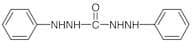
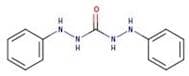
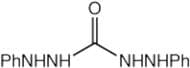
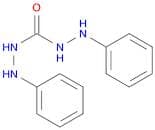
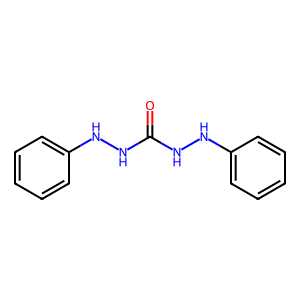
sim-Difenilcarbazida, con el número CAS 140-22-7, es un compuesto orgánico caracterizado por su estructura, que presenta dos grupos fenilo unidos a una parte central de carbazida. Este compuesto es típicamente un sólido a temperatura ambiente y es conocido por su uso como reactivo en química analítica, particularmente en la detección de ciertos iones metálicos, como el mercurio y el plomo, a través de métodos colorimétricos. sim-Difenilcarbazida exhibe buena solubilidad en disolventes orgánicos, lo que lo hace adecuado para diversas aplicaciones en síntesis orgánica y procedimientos analíticos. También se reconoce por su potencial como ligando en química de coordinación. Sin embargo, es importante manejar este compuesto con cuidado, ya que puede representar riesgos para la salud si se ingiere o inhala, y se deben tomar las medidas de seguridad adecuadas durante su uso. En general, sim-Difenilcarbazida es valorado por su reactividad química y utilidad en entornos de laboratorio.
Fórmula:C13H14N4O
InChI:InChI=1/C13H14N4O/c18-13(16-14-11-7-3-1-4-8-11)17-15-12-9-5-2-6-10-12/h1-10,14-15H,(H2,16,17,18)
Clave InChI:InChIKey=KSPIHGBHKVISFI-UHFFFAOYSA-N
SMILES:N(NC(NNC1=CC=CC=C1)=O)C2=CC=CC=C2
Sinónimos:- 1,3-Dianilinourea
- 1,5-Diphenylcarbazide
- 1,5-Diphenylcarbohydrazide
- 2,2′-Diphenylcarbazide
- 2,2′-Diphenylcarbonic dihydrazide
- Carbohydrazide, 1,5-diphenyl-
- Carbonic dihydrazide, 2,2′-diphenyl-
- Diphenylcarbazide
- N,N′-Diphenylcarbazide
- NSC 5058
- s-Diphenylcarbazide
- sym-Diphenylcarbazide
- DPC
- S-DIPHENYLCARBOHYDRAZIDE
- 2,2’-Diphenylcarbonicdihy-drazide
- 1,5-Diphenylcabohydrazide
- 2,2’-diphenyl-Carbonicdihydrazide
- 1,5-Diphenylcarbohydrazine
- 1,5-DIPHENYLCARBONOHYDRAZIDE
- TIMTEC-BB SBB008713
- 2,2’-diphenyl-carbonicdihydrazid
- SYM-DIPHENYLACARBAZIDE
- 2,2’-diphenylcarbonicdihydrazide
- 1,5-diphenyl-carbohydrazid
- Ver más sinónimos
Ordenar por
Pureza (%)
0
100
|
0
|
50
|
90
|
95
|
100
Encontrado 11 productos.
1,5-Diphenylcarbonohydrazide
CAS:Fórmula:C13H14N4OPureza:>98.0%(HPLC)Forma y color:White to Light yellow to Light orange powder to crystalPeso molecular:242.281,5-Diphenylcarbazide, 97+%
CAS:1,5-Diphenylcarbazide is used in the colorimteric determination of chromium, osmium as well as in the detection of cadmium, mercury, magnesium, emetine and aldehydes. This Thermo Scientific Chemicals brand product was originally part of the Alfa Aesar product portfolio. Some documentation and labeFórmula:C13H14N4OPureza:97+%Forma y color:Crystals or powder or crystalline powder, White to cream or pale yellow or pale pink or pale greyPeso molecular:242.281,5-Diphenylcarbazide, ACS
CAS:1,5-Diphenylcarbazide is used in the colorimetric determination of chromium, osmium as well as in the detection of cadmium, mercury, magnesium, emetine and aldehydes. This Thermo Scientific Chemicals brand product was originally part of the Alfa Aesar product portfolio. Some documentation and labelFórmula:C13H14N4OForma y color:White to pale cream; slowly becomes pink on exposure to air., Crystalline powder or powderPeso molecular:242.28Carbonic dihydrazide, 2,2'-diphenyl-
CAS:Fórmula:C13H14N4OPureza:98%Forma y color:SolidPeso molecular:242.2765Diphenylcarbazide
CAS:Diphenylcarbazide is used for the determination of chromium.Fórmula:C13H14N4OPureza:98%Forma y color:Beige PowderPeso molecular:242.281,5-Diphenylcarbazide
CAS:1,5-Diphenylcarbazide is a chemical compound that is used in analytical chemistry. It can be used to detect trace amounts of metals by using the surface methodology and potassium dichromate as a catalyst. The potassium dichromate catalyzes the reaction between methyl ethyl ketone, chromium, and copper chloride. Methyl ethyl ketone reacts with chromium to produce an unstable intermediate that decomposes into methyl ethyl and chromium oxide. This reaction produces two products: one volatile (methyl ethyl) and one non-volatile (chromium oxide). The volatile product can be detected by mass spectroscopy in plasma mass spectrometry. 1,5-Diphenylcarbazide has been shown to have a high detection sensitivity for many metals, including copper, nickel, zinc, lead, cadmium and mercury. 1,5-Diphenylcarbazide is also used in plant physiology studies to study photosFórmula:C13H14N4OPureza:Min. 98 Area-%Forma y color:PowderPeso molecular:242.28 g/mol1,5-Diphenylcarbazide ACS
CAS:Fórmula:C6H5NHNHCONHNHC6H5Forma y color:White to almost white, slowely becomes pink on exposure to air, Crystalline powderPeso molecular:242.281,5-Diphenylcarbazide
CAS:1,5-Diphenylcarbazide is a versatile building block that can be used as a precursor to many other chemicals. It has been used in the research and development of pharmaceuticals, pesticides, herbicides, and fungicides. 1,5-Diphenylcarbazide is also a useful intermediate for the synthesis of organic compounds. This compound is a high-quality reagent that can be used as an effective reaction component in organic synthesis or as a scaffold molecule for drug discovery.Fórmula:C13H14N4OPureza:Min. 98 Area-%Peso molecular:242.28 g/molRef: 3D-J-650233
-Unit-kgkgA consultar1kgA consultar5kgA consultar10kgA consultar25kgA consultar2500gA consultar