CAS 141-53-7
:formiato de sodio
Descripción:
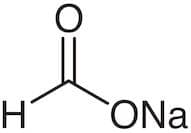
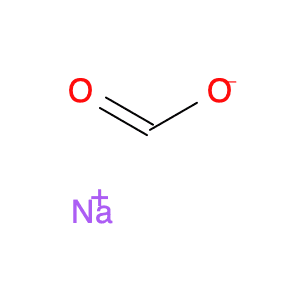
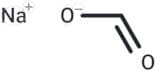
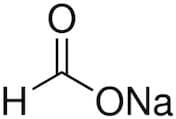
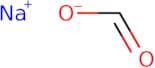
formiato de sodio, con la fórmula química HCOONa y número CAS 141-53-7, es la sal sódica del ácido fórmico. Aparece como un polvo cristalino blanco e higroscópico que es soluble en agua y tiene un sabor ligeramente salado. formiato de sodio se utiliza comúnmente en diversas aplicaciones, incluyendo como agente amortiguador en la investigación bioquímica, conservante en la industria alimentaria y agente descongelante para carreteras. También puede servir como fuente de ácido fórmico en la síntesis química. La sustancia se considera generalmente no tóxica, pero debe manejarse con cuidado para evitar irritaciones en la piel y los ojos. En términos de sus propiedades químicas, formiato de sodio puede sufrir descomposición térmica a temperaturas elevadas, liberando gases como el dióxido de carbono. Su capacidad para actuar como agente reductor lo hace útil en ciertos procesos industriales. En general, formiato de sodio es un compuesto versátil con una utilidad significativa en múltiples campos, incluyendo la química, la ciencia de los alimentos y aplicaciones ambientales.
Fórmula:CH2O2·Na
InChI:InChI=1S/CH2O2.Na/c2-1-3;/h1H,(H,2,3);
Clave InChI:InChIKey=ZDPALFHDPFYJDY-UHFFFAOYSA-N
SMILES:C(O)=O.[Na]
Sinónimos:- Formate, Sodium
- Formiate de sodium
- Formiato De Sodio
- Formic acid, sodium salt (1:1)
- NA-Amasil
- Natriumformiat
- Natriumformiat, Techn.
- Sodium Formate
- Formic acid, sodium salt
Ordenar por
Pureza (%)
0
100
|
0
|
50
|
90
|
95
|
100
Encontrado 12 productos.
Sodium Formate
CAS:Fórmula:CHNaO2Pureza:>97.0%(T)Forma y color:White to Almost white powder to crystalPeso molecular:68.01Sodium formate, ACS, 99.0% min
CAS:Reducing agent, buffering agent, complexing agent, Noble metal precipitantSodium formate is used in analytical chemistry to precipitate noble metals. It is used for tanning leather, for dyeing and printing fabrics. It acts as an electroplating agent, an acidulant in the textile industry, a reducingFórmula:CHNaO2Pureza:99.0%Peso molecular:68.01Sodium formate, 98%
CAS:Sodium formate is used in analytical chemistry to precipitate noble metals. It is used for tanning leather, for dyeing and printing fabrics. It acts as an electroplating agent, an acidulant in the textile industry, a reducing agent, a mordant, a complexing agent. Further, it is used in photographicFórmula:CHNaO2Pureza:98%Forma y color:White or pale cream, Crystals or powder or crystalline powderPeso molecular:68.01Sodium formate
CAS:Fórmula:NaOOCHPureza:≥ 97.0% (dried basis)Forma y color:White to off-white crystalline poweder or crystalsPeso molecular:68.01Sodium formate
CAS:Sodium formate has antiviral and antifungal properties, can inhibit carbonic anhydrase, and can also be used as a biochemical buffer.Fórmula:CHNaO2Forma y color:SolidPeso molecular:68.01Sodium Formate
CAS:Fórmula:CHNaO2Pureza:97%Forma y color:Solid, Crystalline Powder or PowderPeso molecular:68.007Sodium Formate extrapure AR, ACS
CAS:Fórmula:HCOONaPureza:min. 99%Forma y color:White, Crystalline powder, Clear, ColourlessPeso molecular:68.01Sodium Formate pure, 98%
CAS:Fórmula:CHNaO2Pureza:min. 98%Forma y color:White, Crystalline powder, Clear, ColourlessPeso molecular:68.01Formic acid sodium salt
CAS:Formic acid is a carboxylic acid that is found in the form of calcium formate. Formic acid has synergistic effects with many other drugs, including calcium, and it is often used as a model system for studying the effects of various drugs on biological systems. The constant pressure analytical method was developed to determine the concentration of formic acid in blood samples and can be used as an analytical tool for biocompatible polymers. Formic acid has been shown to inhibit bowel disease by inhibiting certain enzymes involved in the disease process. It also has inhibitory properties against complex enzymes such as lipases and proteases. Formic acid undergoes a phase transition from liquid to gas at a temperature of about -76°C (-108°F).
Fórmula:HCOONaPureza:Min. 95%Forma y color:White PowderPeso molecular:68.01 g/mol